

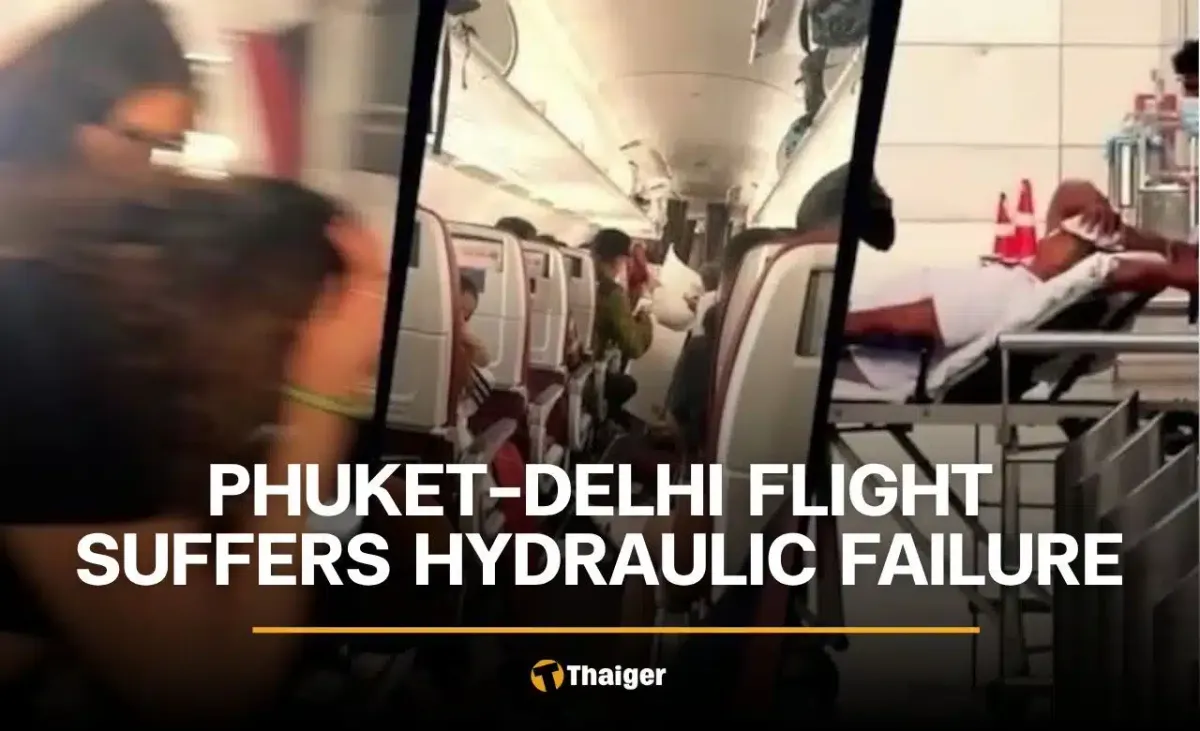
An Air India flight from Phuket to Delhi experienced a significant hydraulic failure on August 4, leading to injuries among passengers and crew and prompting a review of pilot drug testing protocols. Flight AI2379, an Airbus A320-251N registered VT-EXO, was en route to Delhi when the incident occurred at Flight Level 360. The event, initially logged as a turbulence encounter, is now being investigated as a technical accident due to the extent of injuries and cabin damage.
Hydraulic System Malfunction and Aircraft Upset
The sequence of events began when the aircraft’s Green hydraulic system lost pressure. Within four seconds, the Blue and Yellow hydraulic systems also failed. This critical failure led to the autopilot disengaging. The aircraft experienced an immediate upset, climbing 372 feet before descending 292 feet, during which a two-second stall warning was activated. The co-pilot was at the controls during this critical phase and attempted to regain control before the pilot-in-command took over.
Despite the serious technical issue and the aircraft’s erratic behavior, the flight crew opted not to divert to a closer airport. Instead, they decided to continue the flight to Delhi and requested priority medical assistance upon arrival. The flight carried a total of 145 individuals: 137 passengers and eight crew members, comprising six cabin crew and two pilots.
Passenger and Crew Injuries
The incident resulted in injuries to 24 individuals on board, including 20 passengers and four cabin crew members. Four of those injured sustained serious harm. The severity of these injuries contributed to the reclassification of the event from a turbulence incident to a potential technical accident by investigators.
Preliminary Investigation Findings and Equipment Status
A preliminary report released by the Aircraft Accident Investigation Bureau (AAIB) on September 4 shed light on a potential contributing factor. The report indicated that the aircraft’s Power Transfer Unit (PTU) had been listed under the Minimum Equipment List (MEL) since July 28, just seven days prior to the incident. The MEL outlines conditions under which an aircraft can be dispatched with certain equipment inoperative.
Pilot Drug Testing and Regulatory Scrutiny
Adding another layer to the investigation, the pilot-in-command’s drug test results came under scrutiny. According to reports citing the AAIB’s preliminary findings, the pilot-in-command’s initial sample tested non-negative for psychoactive substances, and a subsequent confirmatory blood test yielded the same result. The co-pilot, however, tested negative in both tests. Both pilots passed mandatory alcohol breath-analyzer checks.
Following the non-negative result for the pilot-in-command, the AAIB recommended that the Directorate General of Civil Aviation (DGCA) take appropriate and priority action. India’s Ministry of Civil Aviation had previously classified the event as a serious incident shortly after it occurred.
Conflicting Information on Testing Mandate
While Air India stated that the pilot testing was voluntary and that the carrier maintains zero tolerance for safety breaches, an internal memo obtained by news agencies suggested a different scenario. This memo indicated that the screening was mandatory for all pilots in the group and commenced on August 13, after the incident.
Local media reports have widely suggested that the substance detected was marijuana, although neither the AAIB nor Air India has officially confirmed this detail. As of the latest reports, no public statement has been issued by the DGCA or the pilots involved.
Ongoing Investigation and Assistance
The probable cause of the hydraulic failure has not yet been determined by the AAIB. Airbus and France’s aviation safety agency, the BEA, are providing assistance to the investigation. Technical experts from Airbus inspected the aircraft in Delhi between August 13 and 15.
Pilot records indicate the pilot-in-command, aged 34, had accumulated 5,055 flying hours, all on the A320. The co-pilot had 1,393 flying hours. Both crew members had a rest period of nearly 22 hours prior to the flight, meeting standard requirements.
Air India’s Response and Safety Commitment
In the aftermath of the incident, Air India reiterated its commitment to safety, emphasizing that it is the company’s highest priority. The airline stated its zero-tolerance policy towards any breaches of safety, fitness, or regulatory requirements. Air India confirmed its full cooperation with the ongoing investigation.
Conclusion
The incident involving Air India flight AI2379 highlights a complex interplay of technical malfunction, crew response, and regulatory oversight. The investigation continues to examine the root cause of the hydraulic failure, the circumstances surrounding the pilot’s drug test, and the broader implications for aviation safety protocols in India. The findings are expected to provide crucial insights into preventing similar occurrences in the future.
