

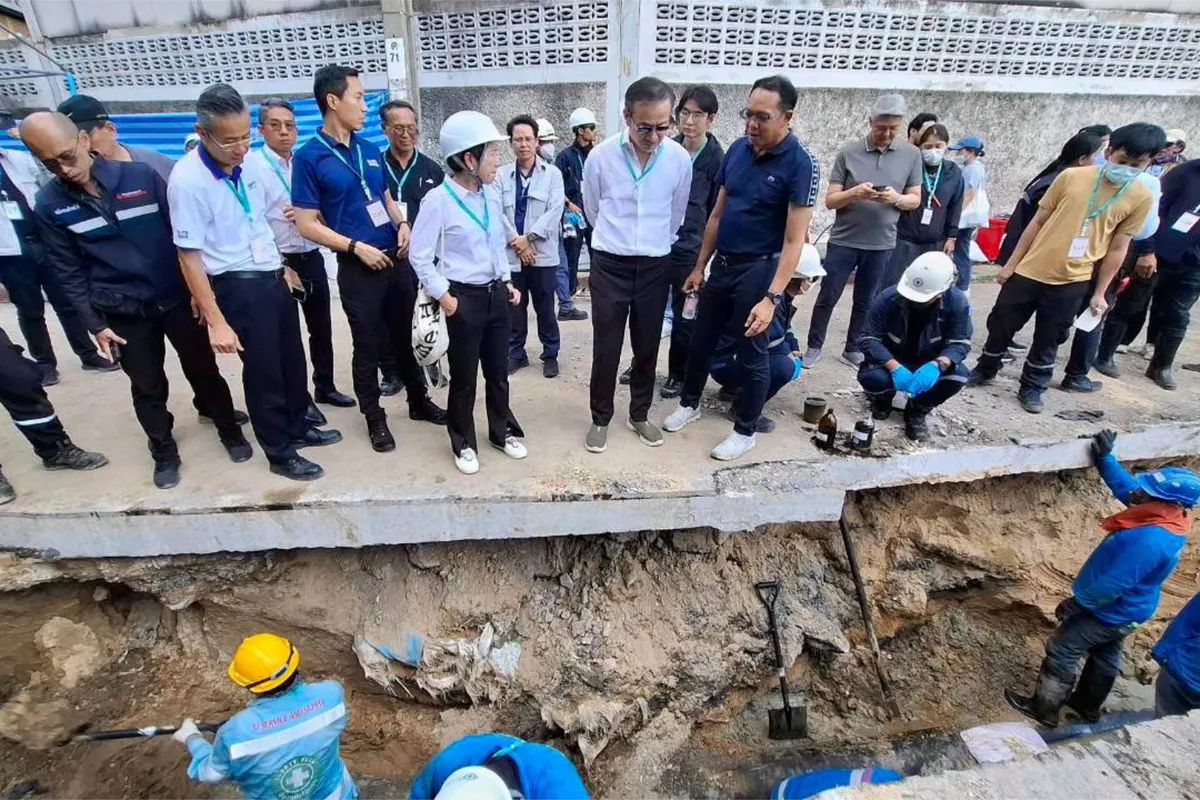
Energy conglomerate Bangchak has stated that extensive inspections have found no evidence of leaks in the fuel pipeline it operates. The company confirmed on Saturday that multiple engineering techniques employed to assess the pipeline’s condition yielded “no abnormal results.” This assurance comes after initial reports of potential seepage raised concerns among residents and prompted a temporary halt in pipeline operations.
Pipeline Operations and Ownership Structure
Bangchak holds ownership of Bangkok Fuel Pipeline and Logistics Co (BFPL), the entity responsible for operating the pipeline. This infrastructure is owned by BAFS Pipeline Transportation Co, a subsidiary of Bangkok Aviation Fuel Services Plc (BAFS). The critical pipeline network connects the Bangchak refinery to key distribution points, including depots and major airports such as Don Mueang and Suvarnabhumi, playing a vital role in the capital’s fuel supply chain.
Initial Response and Investigation
Following the emergence of concerns, company personnel were dispatched to the site on Monday. The location, situated beneath the Rama III elevated bridge at the border of Klong Toey and Yannawa districts, became the focus of collaborative efforts involving Bangchak, the Bangkok Metropolitan Administration, and the Ministry of Energy. To facilitate a comprehensive examination, pipeline operations were suspended on Tuesday morning.
A day later, energy ministry officials indicated a potential leak in the Klong Toey area based on preliminary findings. Deputy Prime Minister Phiphat Ratchakitprakarn subsequently addressed the public, clarifying that any detected oil contamination was attributed to “seepage from a pipeline rather than a major leak.” He added that the issue was expected to be repaired and sealed promptly.
Advanced Inspection Techniques Employed
In its official statement, Bangchak detailed the rigorous inspection process. The company first utilized a technique known as direct current voltage gradient (DCVG). This method is designed to detect anomalies in the external protective coating of the pipeline, which is crucial for preventing corrosion. While water mixed with oil was observed at one specific point, its origin could not be definitively identified during this phase of the inspection.
Pressure Testing Confirms Integrity
To further validate the pipeline’s structural soundness and identify any potential leaks not apparent through visual or coating inspections, a controlled pressure test was conducted. This test involved gradually increasing the internal pressure within a contained section of the pipeline. The pressure was elevated in stages, starting from 10 barg (bar gauge) and rising to the standard operating pressure of 28 barg. This pressure level was then maintained consistently for a full hour.
A barg measurement indicates the internal pressure of the pipeline relative to the surrounding atmospheric pressure. Bangchak emphasized the significance of this test, stating, “If the pipeline had been leaking, an abnormal pressure drop or liquid seepage would have been detected.” The results unequivocally confirmed the absence of any leakages, with all monitored readings remaining stable and consistent both at the inspection site and within the control room.
Future Inspections and Commitment to Responsibility
Despite the positive findings from the initial inspections and pressure tests, Bangchak indicated that further comprehensive checks are scheduled. These upcoming inspections will incorporate advanced technologies such as short- and long-range ultrasonic testing, radar scanning, and an intelligent pigging inspection. Intelligent pigging involves deploying a specialized device, colloquially known as a “pig” (pipeline inspection gauge), through the pipeline. These devices are used for cleaning, measuring internal dimensions, and evaluating the pipe’s condition without necessitating a shutdown of operations.
The company reiterated its commitment to transparency and accountability. Bangchak stated that if subsequent investigations reveal any damage or impact attributable to BFPL’s operational activities, the company is fully prepared to assume responsibility. This includes providing fair and appropriate compensation to any parties affected by such issues.
Conclusion
The thorough inspections conducted by Bangchak, employing sophisticated engineering techniques and rigorous testing, have concluded that the fuel pipeline remains free of leaks. While initial concerns prompted swift action and a temporary operational pause, the comprehensive assessments, including a critical pressure test, have affirmed the pipeline’s integrity. The company’s proactive approach, commitment to advanced future inspections, and pledge to take responsibility if any operational fault is identified underscore its dedication to safety and public trust in the critical fuel infrastructure it manages.
