

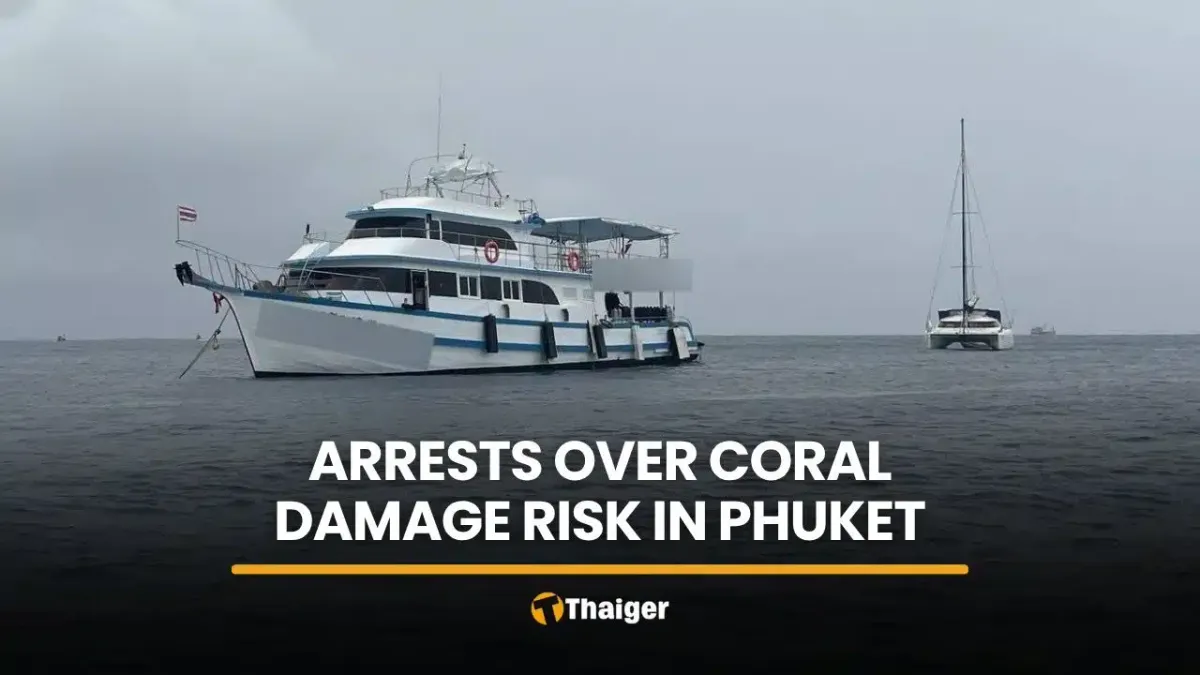
Two boat operators were arrested off Racha Yai Island in Phuket on September 4th following an inspection that revealed their vessels were moored in a manner that posed a significant risk to the delicate coral reef ecosystem. The arrests were made by officials from Legacy Marine after the boats were found tied directly to the bases of mooring buoys, a practice authorities say can lead to severe damage to marine life.
Concerns Over Mooring Practices Prompt Inspection
The incident unfolded at Ao Tue on Racha Yai Island after the Department of Marine and Coastal Resources (DMCR) received an anonymous tip. The complaint detailed that diving boats had been moored in the area for an extended period, with their sterns secured directly to the mooring buoy bases. This specific method of mooring immediately raised red flags for conservation officials.
Following the complaint, the Director-General of the DMCR, Pinsak Suraswadi, dispatched officers from the department’s protection and enforcement division to investigate. Upon arrival, officials confirmed that two diving boats were utilizing the moorings in a way that directly contravened the established marine and coastal resource protection measures for the Racha Yai and Racha Noi islands, located within the Rawai subdistrict of Phuket.
How Mooring Practices Can Harm Coral Reefs
The DMCR elaborated on the potential dangers posed by the observed mooring technique. Tying the stern of a vessel directly to a mooring base creates a direct, rigid connection. When waves and wind cause the boat to move, this constant tension and movement can dislodge or shift the entire mooring base. A displaced mooring base, especially one that is being dragged or scraped along the seabed, can inflict substantial physical damage on the coral reef below. This can result in broken coral structures and the destruction of fragile marine habitats.
Furthermore, the department highlighted that leaving a boat attached to a single mooring for an extended duration not only risks damage but also obstructs access for other vessels. This can create logistical problems for the marine tourism industry and potentially lead to further conflicts over mooring availability.
Legal Ramifications and Enforcement
The operators of both implicated boats were subsequently arrested at the scene. They were then transferred to the Chalong Police Station to face further legal proceedings. The alleged violations fall under Section 22 of the Marine and Coastal Resources Management Promotion Act B.E. 2558 (2015). This legislation mandates compliance with protective measures designed to safeguard marine and coastal resources.
Individuals found in violation of this act face serious penalties. These can include a maximum prison sentence of up to two years, a substantial fine of up to 200,000 Thai baht, or a combination of both imprisonment and a fine. The severity of the potential punishment underscores the importance authorities place on protecting these vital underwater environments.
Continued Monitoring and Public Appeal
In response to this incident, the DMCR has pledged to intensify its surveillance and monitoring efforts. These increased patrols will focus on all protected marine areas, particularly those known for their ecological significance and high visitor traffic. The department emphasized that the protection of Thailand’s marine heritage is a shared responsibility.
The DMCR issued a public appeal, urging all users of marine resources—including local residents, tourists, and operators within the marine tourism sector—to adhere strictly to conservation guidelines. The department also encouraged the public to remain vigilant and to report any activities observed that could potentially harm marine ecosystems. This collaborative approach, it is hoped, will help prevent future incidents and ensure the long-term health of Thailand’s coral reefs and marine biodiversity.
Broader Context of Marine Conservation in Thailand
This arrest comes at a time when marine conservation is a significant focus for Thailand’s tourism and environmental agencies. Efforts to protect and restore coral reefs have been ongoing, with various initiatives aimed at promoting sustainable tourism practices. For instance, the Tourism Authority of Thailand (TAT) has launched programs like the Coral College Project, which aims to educate visitors and operators on responsible marine activities. These efforts are crucial, especially in popular diving destinations like Phuket and the surrounding islands, which are vital for both the local economy and global biodiversity.
The recovery of coral reefs in areas like the Phi Phi Islands, which have seen successful reopenings for snorkeling and diving following periods of rehabilitation, demonstrates the potential for resilience when conservation measures are effectively implemented and respected. The incident at Racha Yai serves as a stark reminder that continued vigilance and strict enforcement are necessary to build upon these successes and safeguard these invaluable natural resources for future generations.
