

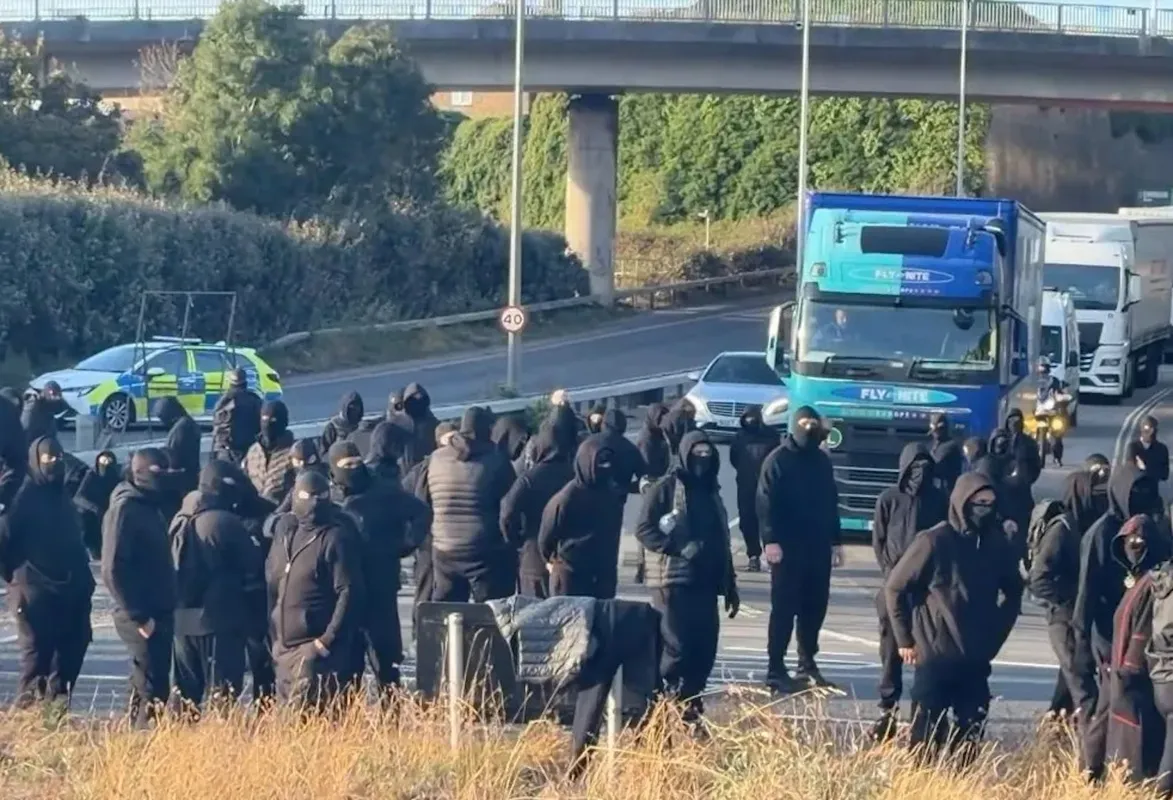
The Port of Dover experienced significant disruption on [Date of Incident], as a group of masked protesters staged a demonstration, halting traffic in and out of the vital UK gateway. The protest, described as an “ongoing public order incident” by port authorities, saw roads leading to the terminal completely blocked, causing widespread delays for freight and passenger vehicles.
Protestors Disrupt Port Operations
In a statement released during the incident, the Port of Dover confirmed that “traffic going in and out of the Port is stopped.” Local law enforcement reported they were actively “engaging” with the individuals involved. Images circulating on social media depicted dozens of people, many wearing balaclavas, converging on the roads surrounding the port facilities. The Port of Dover is a critical hub, connecting southern England with northern France and handling a substantial volume of trade.
A local councillor, Paul King, associated with the anti-immigration Reform UK party, indicated that the demonstration was a “stop the boats protest.” This designation points to the ongoing political and social debate in Britain concerning the irregular arrival of migrants via small boats across the English Channel.
The Broader Context: Migrant Crossings and Political Sentiment
The protest at Dover occurs against a backdrop of persistent challenges faced by the UK in managing migrant crossings. In recent years, thousands of individuals have made the perilous journey across the Channel annually, seeking asylum in Britain. This issue has become a focal point for political discourse, particularly for right-wing groups who have seen their influence grow amidst rising anti-immigration sentiment.
The current Labour government has stated that efforts to curb these crossings, including enhanced cooperation with French authorities, have led to a reduction in the number of migrant boats arriving during the summer months compared to 2019. Despite these claims, the issue remains a sensitive and politically charged topic.
Significance of the Port of Dover
The Port of Dover’s strategic importance cannot be overstated. During peak summer months, it typically processes over 10,000 freight vehicles and 15,000 passenger vehicles daily. Furthermore, it plays a crucial role in the UK’s trade relationship with the European Union, accounting for approximately one-third of all goods traded between the UK and the EU.
The disruption caused by the protest had immediate implications for logistics and travel. Ferry operator P&O Ferries, a major user of the port, acknowledged the situation. While their sailings were reportedly proceeding as scheduled, the company advised passengers that “If you miss your booked departure today, we will get you onto the next available.” This indicated potential knock-on effects and the need for passengers to remain flexible with their travel plans.
Impact and Response
The immediate impact of the protest was the cessation of all vehicular movement into and out of the port. This created significant congestion on surrounding roads and caused considerable anxiety for travelers and businesses relying on the port’s services. Police presence was noted as they worked to de-escalate the situation and restore normal operations.
The motivations behind the protest, as suggested by Councillor King, highlight the deep divisions and strong opinions surrounding immigration policy in the UK. “Stop the boats” has become a potent slogan for those advocating for stricter border controls and reduced immigration. The use of masks by protesters suggests a desire for anonymity, possibly to avoid repercussions or to project a unified, anonymous front.
Government’s Stance and Challenges
The UK government has consistently sought to address the issue of Channel crossings, viewing it as a matter of national security and border control. Policies have included increased surveillance of the Channel, agreements with France for joint patrols and intelligence sharing, and legislative measures aimed at deterring illegal immigration and processing asylum claims. However, these efforts have faced criticism from various quarters, including human rights organizations and opposition parties, who raise concerns about the humanitarian treatment of migrants and the effectiveness of deterrence-based policies.
The political pressure surrounding this issue remains intense. Opposition parties often highlight the human cost of dangerous crossings and criticize government policies as ineffective or inhumane. Meanwhile, segments of the public, particularly those influenced by anti-immigration rhetoric, demand more stringent measures. The protest at Dover serves as a visible manifestation of this ongoing societal tension.
Conclusion
The protest at the Port of Dover underscored the significant impact that such demonstrations can have on critical national infrastructure and the broader political sensitivities surrounding immigration in the United Kingdom. While the immediate disruption was eventually resolved by law enforcement, the underlying issues driving such protests continue to be a major focus of public debate and government policy. The event serves as a stark reminder of the complex challenges involved in managing borders, international migration, and the deeply held views within the population.
