

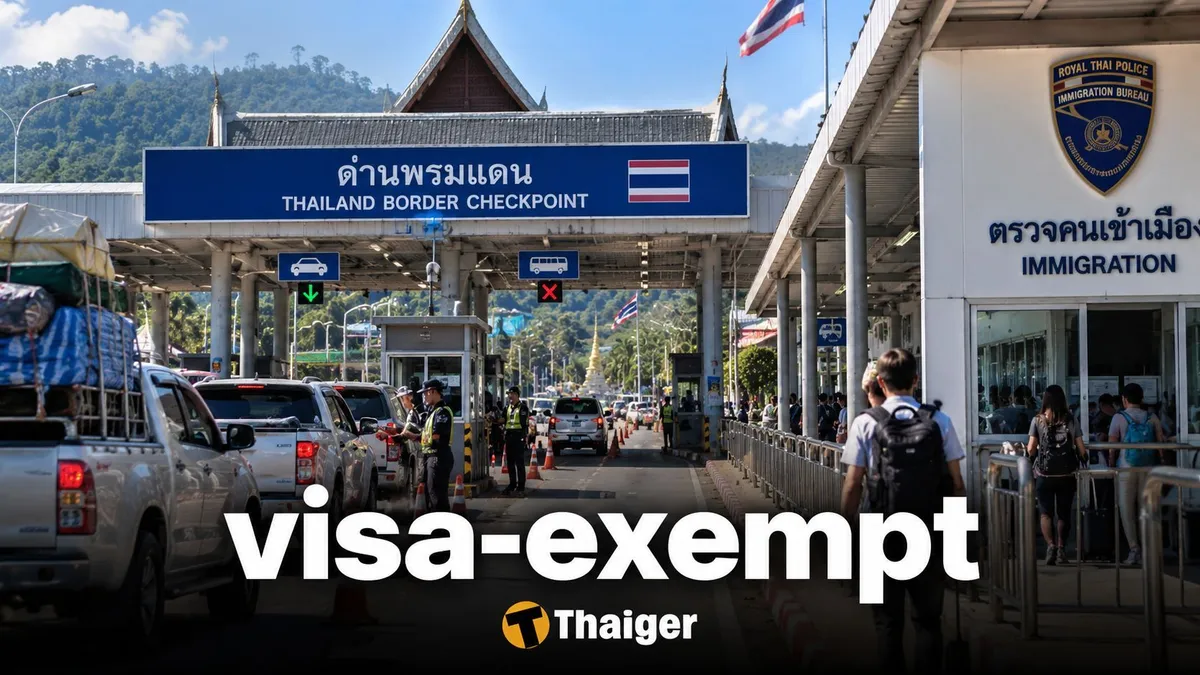
Thailand is implementing a new regulation that will limit the number of times most foreign nationals can enter the country visa-free via land borders to twice per calendar year. This change, set to take effect on September 15, aims to curb the practice of frequent “border runs” and will impact travelers who have relied on these short, visa-exempt entries to extend their stays.
New Visa Framework and Land Border Restrictions
The new policy is part of an updated visa framework published in the Royal Gazette on August 31. Under this framework, the standard visa-exempt stay for many nationalities entering Thailand by land will be reduced from the previous 60 days to 30 days, and crucially, will be capped at two entries per calendar year. This means individuals can only cross a land border using the visa exemption a maximum of two times between January 1 and December 31.
It is important to note that this restriction specifically applies to entries made at land checkpoints. Travelers arriving in Thailand by air are not subject to this new twice-yearly limit on visa-exempt entries. The government’s intention appears to be a move away from the long-standing practice of “border runs,” where individuals would leave and re-enter Thailand to reset their visa-exempt stay, often for extended periods.
Exemptions to the New Rule
While the new cap will affect many nationalities, there are specific exemptions. Citizens of four countries – Malaysia, Singapore, Indonesia, and Brunei – will continue to be allowed to cross Thailand’s land borders without any limit on the number of entries. The government has indicated that the Minister of Interior may have the authority to add other nationalities to this exemption list in the future.
Additionally, the new 15-day visa exemption recently introduced for travelers from Seychelles and Mauritius will also adhere to the twice-a-year limit when entering via land checkpoints.
Implications for Long-Term Visitors
For individuals who have been residing in Thailand through repeated visa-exempt entries, this new regulation presents a significant change. Two visa-exempt land entries will now only account for approximately two months of potential stay within a year. Those who wish to remain in Thailand for longer periods will need to explore and apply for appropriate visas that align with their specific purposes of stay.
Several visa options remain available for those needing to stay beyond the new limits. These include, but are not limited to:
- Tourist Visas: For individuals visiting primarily for tourism.
- Diplomatic and Special Visas (DTV): For specific categories of travelers.
- Retirement Visas: For individuals meeting the age and financial requirements for retirement.
- Non-Immigrant B Visas: For those intending to work or conduct business in Thailand.
The previous visa-exempt entry system, which allowed unlimited land border crossings, had been in place since July 15, 2024. Its cessation on September 15 marks the end of an era for many frequent travelers and “visa runners.”
Broader Changes to Thai Visa Policy
This land border restriction is part of a series of adjustments to Thailand’s visa policies aimed at streamlining immigration processes and potentially boosting tourism revenue. Recent announcements have also indicated changes to visa-free stays for certain nationalities and the duration of visa exemptions. For instance, some countries may now receive a shorter visa-free period, while others might have different entry requirements. The government’s objective appears to be a more structured approach to managing foreign entries, moving away from the informal practices that have developed over time.
Understanding the New 30-Day Standard Stay
The reduction of the standard visa-exempt stay from 60 days to 30 days for many nationalities, combined with the land border entry cap, means that travelers will need to plan their trips more carefully. This change affects the overall duration of stay possible without obtaining a formal visa. It is crucial for all travelers to verify the specific visa requirements and entry conditions applicable to their nationality before planning their travel to Thailand.
Future Outlook for Border Crossings
The implementation of this new policy suggests a shift in Thailand’s immigration strategy. By capping visa-exempt land entries, authorities are likely seeking to gain better control over visitor numbers and durations, potentially encouraging longer, more economically impactful stays through formal visa channels. While this may inconvenience some frequent short-term visitors, it could lead to a more sustainable approach to tourism and immigration management in the long run. The possibility of future adjustments to the exemption list indicates a degree of flexibility, but the core restriction on land border runs is expected to remain.
Conclusion
The introduction of a twice-yearly limit on visa-exempt land border entries is a significant policy shift for Thailand. Effective September 15, most foreign nationals will need to adhere to this new rule, with only citizens of Malaysia, Singapore, Indonesia, and Brunei being exempt. This change necessitates a re-evaluation of travel plans for those who have relied on frequent border crossings to extend their stays. Travelers are advised to familiarize themselves with the updated visa framework and consider applying for appropriate visas if they intend to stay in Thailand for longer than the permitted two 30-day visa-exempt entries per year. Air arrivals remain unaffected by this specific land border restriction.
