

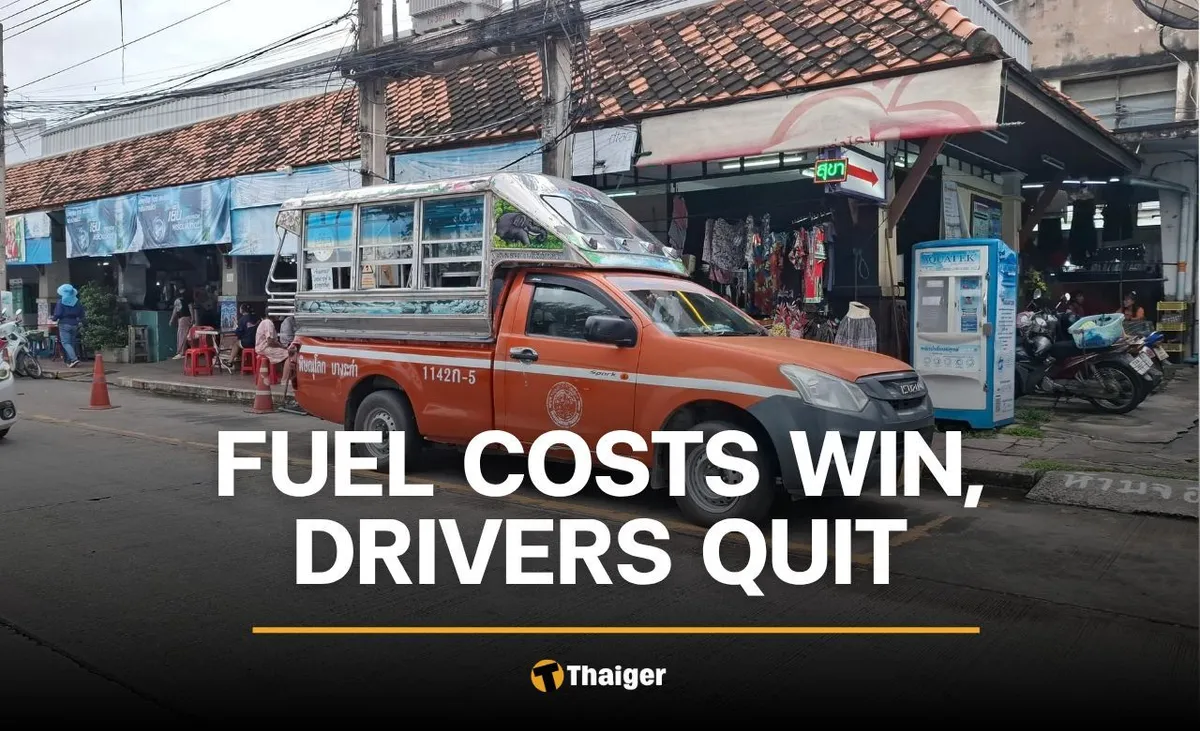
A significant increase in diesel fuel prices is forcing veteran songthaew drivers on the Phitsanulok to Bang Rakam route to consider ceasing operations by the end of the year. This difficult decision stems from a combination of escalating fuel expenses and a sharp decline in passenger numbers, making the traditional public transport service increasingly unsustainable.
The Economic Squeeze on Songthaew Operators
The economic reality for these drivers has become dire. Reports indicate that on some individual trips, the cost of fuel alone can reach up to 200 baht. This expenditure is contrasted with meager earnings, which might only amount to 80 baht from a combination of passenger fares and parcel fees. This daily shortfall highlights the severe financial strain under which the drivers are operating. For some, like Pairoh, a long-time driver on the route, the situation has necessitated cutting back to just one trip per day. Even with this reduced schedule, weekly profits can dwindle to as little as 50 to 100 baht, a stark illustration of the profitability crisis.
Declining Fleet and Future Uncertainty
The impact of these economic pressures is visibly evident in the shrinking number of songthaews operating on the Phitsanulok to Bang Rakam route. Historically, this route was served by as many as nine songthaews. However, that number has already fallen to five. Drivers and industry observers express concern that if diesel prices remain at their current elevated levels, more vehicles may be withdrawn from service. This potential further reduction in transport options could have a significant impact on the connectivity between Phitsanulok and Bang Rakam, particularly for residents who rely on this service for commuting and transporting goods.
Broader Context of Fuel Prices in Thailand
The plight of the Phitsanulok songthaew drivers is occurring against a backdrop of generally high fuel prices across Thailand. As of Thursday, September 10, major fuel retailers maintained stable prices at the pump, with leading brands posting remarkably similar rates for various fuel grades. For instance, standard diesel was priced at 39.84 baht per liter across several prominent providers, including Bangchak, PTT, Shell, PT, Susco, and Caltex. Premium diesel variants were priced even higher, often exceeding 49 baht per liter. While some gasohol and petrol options were priced lower, the cost of diesel, the primary fuel for these songthaews, remains a significant operational expense.
Specific Fuel Prices on September 10 (Illustrative Examples):
- Diesel B20: Approximately 34.84 baht per liter
- Diesel (standard): Approximately 39.84 baht per liter
- Premium/Power Diesel: Ranging from 49.25 to 50.05 baht per liter
- Gasohol E20: Approximately 34.09 baht per liter
- Gasohol 95: Approximately 39.09 baht per liter
These figures underscore the substantial cost burden faced by diesel-dependent transport services. While the government has previously implemented measures to cap diesel prices, such as a 15-day cap at 29.94 baht per liter announced earlier, the current sustained high prices are creating an untenable situation for many small-scale operators.
The Role of Passenger Numbers
Compounding the issue of high diesel costs is the observed decline in passenger numbers. Several factors could contribute to this trend, including shifts in transportation habits, economic conditions affecting disposable income, and potentially the availability of alternative transport options. A reduced passenger volume means that even when drivers manage to complete trips, the revenue generated is insufficient to cover the increased operational costs, particularly fuel. This dual challenge of rising expenses and falling income creates a vicious cycle that threatens the viability of the songthaew service on this specific route.
Conclusion: A Looming Service Gap
The potential cessation of the Phitsanulok to Bang Rakam songthaew service represents more than just the loss of a business for a few drivers. It signifies a potential gap in public transportation infrastructure for the communities served. As veteran drivers grapple with the unsustainable economics of soaring diesel prices and dwindling passenger numbers, the future of this vital link between two locations hangs precariously in the balance. Without intervention or a significant shift in market conditions, the iconic songthaews may soon disappear from this route, leaving passengers to seek alternative, potentially less accessible or more expensive, means of travel.
