

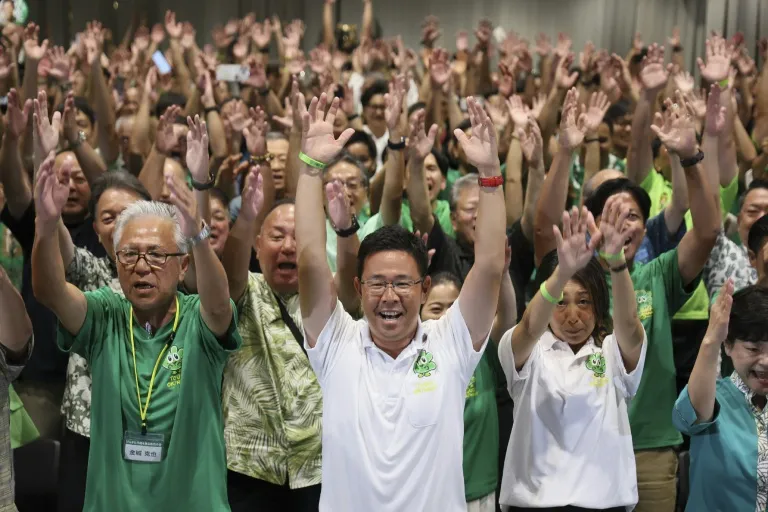
Okinawa voters have elected Genta Koja as their new governor, signaling a shift in the prefecture’s stance on the presence of U.S. military bases. Koja, a 42-year-old newcomer, secured a decisive victory over incumbent Denny Tamaki, who had advocated for relocating the controversial Futenma air base off the island. The election outcome suggests a greater acceptance of the national government’s plan to maintain a significant U.S. military footprint in Okinawa, albeit with relocation within the prefecture.
Okinawa’s Complex Relationship with U.S. Bases
Okinawa, Japan’s southernmost prefecture, hosts the majority of the approximately 54,000 U.S. military personnel stationed in Japan. This concentration of forces has been a source of ongoing tension for decades. Residents have frequently voiced grievances concerning noise pollution, environmental damage, accidents involving military aircraft, and a series of criminal incidents, including sexual assaults, attributed to U.S. servicemen. These issues have fueled a persistent anti-base sentiment among a significant portion of the Okinawan population, who feel they disproportionately bear the burden of hosting U.S. forces.
The Futenma Relocation Debate
Central to the prefecture’s political discourse for years has been the planned relocation of the U.S. Marine Corps’ Futenma air base. The current facility, situated in the densely populated city of Ginowan, has been a focal point of safety concerns. The impetus for its relocation stemmed from a deeply disturbing incident in 1996: the rape of a 12-year-old schoolgirl by U.S. military personnel. This crime ignited widespread public outrage and intensified protests against the U.S. military presence, leading to an agreement between Japan and the United States to move the base.
The relocation plan, which involves moving the base to a less populated area within Okinawa, specifically to the Henoko district in Nago city, was formally approved in 2013 by then-Governor Hirokazu Nakaima. However, the political landscape surrounding the issue proved volatile. The following year, Nakaima lost his bid for re-election to an opponent who campaigned on a platform of opposing the relocation, highlighting the deep divisions within Okinawa on the matter.
Election Results and Implications
In Sunday’s gubernatorial election, Genta Koja garnered 423,124 votes, a substantial margin over his opponent, Denny Tamaki, who received 276,060 votes. Tamaki, seeking his third term, had positioned himself as a defender of Okinawan autonomy and a critic of the central government’s base policies. Koja, conversely, aligned himself with the national government’s approach, accepting the plan to move Futenma within the prefecture while emphasizing the importance of maintaining security ties with the United States.
Koja’s victory is interpreted by many as a mandate for a more pragmatic approach to the base issue, potentially easing tensions between Okinawa and Tokyo. While the fundamental challenges of the U.S. military presence remain, the election results suggest a shift in the prefecture’s political leadership, prioritizing stability and cooperation with the national government over the immediate goal of significantly reducing the U.S. military footprint on the island.
Future Outlook
The election of Genta Koja marks a significant moment for Okinawa. While the deep-seated concerns of Okinawans regarding the U.S. military presence are unlikely to disappear overnight, the new governor’s platform suggests a willingness to engage with the existing framework for base relocation. The coming years will likely see continued efforts to balance security needs with the demands for peace and environmental protection within the prefecture. The focus may shift towards ensuring the relocation process is conducted with greater consideration for local concerns and minimizing the impact on residents’ daily lives, even as the core U.S. military presence continues.
