

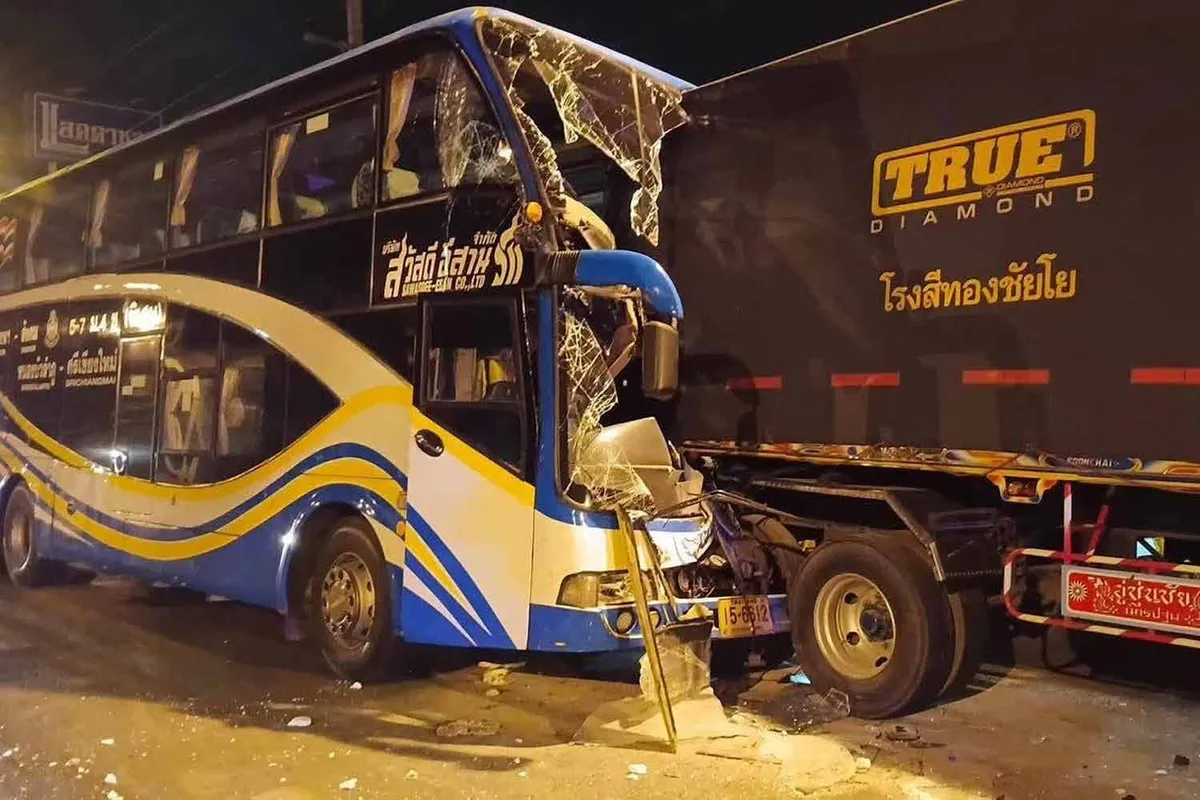
Fifteen people sustained injuries when a passenger bus collided with a parked trailer truck in the early hours of Tuesday morning. The accident occurred on Highway 201 in the Nong Na Saeng sub-district, approximately 3.5 kilometers from the Muang district center. The impact significantly damaged the front of the bus, which was registered in Bangkok, as it struck the rear of the stationary truck.
Accident Details and Passenger Accounts
The injured individuals were transported to Chaiyaphum Hospital, with most reporting injuries to their limbs and waists. One passenger, identified as 65-year-old Supachai Kaeosa-ard, recounted that the bus had departed from Mo Chit terminal in Bangkok at 8:30 PM on Monday. Its intended destination was Nong Khai province. According to Kaeosa-ard, the bus operated without any scheduled stops or driver changes during its journey. The collision took place while the majority of passengers were asleep.
Driver Statements
The bus driver, 48-year-old Preecha Marit, stated that the bus was carrying 35 passengers at the time of the incident. He maintained that he did not see the trailer truck parked on the roadside and denied that he had been dozing off prior to the crash. The driver of the trailer truck, 33-year-old Thaweesak Phuttharaksa, explained that his vehicle was loaded with steel rods and was en route from Lop Buri. He had pulled over to the side of the road to take a rest approximately 30 minutes before the collision occurred.
Road Safety Considerations
This incident highlights critical issues concerning road safety, particularly for long-distance bus travel. Factors such as driver fatigue, adherence to rest break regulations, and the visibility of parked vehicles on highways are paramount. The circumstances surrounding the crash, including the lack of reported stops or driver rotation on a long journey, warrant attention from transport authorities to ensure passenger safety standards are met.
Driver Fatigue and Regulations
Regulations governing commercial drivers, especially those operating long-haul routes, typically mandate specific rest periods to mitigate the risks associated with fatigue. These regulations are designed to prevent accidents caused by impaired alertness and reaction times. Investigations into such incidents often examine whether drivers adhered to these mandated rest periods and if any contributing factors, such as extended driving hours or insufficient breaks, were present.
Visibility of Stationary Vehicles
The positioning and visibility of parked vehicles on highways also pose a significant safety risk. Drivers are expected to maintain vigilance and be aware of their surroundings, including any obstacles on the road. However, factors such as inadequate lighting, poor weather conditions, or the placement of a vehicle in a blind spot can reduce visibility and increase the likelihood of a collision. The truck driver’s statement that he had parked for a rest indicates the vehicle was stationary, raising questions about its visibility to oncoming traffic in the dark.
Passenger Safety on Long Journeys
The experience of the passengers, many of whom were asleep at the time of the impact, underscores the vulnerability of those traveling on long-distance routes. The reported lack of stops or driver changes suggests a potentially demanding schedule for the driver and a continuous journey for passengers. Ensuring that bus companies implement robust safety protocols, including mandatory driver rest periods and contingency plans for driver fatigue, is essential for protecting passengers.
Conclusion
The collision on Highway 201 serves as a stark reminder of the ongoing challenges in maintaining road safety. While the immediate focus is on the recovery of those injured and the investigation into the specific causes of this accident, the broader implications for driver fatigue management, roadside parking regulations, and overall passenger transport safety remain critical areas for continuous improvement and enforcement.
