

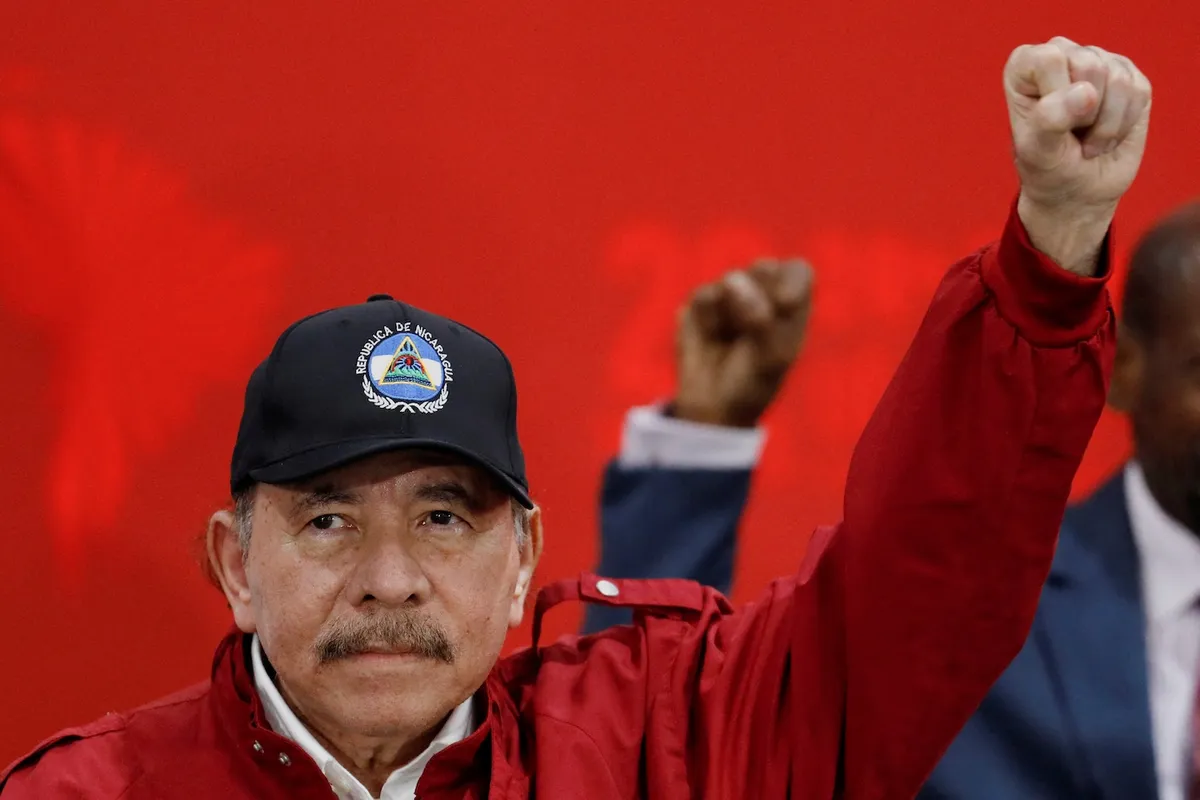
Nicaragua’s National Assembly has advanced a significant constitutional reform that effectively bars opposition parties from participating in future elections and extends the terms of elected officials, including the president, vice president, and military and police leadership. The legislative changes, championed by President Daniel Ortega and Vice President Rosario Murillo, cleared their initial vote in Managua on Tuesday. A second vote, required by Nicaraguan law for constitutional amendments, is slated to begin on January 18.
Entrenching Presidential Power
The reform mandates that constitutional changes must receive approval in two separate legislative sessions before they can take effect. Beyond barring opposition participation, the amendment also extends the terms for co-presidents and other elected officials, as well as the heads of the army and police, from six to seven years. This move further solidifies the grip on power held by the ruling Sandinista National Liberation Front (FSLN) party.
International Condemnation
The legislative actions have drawn sharp criticism from international bodies and foreign governments. U.S. Secretary of State Marco Rubio urged global partners on Wednesday to cease normal relations with Nicaragua, stating that the National Assembly, which he described as controlled by Ortega and Murillo, had further eroded democratic pretense. Rubio asserted that the constitution was rewritten to entrench their “illegitimate dynasty” and indefinitely deny Nicaraguans free and fair elections.
These developments follow President Ortega’s July 19 statement indicating that “there won’t be any more elections” in Nicaragua, a move he framed as a measure to prevent the opposition from “seizing the government.” This announcement had already prompted criticism from several Central American nations, as well as Bolivia, Brazil, and Chile, who viewed it as a democratic regression. In response to the escalating political situation, Panama announced it had withdrawn its ambassador from Managua.
Historical Context of Electoral Changes
This latest reform builds upon previous electoral adjustments made by the ruling party. In 2024, a reform extended the presidential term from five to six years and elevated Vice President Murillo to the co-presidency. That same year, presidential elections originally scheduled for the end of 2024 were postponed until late 2027. President Ortega, a former leftist guerrilla leader, began his fourth consecutive term in January 2022, following a contentious election held the previous November.
Ortega, who played a role in overthrowing the Somoza dictatorship in the late 1970s, has led Nicaragua for nearly two decades, making him the longest-serving leader in the Americas. His Sandinista movement was once hailed by global leftist groups as a champion of democracy, though it was also denounced by the United States during its initial rise to power.
Deepening Political Crisis
Nicaragua has been grappling with a profound political crisis since April 2018. The crisis erupted when government forces violently repressed widespread anti-government protests, resulting in over 300 deaths, thousands of injuries, and triggering a significant exodus of Nicaraguans seeking refuge abroad. The current reforms appear to further deepen this ongoing political instability and restrict democratic freedoms within the nation.
