

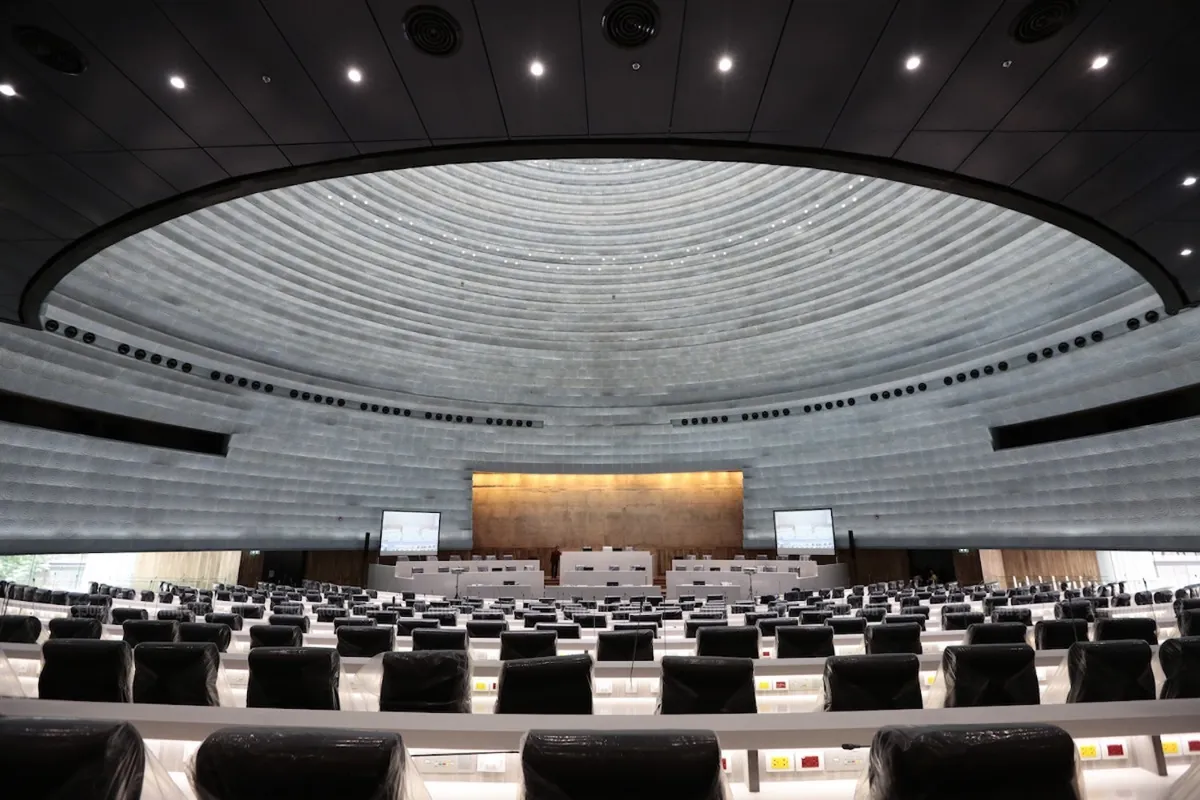
The Senate has passed amendments to a bill aimed at promoting a peaceful society, notably excluding individuals charged under the lese-majeste law from its amnesty provisions. The bill, formally known as the Peaceful Society Promotion Bill, will now return to the House of Representatives for further deliberation after senators introduced significant changes to the version previously approved by the lower house.
Key Amendments to the Amnesty Bill
The revised bill covers politically linked offenses committed between January 1, 2005, and July 16, 2025. The Senate approved the amended bill with a substantial majority, receiving 103 votes in favor, three against, and 22 abstentions. A Senate committee, led by Chatthawat Saengphet, was responsible for incorporating several modifications.
Lese-Majeste Law Exclusion
A significant change bars offenders charged under Section 112 of the Criminal Code, the lese-majeste law, from benefiting from the case-termination process. This exclusion applies even if the offense was committed before the offender turned 18, provided they were 18 or older at the time of the offense, regardless of subsequent remorse. Furthermore, senators stipulated that individuals under 18 charged with lese-majeste offenses would also be ineligible for amnesty under this bill.
Provisions for Juveniles
While excluding lese-majeste offenders, the bill allows courts and prosecutors discretion in handling juveniles accused of other political offenses. Senator Paophan Chobnamtan, a committee member, explained that such cases would utilize measures outlined in the Juvenile and Family Court Act. If no charges have been formally filed, the case would be terminated. For cases already in court, judgment could be suspended if the juvenile demonstrates remorse and adheres to a rehabilitation plan.
Expanded Committee Powers and Preamble Revisions
The Senate committee also revised the bill’s preamble and expanded the authority of the proposed Peaceful Society Promotion Committee. The committee’s powers now extend beyond requesting documents to include the acquisition of physical evidence. Its reports are to be submitted separately to both the House and the Senate. To encourage good faith participation, members of the committee will be granted legal protection.
Addressing Election Offense Concerns
During the Senate debate, questions arose regarding whether the bill’s annex, which lists 29 laws eligible for amnesty, could inadvertently benefit individuals accused of election-related offenses, particularly concerning recent senator selection processes. Committee secretary Senator Phisit Apiwatthanaphong addressed these concerns, asserting that the annex’s reorganization did not alter its substance. He emphasized that offenses related to election fraud, unfair practices, or false qualifications are explicitly excluded, meaning the bill would not apply to ongoing investigations by the Election Commission into alleged collusion or election irregularities.
Alternative Measures for Excluded Offenders
The Senate adopted a committee recommendation to consider alternative measures for politically related offenders who are excluded from the amnesty. The Peaceful Society Promotion Committee is tasked with proposing options for sentence administration or detention arrangements to the justice minister and the Department of Corrections. This initiative aims to foster national reconciliation while upholding human rights and democratic principles.
Conclusion
The Senate’s amendments to the Peaceful Society Promotion Bill represent a significant step in the legislative process, particularly with the clear exclusion of lese-majeste offenders. The bill’s return to the House of Representatives ensures further scrutiny and potential debate on these critical modifications, as lawmakers navigate the complex path toward reconciliation and societal peace.
