

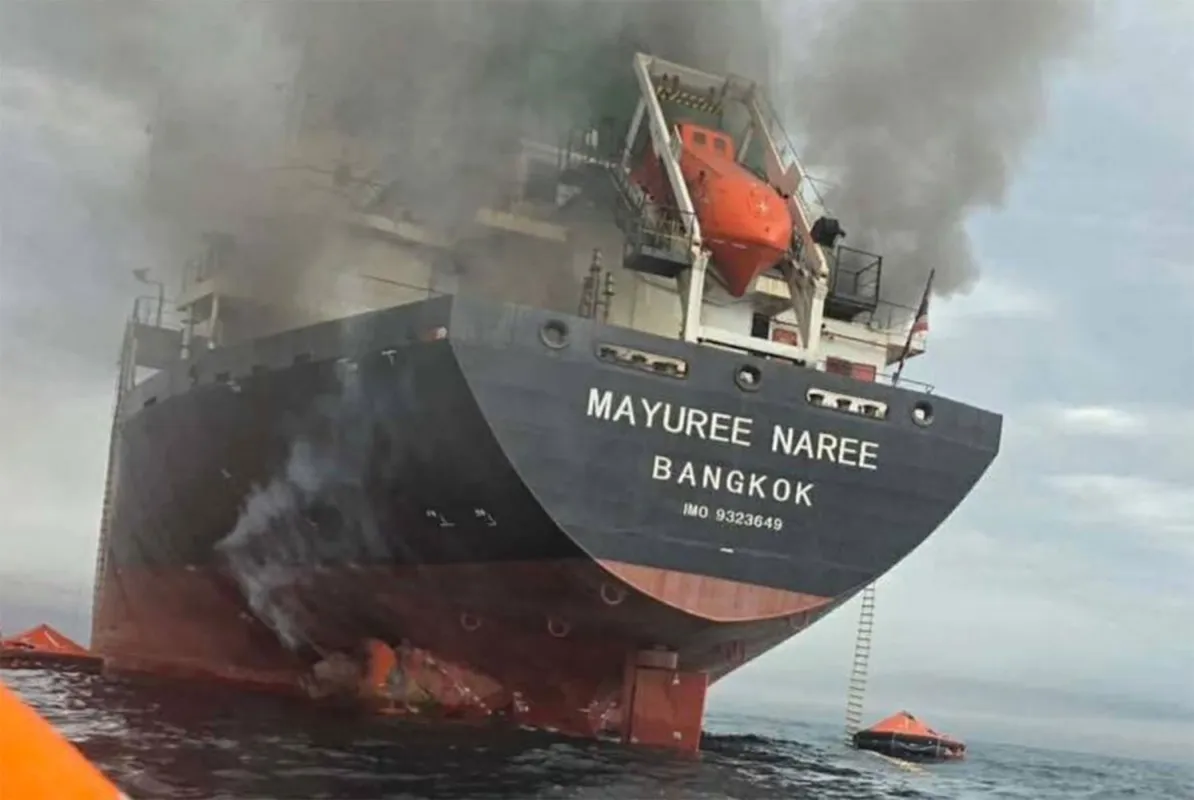
Three Thai sailors who survived a deadly attack on their vessel in the Strait of Hormuz are seeking substantial damages from companies and individuals they hold responsible for the incident. The sailors claim their employers knowingly placed them in a high-risk zone, leading to severe psychological trauma and rendering them unable to continue their maritime careers. The legal action targets entities associated with the ship’s owner, Precious Shipping Plc, and its captain.
Strait of Hormuz Attack and Its Aftermath
The incident occurred on March 11 when the Thai-flagged vessel, Mayuree Naree, was struck by two projectiles while transiting the Strait of Hormuz, a critical chokepoint for global oil and gas shipments. The attack resulted in the tragic deaths of three crew members, with 20 others being rescued. This event took place in a period of heightened tension in the region, following retaliatory strikes between the United States and Israel against Iran on February 28. Iran’s Revolutionary Guards had previously issued warnings that vessels traversing the strait could be targeted.
Legal Action and Claims for Compensation
Lawyer Kunpat Singhathong, representing the affected sailors, stated that each individual is seeking at least 1 million baht in damages. The core of their claim is that they were deliberately sent into a dangerous area without adequate safety measures, jeopardizing their lives and ultimately their ability to work. Mr. Singhathong indicated that all three surviving sailors have been diagnosed with post-traumatic stress disorder (PTSD), significantly impacting their future employment prospects as seafarers. While medical reports substantiating these diagnoses were not publicly disclosed, the lawyer emphasized the severity of their condition.
To date, the sailors have reportedly received two months’ wages and compensation for personal belongings lost during the attack. However, one former crewman, Noppadon Wongsuvan, 33, described the compensation as insufficient and not aligned with international standards. He conveyed that the company’s response to further requests was dismissive, suggesting that the provided compensation was already generous.
Impact on the Sailors’ Lives
The psychological toll of the attack has been profound. Panithi Tumkaew, 43, another plaintiff and an 11-year veteran with the company, described experiencing debilitating fear triggered by loud noises, which has made it impossible for him to return to work. He shared that he is currently relying on sedatives to manage his condition and achieve sleep, highlighting the long-term impact of the trauma.
Precious Shipping, in a statement to the Stock Exchange of Thailand on March 11, indicated that the Mayuree Naree had implemented enhanced security measures and maintained communication with maritime security coordination centers prior to the incident. The company has reportedly informed Mr. Kunpat that the compensation paid to the sailors covers their entitlements and that they do not intend to assume further responsibilities. This stance has fueled the sailors’ determination to pursue legal recourse to obtain what they deem fair compensation for their suffering and lost livelihoods.
The Strait of Hormuz: A Vital and Volatile Waterway
The Strait of Hormuz, a narrow waterway connecting the Persian Gulf to the Gulf of Oman, is one of the world’s most strategically important maritime passages. Approximately 30% of the world’s seaborne oil trade passes through this strait daily, making it a critical artery for global energy markets. Its strategic importance, however, also makes it a frequent site of geopolitical tension and naval incidents. The attacks on vessels in the strait underscore the inherent risks faced by seafarers operating in such volatile regions, especially during periods of heightened international conflict.
Legal Avenues and Future Outlook
The sailors’ pursuit of damages represents a significant legal challenge, aiming to hold ship owners and operators accountable for ensuring the safety of their crews in high-risk maritime zones. The case could set a precedent for compensation and safety standards for seafarers operating in conflict-affected waters. As the legal proceedings unfold, the focus will remain on the evidence presented regarding the employers’ awareness of the risks and the adequacy of the safety measures in place. The sailors’ claims highlight the critical need for robust safety protocols and fair compensation for maritime workers who face extreme dangers in their profession.
Conclusion
The legal battle initiated by the three Thai sailors injured in the Strait of Hormuz attack brings to the forefront critical issues of maritime safety, employer responsibility, and the psychological well-being of seafarers. Their demand for damages reflects the profound and lasting impact of the incident on their lives and careers. As the case progresses, it underscores the importance of international maritime law and the need for stringent safety measures to protect lives in one of the world’s most crucial and perilous shipping lanes.
