

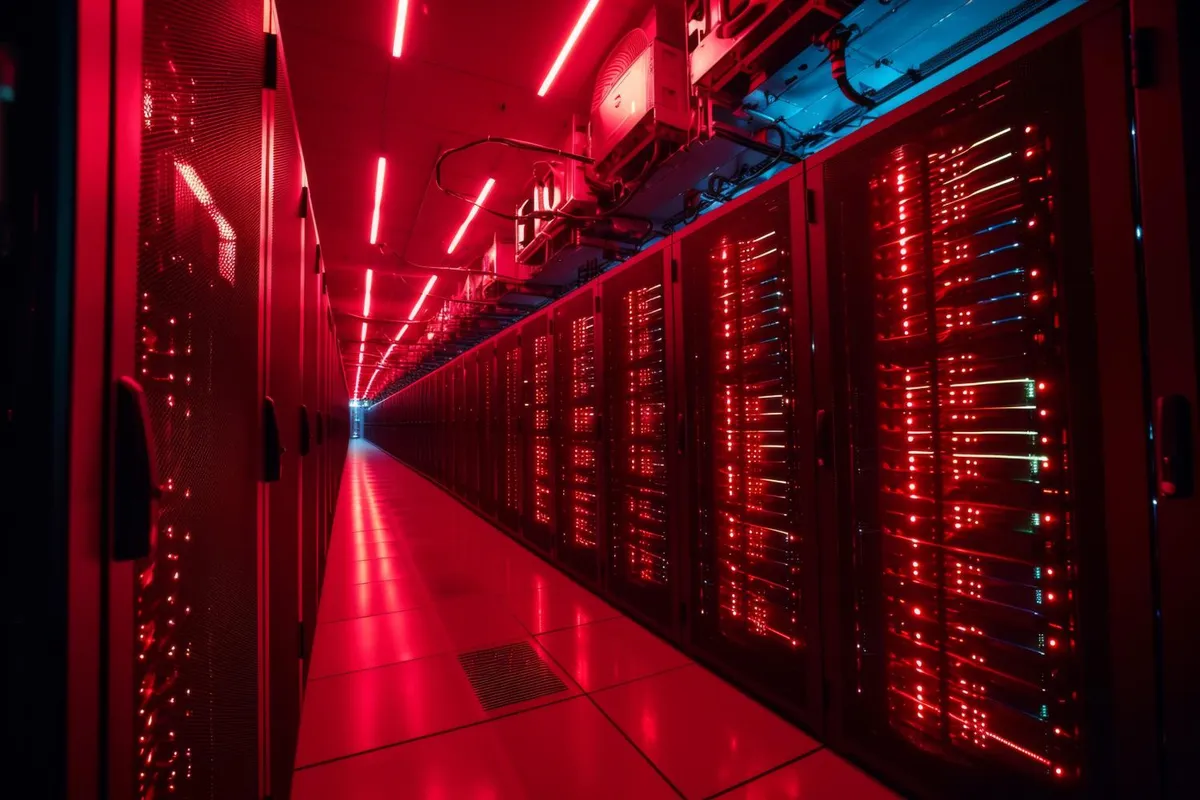
The data center industry in Thailand is poised to significantly contribute to the nation’s economy, with projections indicating a substantial rise in its direct Gross Domestic Product (GDP) share and substantial capital inflows. According to the Thailand Data Centre Association, the sector’s GDP contribution could climb from approximately 0.93% to 2.47% within five years. This growth is expected to be fueled by around 2 trillion baht in capital investment, leading to considerable fiscal revenue and broader economic benefits for the private sector.
Projected Growth and Realistic Capacity
The association estimates that Thailand’s operational data center capacity will expand dramatically, from about 1,400 megawatts (MW) in 2026 to approximately 3,700MW by 2030. This represents a robust compound annual growth rate of 27.2%, as detailed by Supparat Singhara na Ayutthaya, general manager of DAMAC Digital and vice-chairman of the association. He clarified that this projected 2030 figure is significantly lower than the widely reported, and often misunderstood, headline figure of nearly 30,000MW in power reservation requests.
Clarifying Power Reservation Figures
Mr. Supparat emphasized that the large power reservation number does not reflect actual, committed electricity demand. Instead, it encompasses a wide range of requests, including speculative inquiries, duplicated applications, and early-stage discussions that may never materialize into operational data centers. To address this, the association supports the government’s initiative to implement firmer reservation commitments and require deposits. This measure aims to ensure that only serious investors commit to the capacity they request, effectively filtering out non-committal applications.
Abundant Power Capacity and Economic Opportunity
Thailand currently possesses ample electricity generation capacity, with roughly 53 gigawatts (GW) of installed capacity compared to a peak demand of about 35.9GW. This leaves a healthy reserve margin of approximately 27%. Even with the projected increase in data center load to 3,700MW by 2030, the total demand would remain well within the nation’s existing power generation headroom. This surplus capacity presents a unique opportunity to monetize idle resources.
Rather than viewing data centers as a strain on national resources, the association advocates for them as a means to convert underutilized generation capacity into tangible economic benefits. “Unused generation is a national asset that earns little while sitting idle; data centers can convert that surplus into revenue, foreign exchange and fiscal receipts,” Mr. Supparat explained. This perspective reframes data centers as a tool for economic revitalization, leveraging existing infrastructure.
Addressing Practical Constraints: Location and Fuel Mix
Despite the overall power surplus, the Thailand Data Centre Association identifies two key practical challenges: location and fuel mix. The national surplus does not guarantee that electricity is readily available in all desired locations for data center development, particularly in key industrial zones like the Eastern Economic Corridor. To overcome this, the association advocates for investment in a more sophisticated and dynamic electricity grid capable of efficiently directing power to areas with genuine demand and improving overall network distribution balance.
The Role of Data Centers in Renewable Energy Transition
The second significant consideration is Thailand’s current reliance on natural gas for power generation. The association suggests that large, creditworthy data center operators can play a crucial role in accelerating the transition towards renewable energy sources. By entering into long-term power purchase agreements (PPAs) for renewable energy, these operators can provide the stable, firm demand needed to make utility-scale solar, wind, and energy storage projects more financially viable. Such large-scale renewable projects, in turn, have the potential to lower the per-unit cost of clean energy, benefiting the broader economy.
The association’s stance is clear: data center demand should not be perceived as a threat to Thailand’s power system. Instead, it should be viewed as an opportunity to utilize existing surplus power, justify significant investments in renewable energy infrastructure, and potentially reduce electricity costs for both households and businesses if the gains from the power sector are reinvested into the economy.
Regional Competition and Thailand’s Digital Momentum
Thailand faces intense regional competition in attracting foreign investment, with countries like Vietnam experiencing record foreign investment, largely driven by its manufacturing sector. In this competitive landscape, data centers represent one of the few high-value sectors where Thailand is currently demonstrating significant growth momentum. In 2025, the digital sector emerged as the largest recipient of applications submitted to the Board of Investment (BoI), attracting approximately 746 billion baht, with a substantial portion linked to data center development.
Dedicated data center applications saw a remarkable increase, rising more than sevenfold from roughly 99 billion baht in 2024 to 728 billion baht in 2025. The first quarter of 2026 continued this trend, with data centers accounting for the vast majority of a record-breaking application level exceeding 1 trillion baht. This surge positions Thailand favorably against regional competitors, such as Malaysia, which attracted over $23 billion from North American hyperscalers in the first ten months of 2024, and Indonesia, whose hyperscale market is projected to nearly double to approximately $8 billion by 2030. Thailand is currently benefiting from spillover demand as operators encounter power, land, and cost challenges in established markets like Singapore and Malaysia. However, this advantage is contingent upon Thailand’s readiness in terms of power infrastructure.
Enhancing Local Content and Supply Chain Development
Beyond attracting investment, Mr. Supparat highlighted the importance of capturing more of the data center supply chain within Thailand. The construction and operation of data centers require substantial mechanical and electrical equipment, much of which is currently imported. The association poses a critical question for policymakers: why are Thai companies not supplying a larger share of these components, especially given the openness of data center operators to local sourcing? The primary constraint, according to the association, lies in domestic supply capabilities, not market demand.
Adopting Localization Models for Growth
Drawing inspiration from localization models employed by Japanese and Chinese investors, and referencing a November 2025 regulation in Selangor, Malaysia, which mandates at least 30% local content for new data centers, Thailand could adopt and enhance a similar approach. This could involve establishing a formal local content framework coupled with targeted incentives for Thai-owned manufacturers specializing in critical data center and AI infrastructure equipment. The Board of Investment (BoI) has already begun integrating data center incentives with criteria such as Thai employment, SME development, energy efficiency, and domestic ecosystem building. This strategic direction allows Thailand to cultivate a robust local technology sector within the global AI infrastructure supply chain.
By focusing on these areas – ensuring power readiness, optimizing grid infrastructure, encouraging renewable energy integration, and fostering local supply chain development – Thailand can solidify its position as a leading data center hub in the region and maximize the economic benefits of this rapidly growing industry.
