

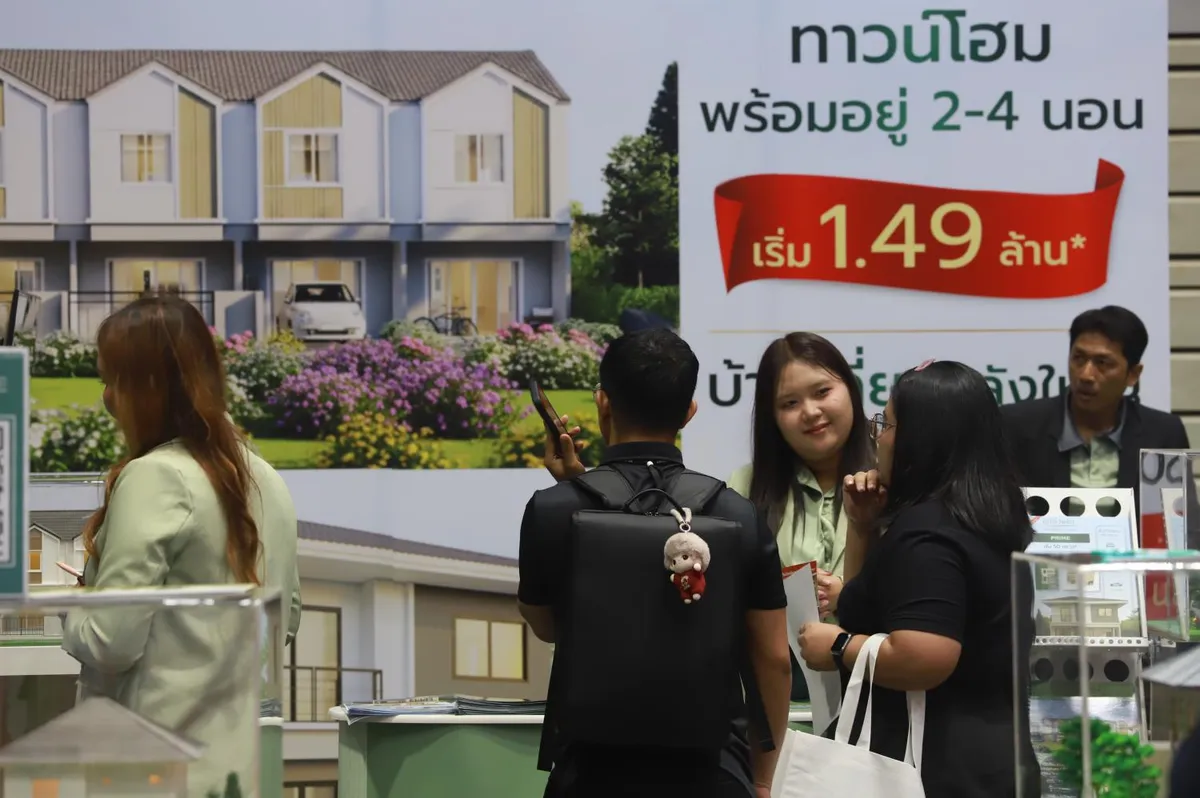
Thailand’s mortgage lending is poised for a slow recovery throughout 2026, with experts predicting a continued struggle due to persistent challenges in purchasing power, high household debt, and cautious lending practices. The outlook suggests that the residential property market will likely remain subdued, with minimal growth expected in outstanding mortgage loans.
Subdued Growth in Mortgage Lending
Recent data from Kasikorn Research Center (K-Research) indicates a fragile recovery in mortgage lending. While outstanding mortgage loans at commercial banks saw a modest 1% year-on-year increase in March and April 2026, marking the first expansion since late 2024, this rebound is viewed with caution. Analysts attribute this growth partly to a low base effect, as many potential homebuyers had postponed purchases in the previous year, anticipating government stimulus measures.
These government initiatives, including reduced transfer and mortgage registration fees and a temporary easing of loan-to-value (LTV) regulations, did provide some support to market activity. However, K-Research points out that new mortgage lending figures may overstate genuine housing demand. A significant portion of the reported lending growth stems from refinancing, where borrowers switch lenders or restructure existing debts rather than purchasing new properties.
During the first four months of 2026, refinancing constituted approximately 35.2% of all new mortgage disbursements. This trend highlights that the expansion in loan volumes does not necessarily translate to increased home sales. Furthermore, average loan-to-value ratios have decreased for both lower and higher-priced properties, signaling that banks remain conservative in their lending decisions, even with relaxed LTV rules.
Persistent Economic Headwinds
The cautious lending environment, coupled with slowing economic growth and weak household financial positions, continues to restrict access to financing for many potential borrowers. The overall economic climate is not conducive to a robust recovery in the housing market.
For the entirety of 2026, K-Research forecasts that mortgage lending within Thailand’s banking sector will likely contract by 0.5% or remain flat, a slight improvement from the 0.5% decline observed in 2025. This subdued outlook is underpinned by several critical factors:
- Weak Domestic Purchasing Power: Consumers’ ability to afford new homes is significantly hampered.
- Persistently High Household Debt: Elevated debt levels strain borrowers’ capacity to take on new loans.
- Pressure on Debt Servicing: The ability of households to manage existing and new debt obligations remains a concern.
Impact of LTV Regulation Extensions
The extension of relaxed LTV regulations until the end of June 2027 is expected to offer some relief. This measure is intended to help property developers manage unsold inventory and provide a degree of support to the sector. By reducing down-payment requirements, the extended regulations offer more flexibility to financially stable buyers who can demonstrate adequate repayment capacity.
However, experts caution that this extension alone is unlikely to catalyze a substantial upturn in mortgage lending. The primary determinants of loan approvals remain a borrower’s income and overall financial strength, rather than the LTV ceilings. Therefore, while helpful, the LTV relaxation is not a silver bullet for the market’s challenges.
The Critical Role of Confidence and Affordability
Industry leaders emphasize that restoring consumer confidence and improving household financial health are paramount for a sustainable recovery in Thailand’s housing finance market. Pitipat Preedanont, president of the Thai Condominium Association, highlighted the alarming rate of mortgage rejections.
During the first half of 2026, Mr. Preedanont reported that mortgage rejection rates have been exceptionally high, with 40-50% of home loan applications being denied. This situation prevents even qualified buyers from completing property transfers. He noted instances where units were resold multiple times due to the inability of initial buyers to secure financing, underscoring mortgage rejections as the industry’s most significant obstacle.
Adding another layer to the problem, Kessara Thanyalakpark, managing director of Sena Development, identified a growing trend of “self-rejection.” This occurs when buyers withdraw from a purchase shortly before the transfer, even after obtaining mortgage approval. Ms. Thanyalakpark stated that self-rejections now account for roughly half of all failed property transfers, surpassing the rate of bank loan rejections, which stand at approximately 40%.
The consensus among industry observers is that rebuilding consumer confidence is as crucial as enhancing access to mortgage finance. “The real issue is confidence,” Ms. Thanyalakpark remarked. “Until consumers feel secure about their financial future, mortgage approvals alone will not revive the housing market.” This sentiment underscores the need for broader economic stability and improved consumer sentiment to drive a genuine recovery in home loan demand and the broader property sector.
Conclusion
The trajectory for Thailand’s home loans in 2026 remains challenging, characterized by cautious optimism at best. While some government measures aim to stimulate the market, fundamental issues of weak purchasing power, high debt, and low consumer confidence continue to cast a shadow. A significant and sustained recovery will likely depend on a broader improvement in economic conditions and a restoration of consumer financial security, rather than solely on adjustments to lending regulations.
