

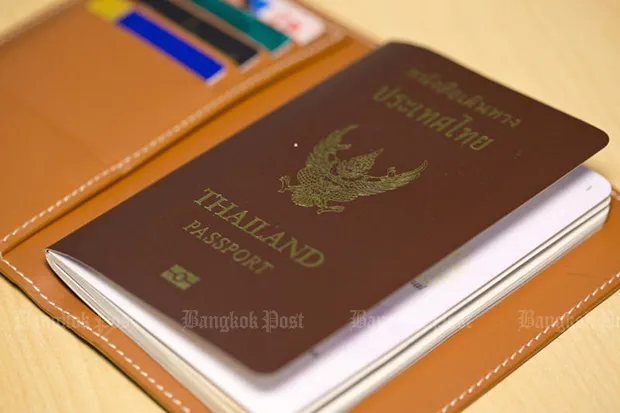
Thailand’s passport has seen a decline in its global mobility ranking, now positioned 63rd worldwide according to the latest Henley Passport Index. This marks a two-place drop from the previous year’s assessment. The index, a widely recognized measure of travel freedom, evaluates passports based on the number of destinations their holders can access without a prior visa.
Global Mobility and Thailand’s Position
Holders of a Thai passport currently have visa-free or visa-on-arrival access to 77 destinations. While this offers a degree of travel convenience, it falls significantly short when compared to leading nations. For instance, passport holders from Singapore, which consistently ranks at the top of global mobility indexes, can enter 192 destinations visa-free. This stark difference highlights the varying levels of international access afforded by different national documents.
Regional Standing within ASEAN
Within the Association of Southeast Asian Nations (ASEAN), Thailand’s passport ranks fifth. This places it behind several regional neighbors in terms of international travel accessibility. The leading ASEAN nations in this year’s index are:
- Singapore
- Malaysia
- Brunei
- East Timor
The specific rankings for other ASEAN countries, from highest to lowest visa-free access, are:
- Singapore: 192 destinations
- Malaysia: 183 destinations
- Brunei: 163 destinations
- East Timor: 93 destinations
- Thailand: 77 destinations
- Indonesia: 70 destinations
- Philippines: 65 destinations
- Vietnam: 48 destinations
- Cambodia: 47 destinations
- Laos: 47 destinations
- Myanmar: 43 destinations
Understanding the Henley Passport Index
The Henley Passport Index is an annual report that ranks all 199 passports globally. Its methodology is based on exclusive data from the International Air Transport Association (IATA), which maintains the world’s largest and most accurate travel information database. The index calculates a “global access score” for each passport, reflecting the number of destinations that do not require a visa for entry.
The index provides a comprehensive overview of global travel freedom, allowing individuals and governments to assess the relative strength and accessibility of different national passports. Factors influencing a passport’s rank include diplomatic relations between countries, reciprocal visa agreements, and international security considerations.
Global Leaders and Laggards
The Singapore passport has held the top position globally since 2004, a testament to its nation’s strong international standing and diplomatic ties. In the past, Singapore shared the top spot with Japan, though the Japanese passport has since seen a slight decline in its ranking, now holding the second position.
The index also highlights significant disparities in global access. For example, the United States passport is ranked 10th, offering considerable travel freedom. In contrast, countries experiencing geopolitical instability or facing international sanctions often have passports with much lower rankings. Afghanistan, for instance, remains at the bottom of the index at 104th place, indicating extremely limited visa-free travel options for its citizens.
Implications of Passport Rankings
A passport’s ranking on the Henley Index has several implications. For individuals, a higher-ranked passport can mean easier and more frequent international travel for tourism, business, or education, often without the time-consuming and costly process of applying for visas. For nations, a strong passport ranking can be seen as an indicator of positive international relations and global integration.
Conversely, a lower ranking can present challenges. It may reflect diplomatic isolation, security concerns, or a less developed international presence. For citizens of countries with lower-ranked passports, international travel can be more complex, requiring more extensive planning and adherence to visa application procedures.
Conclusion
The recent Henley Passport Index report indicates a slight decrease in Thailand’s global travel mobility. While holding a respectable position within ASEAN, the Thai passport offers access to fewer destinations compared to leading regional and global passports. The index serves as a valuable tool for understanding the dynamics of international travel access and the factors that contribute to a passport’s strength on the world stage.
