

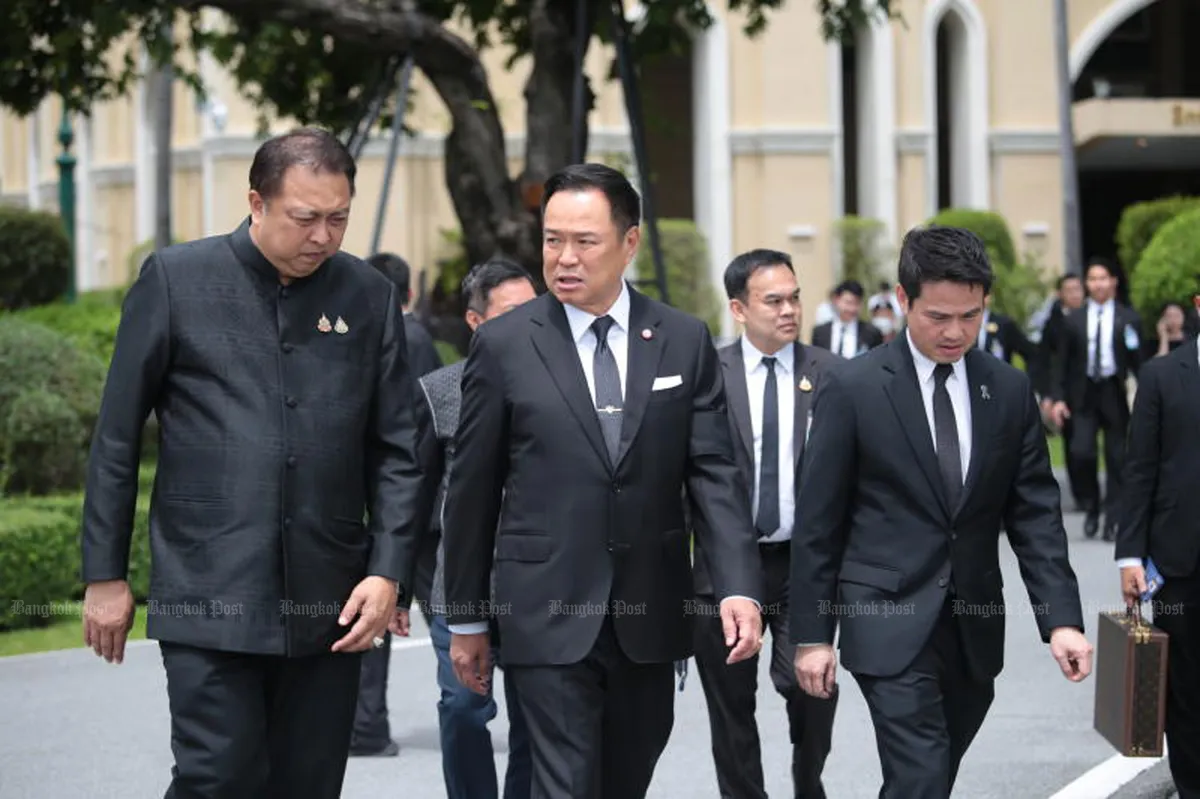
Thai Prime Minister Outlines Ambitious Reform Agenda to Boost Investment
During a recent address to the Joint Foreign Chambers of Commerce in Thailand (JFCCT), Prime Minister Anutin unveiled a comprehensive strategy aimed at bolstering the nation’s economic competitiveness and attracting foreign investment. The event, attended by approximately 400 delegates including government officials, foreign chamber leaders, business representatives, and ambassadors, focused on “Thailand 2026: A Vision for Competitiveness, Investment and a Future-Ready Economy.” The Prime Minister emphasized a shift from uncertainty to confidence through reform and resilience.
Addressing Global Economic Headwinds
Prime Minister Anutin acknowledged that recent interactions with global business leaders consistently highlight “uncertainty” as a dominant characteristic of the current economic landscape. This uncertainty stems from evolving global supply chains, rapid technological advancements, and escalating geopolitical tensions, all of which significantly influence international investment decisions.
He stressed that the Thai government understands that a nation’s competitiveness is not solely determined by costs but also by its capacity to adapt to the dynamic global economic environment. To address these challenges and foster growth, the administration has outlined four core strategies.
Four Pillars of Economic Strategy
1. Enhancing Business Friendliness
The government is actively working to position Thailand as a more attractive destination for businesses. Key initiatives include implementing regulatory reforms, expanding digital public services, streamlining investment approval processes, and improving inter-agency coordination. A notable program, Thailand FastPass, has already facilitated the approval of 25 projects valued at over 223 billion baht by expediting licensing and approval procedures. Furthermore, a review of business-related legislation is underway to reduce unnecessary restrictions and cultivate a more favorable investment climate.
2. Investing in Future Industries
Thailand is making significant investments in high-growth sectors such as advanced electronics, semiconductors, artificial intelligence (AI), digital services, and clean energy. The objective is to establish the nation as a leading regional hub for these next-generation industries.
3. Prioritizing Human Capital Development
Alongside technological advancement, the government is placing a strong emphasis on human resource development. Prime Minister Anutin stated that the full potential of AI can only be realized with a skilled and adaptable workforce. To achieve this, enhanced collaboration between public agencies, educational institutions, and the private sector is being fostered to cultivate talent aligned with future industry demands.
4. Deepening Global Economic Integration
Thailand is committed to strengthening its ties with the global economy. Recognizing ASEAN as one of the world’s most rapidly expanding regions, Thailand’s strategic geographical location offers a distinct advantage in trade connectivity, investment, and supply chain management. The government is actively pursuing high-standard trade agreements, including ongoing negotiations for a Thailand–European Union Free Trade Agreement. Plans are also in motion to establish Thailand as ASEAN’s primary logistics hub. Additionally, the nation is pursuing membership in the Organisation for Economic Co-operation and Development (OECD).
