

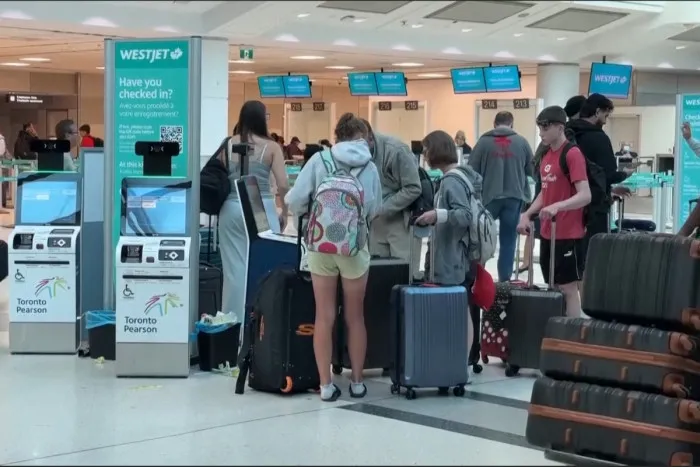
Flight attendants at Canada’s WestJet initiated a strike on Sunday, August 2nd, after contract negotiations with the airline collapsed. This action has led to the grounding of flights, significantly impacting travelers during the peak summer vacation period. The walkout by members of the Canadian Union of Public Employees (CUPE) represents a major disruption for the country’s second-largest airline.
Negotiations Break Down
The strike commenced after extensive bargaining sessions failed to produce an agreement acceptable to both the union and WestJet management. The union has been seeking improved wages, benefits, and working conditions for its members. Specific points of contention have reportedly included issues related to scheduling, pay equity, and job security. Despite efforts from mediators, the parties remained at an impasse, leading the union to authorize a strike vote, which subsequently passed overwhelmingly.
Impact on Travelers
The timing of the strike could not be worse for many Canadians planning summer holidays. WestJet is a major carrier, and the walkout has caused widespread flight cancellations and delays. Passengers holding tickets for affected flights have faced uncertainty and the need to rebook, often with significant inconvenience. The airline has stated it is working to minimize disruptions and assist affected customers, but the reality on the ground is one of significant travel chaos for thousands.
Travelers expressed a range of emotions as the strike loomed and then began. Some voiced solidarity with the flight attendants, understanding the reasons behind their labor action. “I sympathize with the workers,” one traveler told reporters prior to the strike. “They deserve fair treatment and good working conditions.” However, others expressed frustration and concern over the potential impact on essential services and their travel plans. The possibility of an “essential service” being halted raised questions about the balance between workers’ rights and the public’s need for reliable transportation, particularly during a busy travel season.
Union’s Stance and Demands
CUPE, representing over 1,600 WestJet flight attendants, has emphasized that the strike is a last resort. The union has highlighted what it perceives as WestJet’s reluctance to address key issues that affect the daily lives and financial well-being of its members. According to union representatives, the proposed contract did not adequately reflect the rising cost of living or the essential role flight attendants play in ensuring passenger safety and comfort. Key demands have centered on:
- Wage Increases: To keep pace with inflation and industry standards.
- Improved Benefits: Including better healthcare and retirement provisions.
- Scheduling Fairness: Addressing concerns about unpredictable schedules and excessive on-call duties.
- Job Security: Ensuring protections against outsourcing and unfair dismissals.
The union has stated its commitment to reaching a fair agreement but insists that WestJet must come to the table with a genuine willingness to negotiate meaningfully on these critical points.
WestJet’s Position
WestJet has publicly stated its disappointment that an agreement could not be reached and has expressed its commitment to resolving the labor dispute. The airline has indicated that it presented what it considered a fair offer, taking into account the current economic climate and the company’s operational needs. WestJet has also pointed to the potential economic consequences of a prolonged strike, both for the airline and for the broader tourism industry in Canada.
In response to the strike, WestJet has been forced to cancel a significant portion of its flight schedule. The airline is implementing contingency plans to manage the situation, which includes recalling off-duty pilots and management staff to assist with ground operations and customer service. WestJet has urged passengers to check their flight status regularly and has provided information on rebooking and refund options for those affected by cancellations.
Potential for Escalation and Resolution
The strike by WestJet flight attendants adds another layer of complexity to the ongoing challenges faced by the airline industry globally, which is still recovering from the impacts of the COVID-19 pandemic. The disruption at WestJet could potentially influence labor relations at other Canadian airlines if flight attendants see a successful outcome for their WestJet counterparts.
The path to resolution will likely involve renewed negotiations, possibly with the assistance of federal mediators. The duration of the strike remains uncertain, and its impact will depend on the willingness of both parties to compromise. For travelers, the immediate future holds continued uncertainty, with many hoping for a swift resolution that allows normal operations to resume and summer travel plans to proceed without further disruption. The situation underscores the delicate balance between labor rights and the operational demands of the airline industry, especially during periods of high demand.
Conclusion
The strike action by WestJet flight attendants marks a significant labor dispute for Canada’s aviation sector. With flights grounded and thousands of travelers affected, the focus remains on the negotiation table. Both WestJet and CUPE face pressure to reach a resolution that addresses the concerns of the flight attendants while ensuring the airline’s operational stability and the continuity of travel services for the public. The outcome of this dispute will be closely watched by industry stakeholders and the traveling public alike.
