

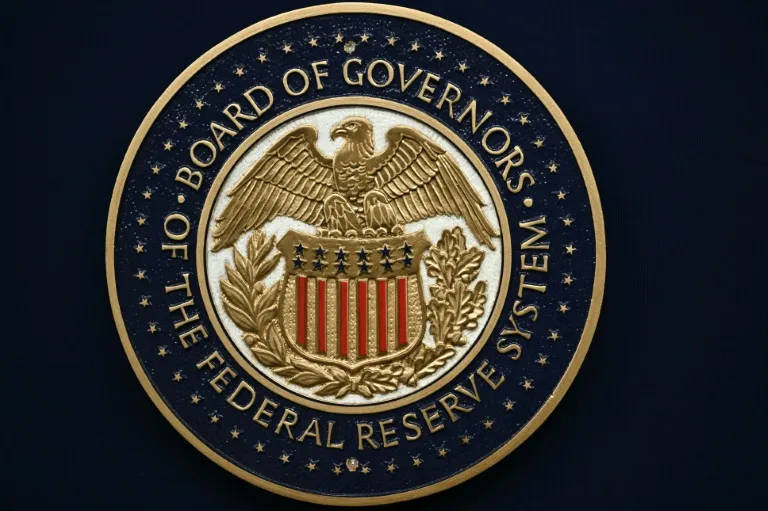
Global stock markets experienced a modest uptick on Wednesday, buoyed by a dip in oil prices and anticipation surrounding the U.S. Federal Reserve’s imminent interest rate decision. Investors are closely watching the Fed, which is widely expected to implement its first borrowing cost increase since 2023, a move that could strengthen the U.S. dollar but potentially face political pressure.
Federal Reserve Poised for Rate Hike Amid Inflationary Pressures
The Federal Reserve is under significant pressure to raise interest rates, a move driven by inflation figures that have consistently exceeded the central bank’s target. Compounding this challenge, geopolitical tensions in the Middle East have kept crude oil prices elevated, with benchmarks like Brent North Sea Crude hovering above $100 a barrel. This confluence of factors has led many analysts to predict a quarter-percentage-point rate increase.
Such a decision, if enacted, would mark the first such adjustment since 2023. The prevailing economic conditions, characterized by persistent price increases and robust job creation data released last week, have strengthened the case for tighter monetary policy. Fed Chairman Kevin Warsh’s remarks at the Jackson Hole symposium last month, which were perceived as hawkish, further solidified expectations for a rate hike.
Deutsche Bank’s Jim Reid noted that forward-looking indicators suggest inflation is likely to remain elevated for an extended period. Markets are also factoring in the possibility of another rate increase before the year concludes, reflecting a broader concern about controlling inflation.
Market Reaction and Investor Sentiment
While a rate hike is largely anticipated and “priced in” by the markets, according to Lale Akoner, Global Market Strategist at eToro, the Fed’s accompanying policy guidance could serve as a more significant catalyst for market movements. The guidance will signal the central bank’s future intentions and its outlook on inflation and economic growth.
Kathleen Brooks, Research Director at XTB, expressed caution, suggesting that any deviation from a hawkish stance could negatively impact bonds and potentially boost gold prices. “If the Fed fails to hike or sounds less hawkish than the market expects, we doubt this will be good for bonds, and instead will boost gold, as the market frets that the world’s most important central bank will lose control of inflation,” Brooks stated.
The yield on the 10-year U.S. Treasury note has climbed above five percent this week, a level not seen since 2007, prior to the global financial crisis. This surge in yields, driven by persistent inflation concerns, has exerted downward pressure on global stock markets.
Oil Prices Ease Amid Shifting Supply Dynamics
Global stock markets found some support on Wednesday as oil prices retreated. This decline followed the release of a U.S. industry report indicating an increase in crude oil stockpiles, suggesting a potential easing of supply constraints. However, oil prices have still seen a significant spike of approximately 20% this month.
The recent surge in oil prices has been attributed to ongoing geopolitical tensions, particularly between the United States and Iran, and disruptions to supply chains. Saudi Arabia was compelled to shut down a key oil pipeline due to conflict with Houthi fighters in Yemen, further contributing to market volatility.
Key commodity prices reported around 13:45 GMT included:
- Brent North Sea Crude: Down 1.0% at $107.64 per barrel
- West Texas Intermediate: Down 1.7% at $104.06 per barrel
Central Banks on the Horizon: Beyond the Fed
Following the Federal Reserve’s decision, attention will turn to the Bank of England on Thursday. The BoE is widely expected to maintain its current benchmark interest rate. Despite high inflation figures, which reached 3.1% in August according to official data released Wednesday, persistent weakness in the UK’s economic growth is anticipated to offset the need for a rate hike. UK inflation remains above the BoE’s two percent target, largely driven by escalating fuel prices.
Looking further ahead, the Bank of Japan is slated to announce its rate decision on Friday. Expectations are for a rate hike, driven by rising inflation within Japan and the central bank’s objective to support the value of the yen.
Geopolitical Developments and Trade Relations
Investors are also monitoring diplomatic developments, particularly an upcoming summit between U.S. President Donald Trump and Chinese counterpart Xi Jinping. Reports suggest that the leaders may discuss potential reductions in tariffs, a development that could ease trade tensions between the world’s two largest economies.
The U.S. President has publicly advocated for lower interest rates to stimulate economic activity, creating an unusual dynamic where he has actively pressured the independent Federal Reserve to reconsider its monetary policy tightening. This stance contrasts with the central bank’s mandate to control inflation.
Global Market Performance Snapshot
As of the latest reporting, major global indices showed varied performance:
- New York – Dow Jones Industrial Average: Up less than 0.1% at 52,119.87 points
- New York – S&P 500: Up 0.2% at 7,602.61 points
- New York – Nasdaq Composite: Up 0.4% at 26,090.39 points
- London – FTSE 100: Up 0.0% at 10,723.12 points
- Paris – CAC 40: Up 0.0% at 8,129.12 points
- Frankfurt – DAX: Up 0.0% at 25,483.54 points
- Tokyo – Nikkei 225: Up 0.7% at 63,923.00 (close)
- Hong Kong – Hang Seng Index: Up 0.2% at 24,713.78 (close)
- Shanghai – Composite: Up 0.7% at 3,891.60 (close)
Currency markets also saw movement, with the Euro trading down against the dollar at $1.1528, and the Pound Sterling also lower at $1.3456. The Euro strengthened slightly against the Pound, trading at 85.75 pence. The Dollar saw gains against the Japanese Yen, trading at 155.28 yen.
Conclusion: Navigating Uncertainty
The global financial landscape remains dynamic, with markets keenly focused on the Federal Reserve’s upcoming policy announcement. Inflationary pressures, geopolitical risks, and central bank actions worldwide are all contributing to a complex environment. Investors will be dissecting the Fed’s guidance for clues on future monetary policy, while also keeping a watchful eye on trade relations and commodity price fluctuations.
