

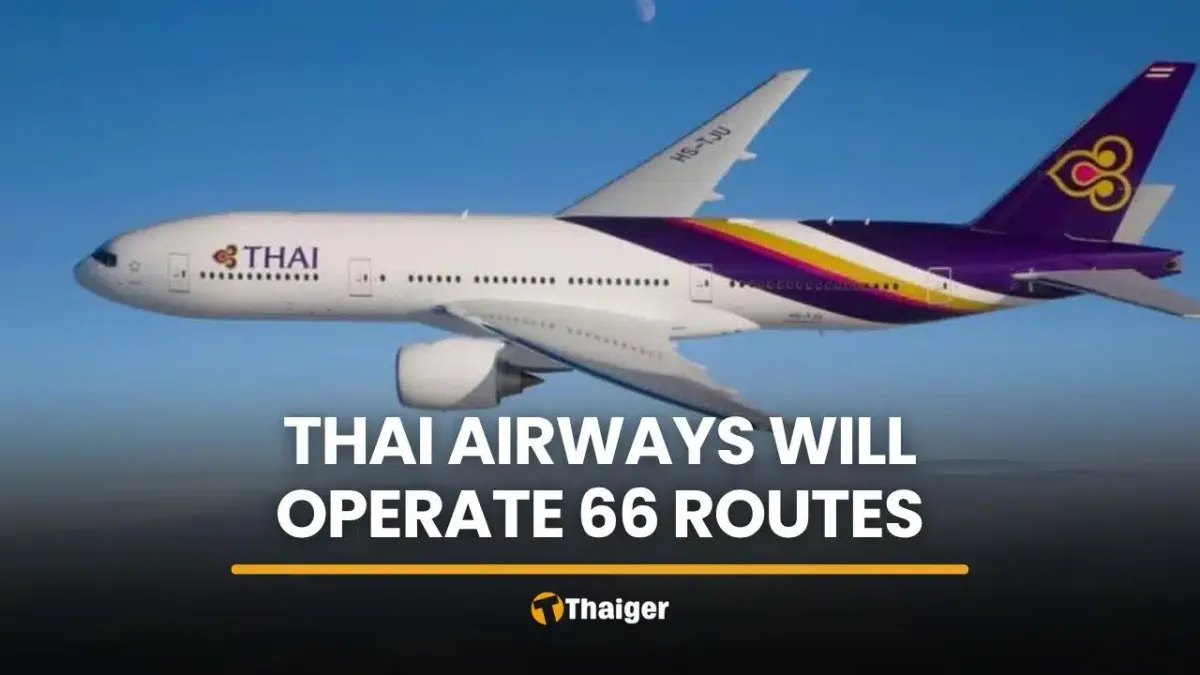
Thai Airways has announced a significant expansion of its winter flight schedule for the 2026/27 season, featuring 66 routes connecting destinations worldwide. The national carrier will introduce a new service between Bangkok and Danang, Vietnam, and enhance frequencies on several key regional routes. This strategic move aims to bolster the airline’s global presence and cater to increasing travel demand.
Expanded Winter Network Details
The comprehensive winter timetable, effective from October 25, 2026, to March 27, 2027, underscores Thai Airways’ commitment to its international network. A notable addition is the new Bangkok-Danang route, set to commence on December 1, 2026, with 14 round trips scheduled weekly. This new service is expected to facilitate greater connectivity between Thailand and Vietnam’s central region, a popular tourist and business destination.
In addition to the new route, Thai Airways is increasing the frequency of flights on several existing regional services. Flights between Bangkok and Vientiane, Laos, and Bangkok and Yangon, Myanmar, will be elevated to 21 services per week. The Bangkok-Siem Reap, Cambodia route will operate seven times weekly, ensuring more convenient travel options for passengers visiting the famed Angkor Wat temples and other attractions.
European and Asian Route Adjustments
The airline’s European network will also see robust activity. Services to Amsterdam will operate seven times a week, while Munich will see 10 weekly flights. Zurich will be served by 11 flights each week, and Paris will receive 14 weekly services, reflecting strong demand for travel between Thailand and major European hubs. Furthermore, the Bangkok-Xiamen route in China is set to resume operations with four weekly flights, re-establishing a vital link for business and leisure travelers.
Strategic Business Adjustments and Financial Performance
Thai Airways executives highlighted that the airline is proactively adjusting its business strategy to navigate global economic uncertainties while maintaining robust financial health. This approach emphasizes flexibility and resilience in its operations. The company’s recent financial performance has been positive, with a reported net profit of 1.537 billion baht for the second quarter, indicating a strong recovery and operational efficiency.
Fleet Modernization and Simplification
A key component of Thai Airways’ long-term strategy involves modernizing and simplifying its aircraft fleet. The airline is gradually phasing out older aircraft and integrating newer, more fuel-efficient models. The goal is to reduce the number of different aircraft types in operation to just four, which is expected to streamline maintenance, training, and overall operational costs. This initiative is crucial for enhancing efficiency and sustainability.
Currently, Thai Airways operates nine Airbus A321neo aircraft, a number projected to grow to 15 by the close of 2026. The long-term vision includes expanding the A321neo fleet to a total of 32 aircraft. For its long-haul operations, the airline is focusing on the Boeing 787 as a cornerstone of its fleet renewal program. These modern aircraft are designed for greater fuel efficiency and passenger comfort.
Enhancing Passenger Experience
Beyond network and fleet developments, Thai Airways is investing in improving its onboard products and services. Passengers can anticipate enhancements to in-flight entertainment systems, as well as refined food and beverage offerings. These improvements are part of a broader effort to elevate the overall travel experience and maintain a competitive edge in the global aviation market.
Broader Aviation Context
This expansion by Thai Airways aligns with broader trends in the region, including Thailand’s push to strengthen its position as an aviation hub. Significant investments are being made in airport infrastructure and route development across the country. Recent analyses have also indicated a shift in regional aviation rankings, with Thailand regaining prominence in the ASEAN aviation sector.
The airline’s strategic initiatives, including network expansion and fleet modernization, are designed to support its ambition to be a leading carrier in the region and globally. The focus on operational efficiency, financial stability, and an improved customer experience positions Thai Airways for continued growth in the post-pandemic travel landscape.
