

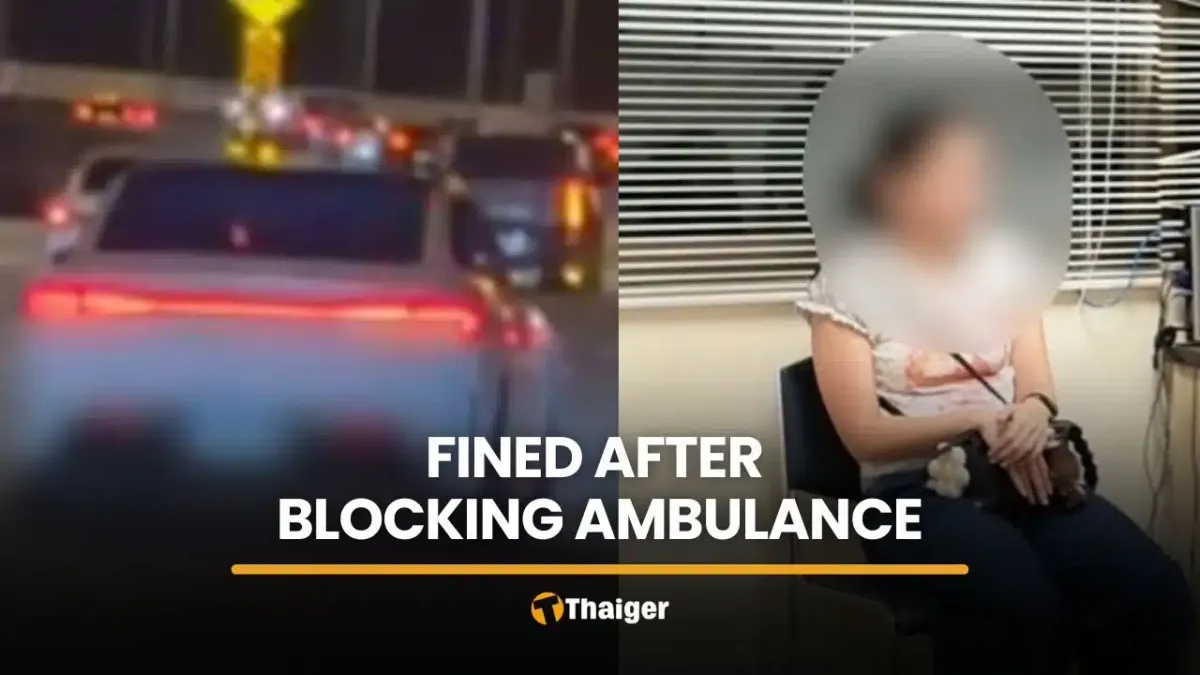
A driver has been fined after a video captured their electric car obstructing an emergency convoy on a Bangkok expressway, which was transporting a critically ill monk. The incident, which occurred on the Stage 2 Expressway near Krung Thep Aphiwat Central Terminal, drew significant attention after footage was shared widely on social media.
Incident Details Emerge
The Traffic Police Division reported on September 23 that the incident involved a white electric vehicle that remained in the right lane, impeding the progress of a police convoy. This convoy was escorting an ambulance carrying a monk in critical condition. According to official accounts, the car failed to yield or move aside, despite the convoy operating under emergency conditions, indicated by flashing lights and sirens.
Following the circulation of the video, officers from the Traffic Police Division and the Expressway Traffic Control Centre 2 identified and contacted the driver. The individual was subsequently summoned to acknowledge a charge related to failing to give way to an emergency vehicle. While the driver has been fined, the specific amount has not been publicly disclosed.
Importance of Yielding to Emergency Vehicles
In the wake of this incident, a spokesperson for the Traffic Police Division emphasized the critical importance of motorists understanding their responsibilities when encountering emergency vehicles. The division issued a reminder detailing the proper protocol for drivers when they see or hear an approaching emergency vehicle with its lights or sirens activated.
Motorists are advised to:
- Remain calm and avoid sudden maneuvers.
- Reduce speed gradually.
- Safely move to the side of the road, allowing the emergency vehicle to pass unimpeded.
The division stressed that prompt and appropriate action from drivers can be crucial in emergency situations. “Every second of an emergency vehicle may mean a chance to save someone’s life,” the spokesperson stated, underscoring the life-or-death stakes involved in ensuring clear passage for ambulances, fire trucks, and police vehicles.
Broader Context and Public Awareness
This event highlights ongoing challenges in traffic management and public awareness regarding emergency vehicle protocols. Similar incidents, though perhaps less publicized, can occur frequently, potentially delaying critical medical responses. The Royal Initiative Project, involved in the convoy, often undertakes missions requiring swift transport of individuals in need of urgent medical care, making adherence to traffic laws by other road users paramount.
The incident also brings to light discussions surrounding traffic fines and enforcement in Thailand. While the specific fine amount was not revealed, the fact that a fine was issued underscores the legal obligation for drivers to yield. Public sentiment, as indicated by various surveys, often leans towards stricter penalties for traffic violations that endanger others, though specific measures like speeding fines can be contentious.
Furthermore, this situation resonates with other reported incidents where the timely arrival of emergency services was compromised. For instance, there have been cases where families of patients allegedly faced delays or demands before ambulances could proceed, pointing to a need for consistent adherence to emergency protocols across the board.
Legal Obligations and Ethical Considerations
Legally, failure to yield to an emergency vehicle is a violation in most jurisdictions, including Thailand. The law is designed to prioritize the rapid transport of individuals requiring immediate medical attention or to facilitate law enforcement and emergency response operations. The rationale behind these laws is simple: the faster emergency services can reach their destination, the higher the probability of a positive outcome for the individual in need.
Beyond the legal ramifications, there is a strong ethical component. Road users share a collective responsibility to ensure the safety and well-being of the community. This includes being vigilant and prepared to facilitate the passage of emergency vehicles, recognizing that any one of us could be in a situation requiring such urgent assistance.
Conclusion
The fine issued to the driver for blocking the ambulance carrying a critically ill monk serves as a stark reminder of the importance of traffic etiquette and legal compliance, especially concerning emergency vehicles. The Traffic Police Division’s subsequent public advisory aims to reinforce awareness and prevent future occurrences. By understanding and practicing the correct procedures when an emergency vehicle approaches, all drivers contribute to a safer and more responsive emergency service system, potentially saving lives in critical moments.
