

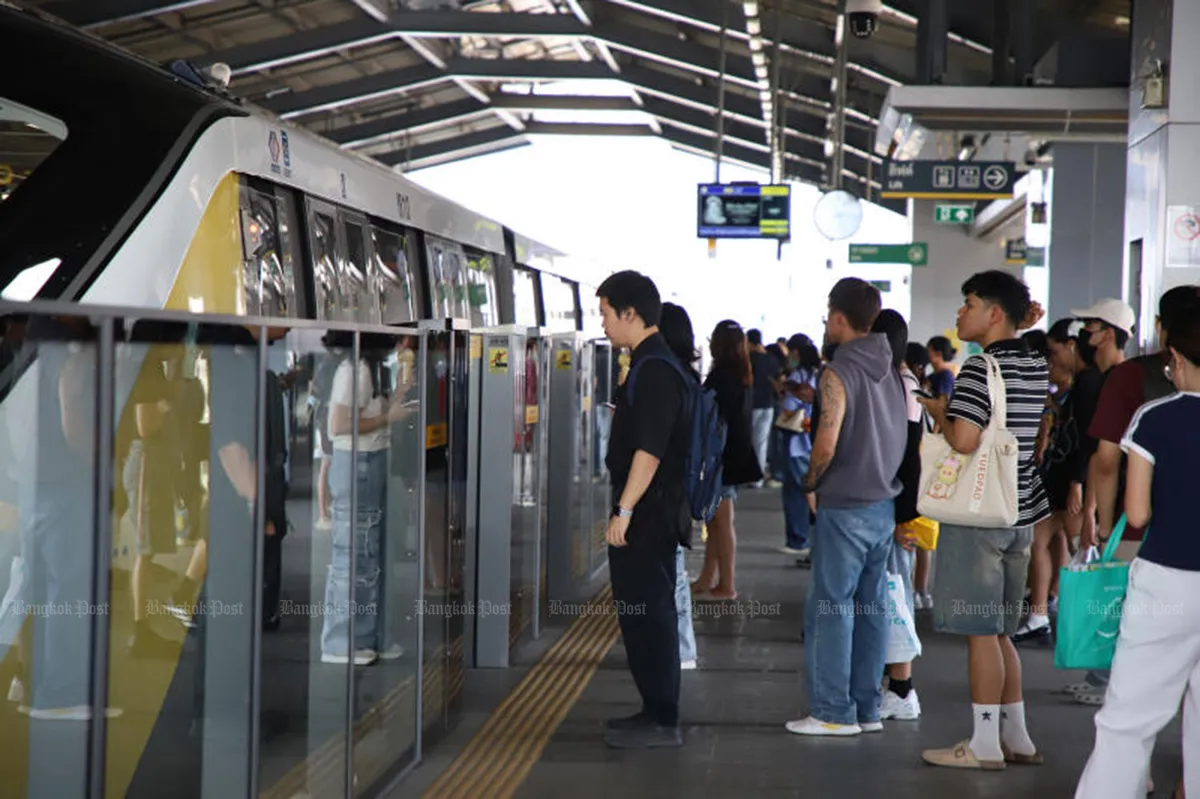
Starting January 1, 2025, Bangkok’s extensive electric rail network will implement a fare cap of 45 baht per trip, a significant move aimed at reducing commuter costs and encouraging greater public transport usage. This new integrated fare system will simplify transfers between different rail lines, making daily commutes more affordable and convenient for residents.
Integrated Fare System to Simplify Commuting
The decision to cap fares at 45 baht was finalized following a review meeting on Thursday, where officials assessed the progress of integrating the city’s various rail systems. Deputy Bangkok Governor Wisanu Subsompon confirmed that the focus was on unifying data, site management, and preparing for the introduction of the fare ceiling. The meeting was presided over by Transport Minister Phiphat Ratchakitprakarn and included representatives from key governmental bodies such as the Ministry of Transport and the Department of Rail Transport.
Currently, fares on Bangkok’s electric train lines vary significantly, ranging from 17 to 65 baht per journey, depending on the specific line, the operator, and the distance traveled. This variability, coupled with the need for frequent transfers for many commuters, can lead to substantial daily travel expenses. The new integrated system aims to alleviate this burden.
How the 45 Baht Cap Works
Under the new scheme, the fare for any single trip will be calculated based on existing contractual rates but will not exceed 45 baht. A key feature of this integration is that passengers transferring between different rail lines will no longer incur a separate initial boarding fare for each new line. This means a commuter can switch between multiple lines within the city’s rail network and still only pay a maximum of 45 baht for their entire journey.
For journeys where the standard fare, calculated by distance, would normally exceed 45 baht, the government will cover the difference. This reimbursement will be processed within three working days and can be received either through the Pao Tang mobile application or directly via the payment card used for the trip.
Continued Support for Special Groups and Payment Modernization
The introduction of the fare cap does not affect existing concessions for special groups. Elderly individuals, children, people with disabilities, and those identified as disadvantaged will continue to benefit from their current fare discounts, ensuring continued accessibility for vulnerable populations.
To ensure a seamless transition, authorities are expediting the installation and upgrading of necessary equipment across the rail network. This includes temporary readers and electronic data capture (EDC) devices, particularly at Green and Gold Line stations, a process facilitated by the Bangkok Metropolitan Administration (BMA). The BMA is working closely with the Ministry of Transport, the Mass Rapid Transit Authority of Thailand (MRTA), and Krungthep Thanakom Co to manage this infrastructure rollout.
Furthermore, the new system is being designed to support modern payment methods. Passengers will be able to utilize EMV contactless payments, including major credit cards, debit cards, and the local Mangmoom cards, enhancing convenience and reducing transaction times.
Consolidation of Green and Gold Line Management
In parallel with the fare system integration, a significant administrative change is underway concerning the management of the Green and Gold Lines. The BMA is coordinating with the Ministry of Transport, MRTA, and Krungthep Thanakom Co to transfer the operational oversight of these lines, including their main routes and extensions, to the MRTA. This transfer will encompass all associated assets, revenues, and liabilities, consolidating management under the MRTA in compliance with established legal procedures.
This comprehensive overhaul of the fare structure and management is expected to streamline public transportation in Bangkok, making it a more attractive and economical option for millions of daily commuters. The government anticipates that these changes will not only reduce the financial strain on individuals but also contribute to a more efficient and integrated urban mobility network.
