

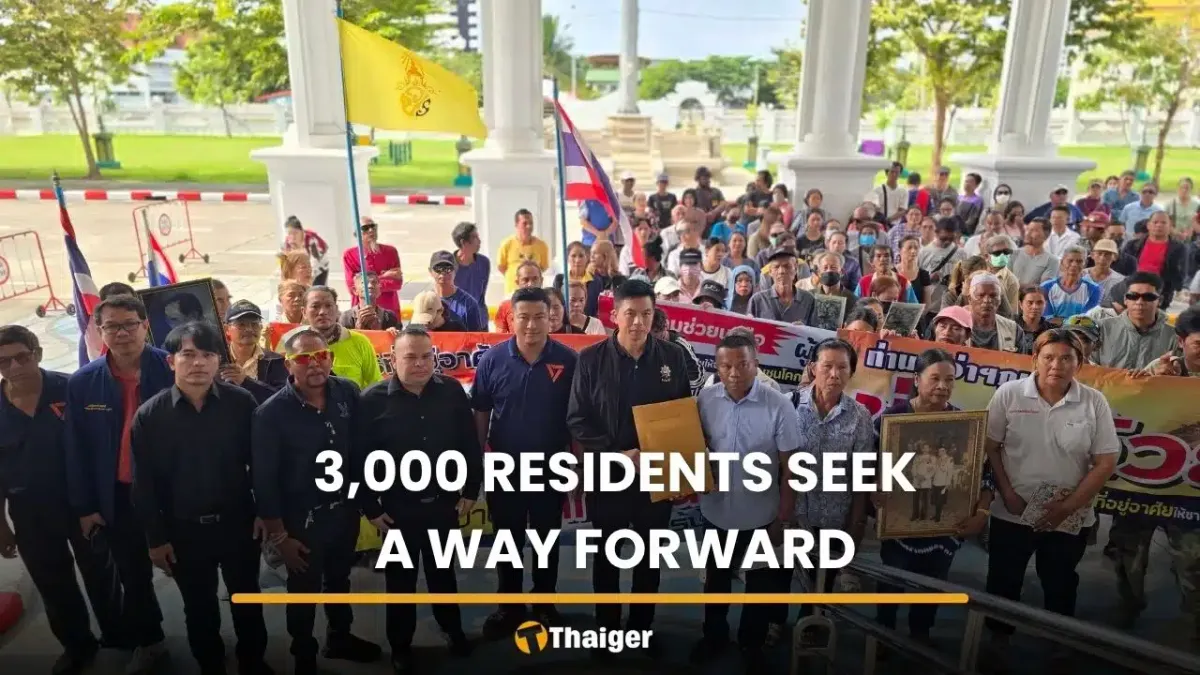
More than 3,000 residents of the Khok Tanod community in Chalong, Phuket, are facing the potential eviction from their homes due to a protracted legal dispute over privately owned land. The ongoing court battles have placed 669 households at risk of displacement, prompting community representatives to seek government intervention.
Community Seeks Government Assistance Amidst Eviction Lawsuits
On September 21, representatives from Moo 9, the Khok Tanod community, submitted a formal petition to the Phuket Damrongdhama Centre, the provincial complaints bureau. Their plea to officials centers on securing protection of residents’ rights throughout the legal proceedings and establishing provisions for housing assistance for families who may be forced to leave their homes. Many of these households are characterized by low incomes and lack alternative housing options.
The Khok Tanod community, also identified as Moo 9 in Chalong by Phuket’s official public-relations office, has been embroiled in a long-standing dispute involving private land ownership claims. According to accounts from Phuket MP Chalermpong Saengdee, numerous eviction and demolition lawsuits have been filed against the residents. The legal challenges have escalated to the point where some cases have already reached final judgments at the Supreme Court level.
Provincial officials have clarified that the administration cannot override or interfere with judicial decisions. However, they assured residents whose cases are still pending that they can continue to present their evidence through the established legal channels. This situation is not new; a 2015 report by the Community Organisations Development Institute (CODI) indicated that private ownership claims and eviction actions affecting over 600 Khok Tanod families had surfaced as early as 2005, well before the recent petition.
Government Support and Long-Term Solutions Explored
In response to the growing crisis, the Phuket Provincial Office of Social Development and Human Security has initiated a registration process for affected families. One representative from each household is eligible to apply for welfare assistance. For individuals and families who may lose their accommodation, temporary housing options are available through the Centre for the Protection of the Destitute, though these are limited in duration.
Furthermore, financial aid is being offered to families who need to relocate and rent new accommodation but cannot afford the upfront costs. This emergency financial assistance aims to mitigate the immediate burden of displacement.
Exploring the Baan Mankong Programme
For more sustainable, long-term solutions, officials are directing attention towards CODI’s Baan Mankong programme. This national initiative is designed to assist low-income communities in acquiring land and developing housing through collective efforts. Key components of the program include negotiating land tenure agreements and establishing community-managed financial systems.
MP Chalermpong Saengdee noted that previous attempts to organize the broader Khok Tanod community faced obstacles due to economic pressures and a lack of sustained effort. To address this, current proposals include establishing a savings group. This would enable participating households to collectively prepare for accessing Baan Mankong funding. Simultaneously, negotiations are underway with the private landowner for a lease agreement, potentially spanning three to 20 years.
Provincial Coordination and Service Provision
The provincial administration has committed to facilitating communication between the residents and relevant government agencies. Their role will be one of coordination rather than direct intervention in the ongoing court cases. This approach aims to ensure that residents have access to necessary support services while the legal processes unfold.
Efforts are also being made to coordinate with utility providers, such as the Provincial Electricity Authority, to ensure continued access to electricity and other essential services for the community. These actions are being taken concurrently with the exploration of various housing solutions for the affected families.
Historical Context and Future Outlook
The Khok Tanod community’s struggle highlights a recurring issue of land disputes and housing insecurity in rapidly developing areas. The current legal actions, which have reached the highest court in some instances, underscore the complexity of property rights and the vulnerability of long-term residents when faced with private land claims.
The government’s proposed solutions, including the Baan Mankong program and financial assistance, represent a concerted effort to provide relief and establish more secure housing arrangements. The success of these measures will likely depend on effective negotiation with the landowner, sustained community engagement, and adequate funding and support from relevant agencies. The community’s petition marks a critical juncture, emphasizing the urgent need for a resolution that balances legal rights with the fundamental need for housing security for hundreds of families.
