

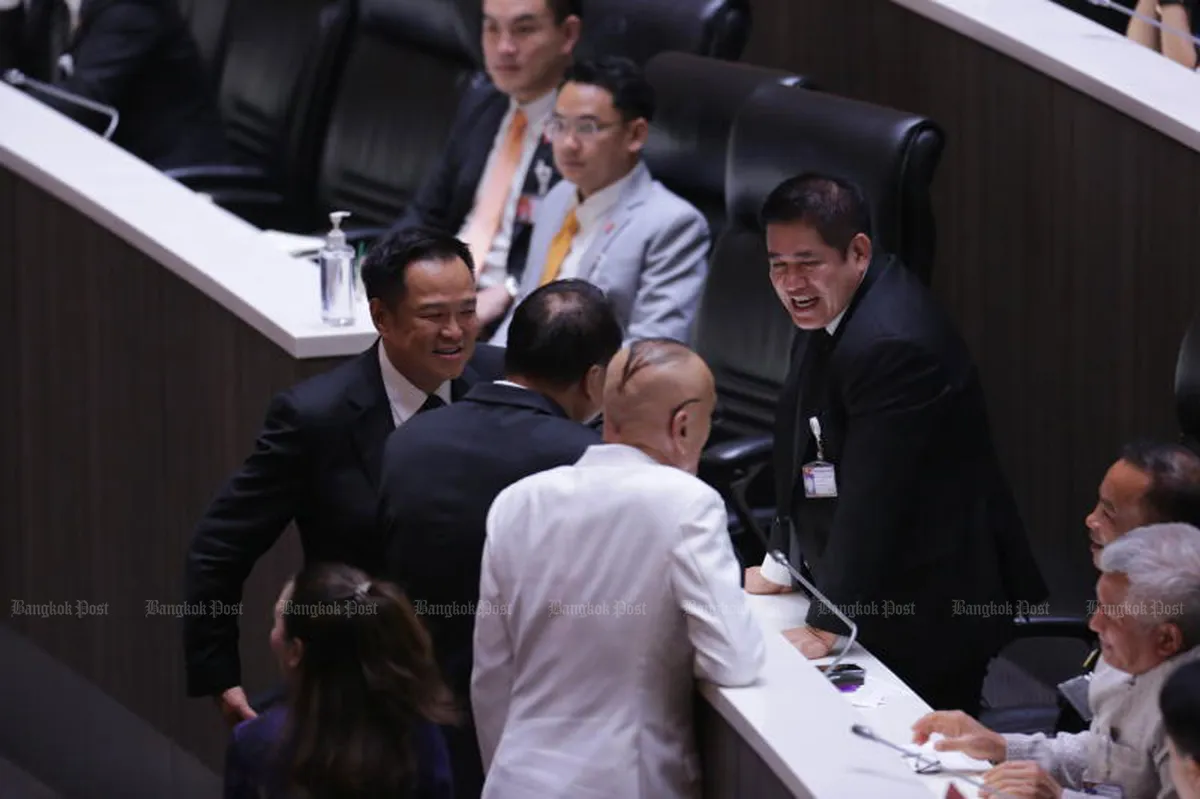
Speculation surrounding the Klatham Party’s potential departure from the opposition bloc and possible alignment with the Bhumjaithai-led government has introduced a degree of uncertainty into the political arena. However, the Klatham Party has officially refuted these claims, asserting its continued commitment to the opposition’s stance, particularly as a significant censure debate approaches.
Political Maneuvering and Opposition Unity
The political landscape in Thailand is often characterized by fluid alliances and strategic realignments. Recent reports suggested that the Klatham Party might be considering a shift away from its current role within the opposition whip. Such a move, if it were to occur, could have significant implications for the balance of power in parliament and the effectiveness of the opposition’s efforts, especially in the lead-up to crucial legislative challenges like a no-confidence vote.
The opposition whip plays a critical role in coordinating parliamentary activities, strategizing for debates, and ensuring party discipline during votes. A departure from this structure by a constituent party could weaken the collective voice and bargaining power of the opposition. Furthermore, rumors of the Klatham Party potentially joining forces with the Bhumjaithai-led government, a prominent party often seen as a key player in coalition politics, fueled further speculation about shifts in government stability and parliamentary dynamics.
Klatham Party’s Official Stance
In response to the circulating rumors, representatives from the Klatham Party have issued clear statements denying any intention to leave the opposition whip. These denials aim to quell the uncertainty and reaffirm the party’s current political alignment. The party leadership emphasized that their focus remains on their existing role within the opposition and their commitment to holding the government accountable through established parliamentary mechanisms.
The timing of these rumors is particularly noteworthy, coinciding with the anticipation of a censure debate. This parliamentary procedure allows the opposition to formally question and challenge the performance of government ministers. A united opposition front is generally considered more effective in such debates, making any perceived fragmentation a significant talking point. The Klatham Party’s denial suggests a strategic decision to maintain solidarity with other opposition parties during this critical period.
The Significance of Censure Debates
Censure debates, often referred to as no-confidence votes, are a fundamental aspect of parliamentary democracy. They serve as a vital check on executive power, providing a platform for the legislature to scrutinize the actions and policies of the government. During these debates, opposition parties present their case, highlighting perceived failures, corruption, or mismanagement, and may call for the removal of specific ministers or even the entire government.
The effectiveness of a censure motion often depends on the strength and unity of the opposition. A cohesive opposition can present a more compelling argument, garner broader support, and potentially sway undecided members. Conversely, internal divisions or the defection of key parties can undermine the opposition’s efforts, making it more difficult to achieve their objectives. The current political climate, with the Klatham Party’s alleged internal deliberations, underscores the importance of opposition unity in such high-stakes parliamentary confrontations.
Potential Implications of Party Realignment
While the Klatham Party has denied any immediate plans to shift its allegiance, the underlying speculation highlights the constant flux within Thai politics. The Bhumjaithai Party, often a kingmaker in coalition governments, is a significant force. Any move that could potentially strengthen or weaken its position, or that of its potential allies, is closely watched.
The formation and maintenance of governments in Thailand often rely on complex coalition agreements. Parties frequently weigh their strategic interests, considering factors such as policy influence, ministerial portfolios, and electoral prospects. Rumors of realignment, even if officially denied, can signal underlying political calculations and potential future shifts. The Klatham Party’s denial, therefore, serves to stabilize the current parliamentary configuration, at least for the immediate future, and reassures its opposition partners.
Conclusion: Navigating Political Uncertainty
The recent reports and subsequent denials from the Klatham Party illustrate the dynamic and often unpredictable nature of parliamentary politics. While speculation about party realignments can create temporary uncertainty, official statements from the parties involved are crucial in clarifying their positions. The Klatham Party’s firm denial of plans to leave the opposition whip, especially with a censure debate on the horizon, suggests a commitment to maintaining the current opposition structure and participating actively in parliamentary oversight. This stance aims to reinforce opposition unity and focus on the critical task of scrutinizing government performance.
