

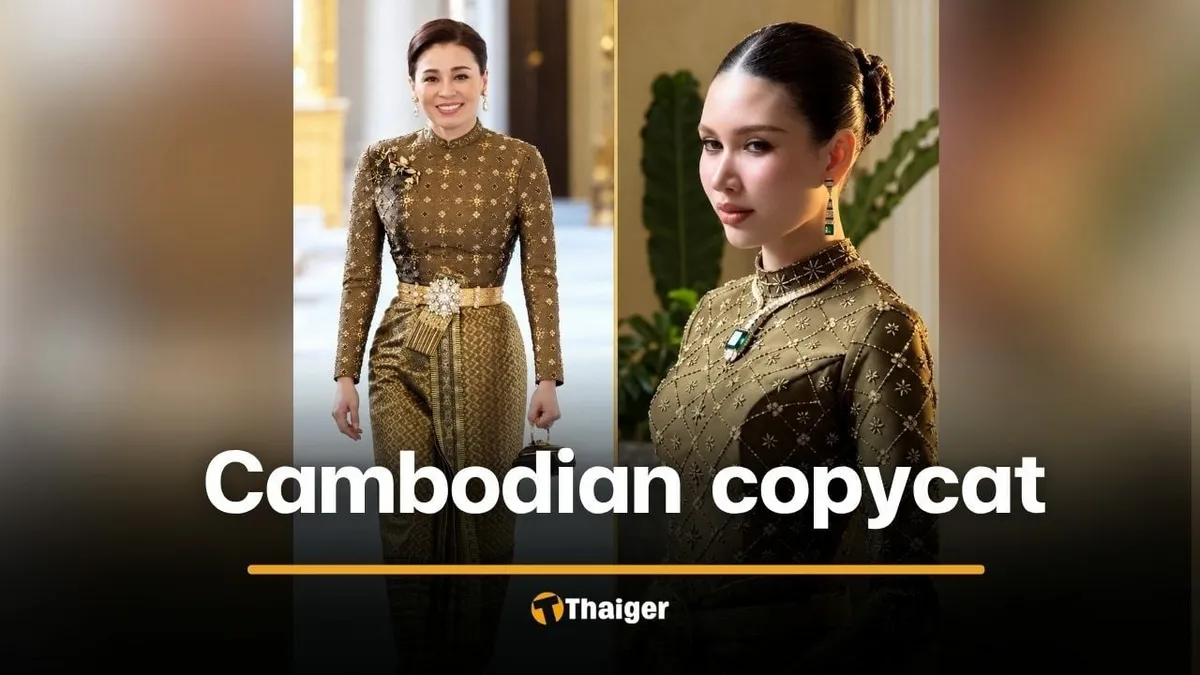
A Cambodian bridal studio is facing accusations of replicating a gown designed for Queen Suthida of Thailand. The claim originated from a popular Thai Facebook page, which alleges the studio presented the dress as part of its own new collection, purportedly inspired by the 1890s, without proper attribution.
Allegations Surface Online
The Facebook page, boasting approximately 290,000 followers, shared images of a Cambodian model wearing a gold, Thai-style gown. According to the page’s post, this garment bears a striking resemblance to a dress created for Queen Suthida by the renowned Thai couture house, Atelier Pichita. The page asserted that the Cambodian studio had marketed this design as an original creation within its new line.
The studio had described its collection as being influenced by the 1890s, a period characterized by intricate detailing, elegant silhouettes, and delicate femininity, according to their promotional materials. The Facebook page, however, questioned the historical accuracy of this claim, noting that the 1890s fell within the reign of King Rama V of Siam. During that era, Cambodia was a French protectorate. The page invited the public to assess whether the design truly reflected the fashion sensibilities of that specific historical period.
Atelier Pichita’s Creation for the Queen
The original gown in question was a bespoke commission by Atelier Pichita. The couture house confirmed on its own Facebook page on May 6th that it had the honor of crafting the exquisite piece for Queen Suthida. Queen Suthida first wore the distinctive gown during a state banquet held at the Royal Palace in Stockholm on April 29th. She subsequently wore the same ensemble again on April 30th during ceremonies commemorating the 80th birthday of King Carl XVI Gustaf of Sweden.
Context of Cultural Disputes
This recent accusation is not the first instance of cultural appropriation concerns arising between Thailand and Cambodia in the public sphere. It follows a separate controversy involving the Miss Universe Cambodia pageant. During the pageant’s preliminary round, an image was used that depicted a woman from Kamphaeng Phet, Thailand, dating back to the reign of King Rama V. The Fine Arts Department of Thailand officially confirmed the photograph’s Thai origin.
In response to that incident, Thailand’s Minister of Culture sent a formal letter to Cambodia, requesting that the country cease the dissemination of what Thailand deemed inaccurate historical information. The minister also issued a warning of potential legal action should such practices continue.
Lack of Public Response
As of the latest reports, the Cambodian bridal studio implicated in the gown copying accusation has not issued a public statement or response to the allegations. The situation remains under scrutiny as the fashion community and the public await further developments or clarification from the studio.
Broader Implications for Cultural Heritage
Incidents like these highlight the complexities surrounding cultural exchange and intellectual property in the fashion industry, particularly when historical or culturally significant designs are involved. The debate underscores the importance of acknowledging sources of inspiration and respecting the provenance of artistic creations. For couture houses and designers, protecting their unique designs and ensuring proper credit is given is paramount. Similarly, for nations, safeguarding their cultural heritage and historical narratives from misrepresentation is a significant concern.
The fashion world often draws inspiration from various eras and cultures. However, the line between inspiration and appropriation can be contentious. In this case, the alleged lack of attribution for a design closely associated with a royal figure and a prominent couture house has sparked a significant online discussion. The historical context provided by the accusers, questioning the link between the gown’s design and the 1890s, adds another layer to the dispute, suggesting a potential misrepresentation of historical periods for commercial gain.
The involvement of a royal figure like Queen Suthida and the international setting of her wearing the gown—Stockholm, Sweden—further amplify the visibility of such disputes. Atelier Pichita’s role as a respected Thai couture house also lends weight to the claims of originality and design ownership. The situation serves as a reminder of the need for careful consideration and ethical practices in the global fashion landscape, where cultural sensitivities and intellectual property rights are increasingly under the spotlight.
Moving forward, it will be important to observe whether the Cambodian studio provides any clarification or response. The outcome of this accusation could influence how such matters are handled in the future, potentially leading to clearer guidelines or increased awareness regarding design attribution and cultural respect within the international fashion community.
