

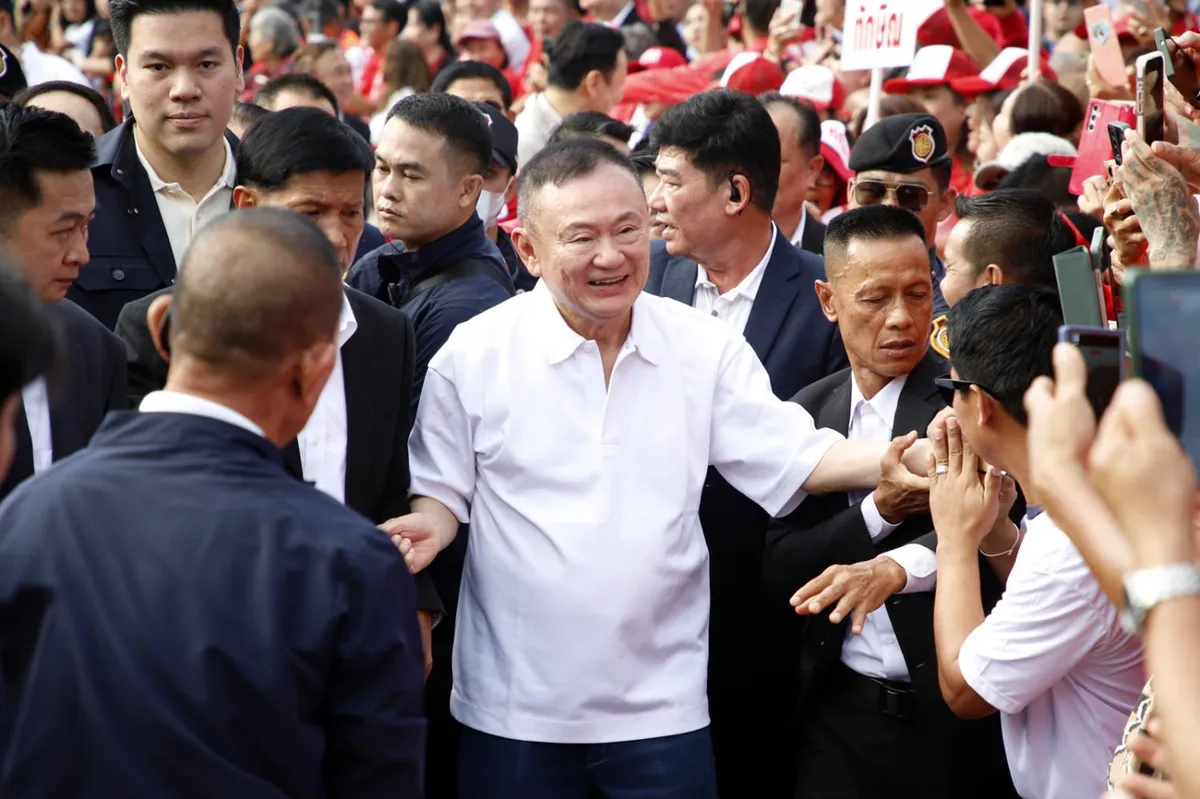
Thaksin Shinawatra has reignited political discussions after his parole release on Monday, following 243 days served of a one-year prison sentence.
Observers Predict Gradual Return to Influence
Stithorn Thananithichot, a political scientist at Chulalongkorn University, observed Thaksin appearing energetic and in high spirits post-release. He anticipates Thaksin’s political influence will resurface gradually through indirect means, such as home-based consultations. Thaksin’s political allies and family network remain closely tied to his guidance and legacy.
“Anyone who thinks he will simply sit still and do nothing but look after his grandchildren is probably mistaken,” Stithorn stated.
Warnings of Risks and Controversy
Political activist Jatuporn Prompan expressed concerns that Thaksin’s ongoing involvement might diminish his public support and invite legal challenges. He cautioned that perceived influence via proxies could stir fresh political disputes.
Prime Minister Open to Meeting
Prime Minister Anutin Charnvirakul confirmed his willingness to meet Thaksin, brushing aside fears of escalating tensions. Anutin highlighted his past role as a subordinate under Thaksin’s administration.
Strict Parole Conditions Imposed
Upon exiting Klongprem Central Prison, authorities fitted Thaksin with an electronic monitoring device and outlined key parole rules. He must stay at his registered residence, report monthly to probation officers, obtain approval for travel beyond Bangkok, and refrain from leaving Thailand. His activities face ongoing oversight, and contact with unrelated former inmates is banned. Violations could prompt parole revocation.
Thaksin’s legal team indicates he will report on May 25, June 27, July 29, and August 31, with parole set to end on September 9. He also plans a medical evaluation at a Bangkok hospital.
