

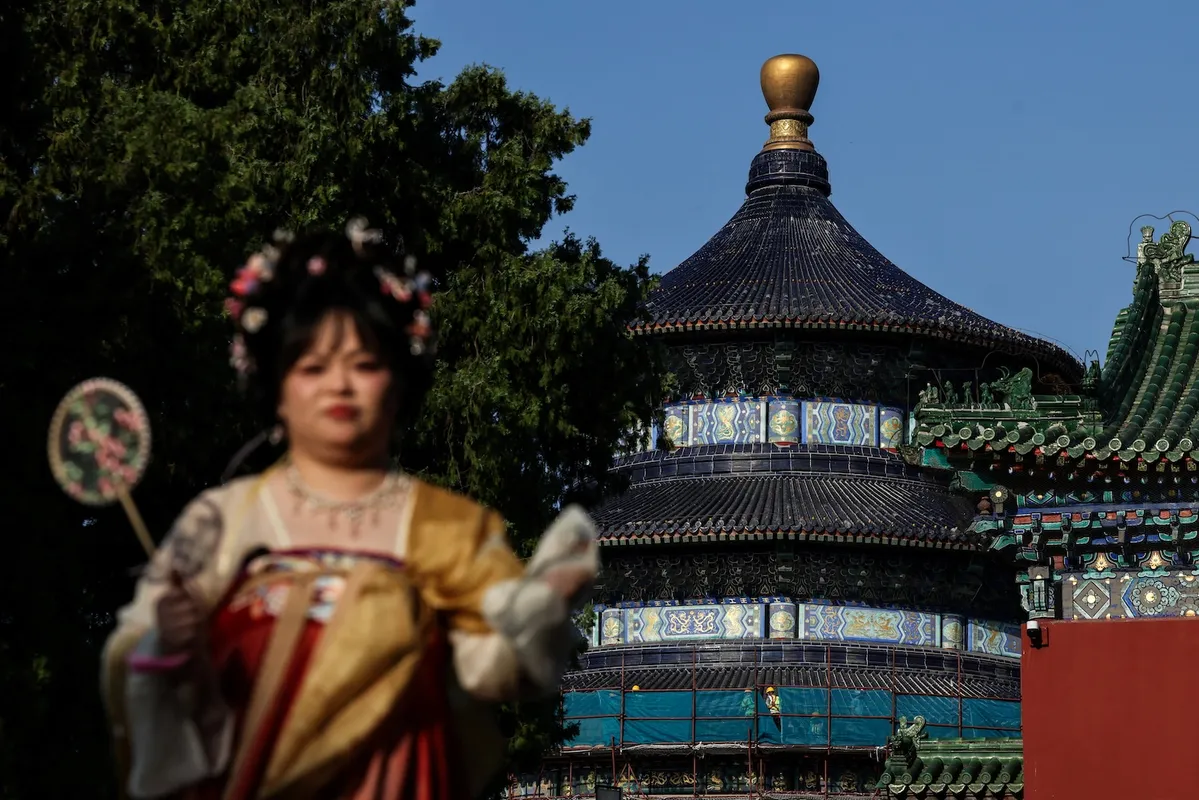
US President Donald Trump and Chinese President Xi Jinping plan to stroll the historic grounds of Beijing’s Temple of Heaven on Thursday, highlighting a pivotal summit where both leaders pursue major diplomatic gains.
Symbolic Venue Choice
Xi selects this imperial site to emphasize China’s rich history and cultural depth. The location resonates literally for Trump, with agriculture topping his agenda as US farmers seek expanded Chinese imports of soybeans, grains, and meat.
“As a Chinese leader, this is the perfect backdrop to show the depth of Chinese history and how long it is, how sophisticated it is,” stated Lars Ulrik Thom, a Beijing-based historian and founder of historical walking tour company Beijing Postcards.
Trump arrives in Beijing on Wednesday ahead of Thursday and Friday meetings. The White House confirms the leaders’ visit to the Temple of Heaven on Thursday.
Trade Priorities Amid Challenges
Court rulings limit Trump’s tariff ambitions, shifting focus to deals on soybeans, beef, Boeing aircraft, and China’s assistance with the Iran situation, according to analysts.
In 2017, Xi and his wife provided Trump and the first lady a private tour of the Forbidden City. Observers note Xi’s increased confidence entering talks and anticipate elaborate hosting for the US leader, who appreciates grandeur.
Temple’s Historic Role
Constructed in 1420 by the Ming emperor who built the Forbidden City, the temple lies 7 km south, encircled by ancient pine and cypress trees. It now serves as a vibrant park for tai chi, chess, and dancing among Beijing residents.
During imperial times, emperors led annual processions from the Forbidden City with thousands in tow, including elephant carriages, to conduct ceremonies affirming their rule. Poor harvests or unrest could undermine their authority.
The iconic Hall of Prayer for Good Harvests, rebuilt in the late 1800s, features tall redwood imported from the US, Thom notes.
Agriculture Deals in Focus
Post-tour, Trump aims for firm Chinese pledges on soybean, grain, and meat purchases. China ranks as the largest US farm export market, importing about $24 billion in goods in 2024 before Trump’s inauguration.
Beijing has curtailed much of this trade in response to tariffs, reducing reliance on US supplies. Soybean farmers monitor China’s adherence to its pledge for 25 million tonnes annually through 2028. Larger orders could ease pressures on US producers—a key Trump voter base—before November midterms.
“It’s a very good backdrop to telling Donald Trump and the world that China’s here and has been here for thousands of years,” Thom added.
