

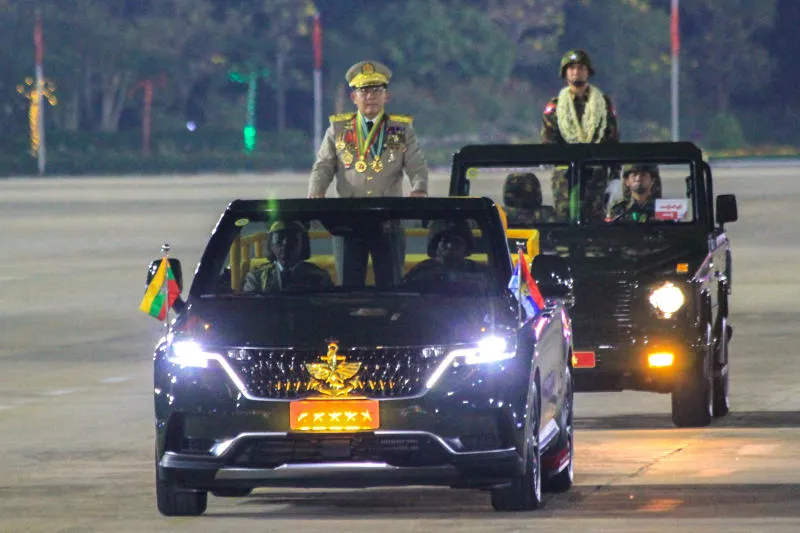
Myanmar’s Junta Chief Visits India, Balancing Regional Powers
Myanmar’s de facto leader, who recently assumed the presidency, is embarking on a significant five-day visit to India. This trip marks a notable step in the nation’s re-engagement with its neighbors, five years after many countries distanced themselves from its military leadership following a coup. The visit underscores a complex geopolitical maneuver, with Myanmar aiming to diversify its international partnerships.
For India, this engagement presents a strategic opportunity. Analysts suggest New Delhi seeks to temper China’s considerable influence in Myanmar. Furthermore, India is keen on securing access to the country’s valuable rare earth mineral deposits and bolstering security along its northeastern frontier.
Seeking Diplomatic Resurgence
Richard Horsey, a senior Myanmar adviser at Crisis Group, commented on the shift in approach. “After transitioning to civilian attire as president, Min Aung Hlaing is focused on enhancing diplomatic engagement across the region,” Horsey stated. He anticipates a move towards more conventional relations with ASEAN (Association of Southeast Asian Nations), potentially with support from Thailand and other member states. A visit to Beijing to meet President Xi Jinping is also anticipated, positioning India as another key neighbor in these diplomatic efforts.
An official from Myanmar’s presidential office, when contacted by phone, declined to comment on the specifics of the visit. However, Indian foreign ministry spokesman Randhir Jaiswal indicated the breadth of discussions, stating on Friday that “All issues that form part of the gamut of relations between Myanmar and India will come up for discussion.”
Diplomatic Isolation Post-Coup
The current situation stems from a military takeover on February 1, 2021, which ousted the elected civilian government led by Aung San Suu Kyi. This event triggered widespread protests that evolved into a nationwide armed resistance against the military. The coup drew significant international condemnation, leading to Myanmar’s generals being excluded from ASEAN summits and a period of growing diplomatic isolation for the new military-led administration.
A significant earthquake last year created an unexpected diplomatic opening for Min Aung Hlaing. He made a rare appearance at a regional summit in Bangkok, an engagement he now aims to build upon following a much-criticized election that ultimately led to his presidency.
Gautam Mukhopadhaya, a former Indian ambassador to Myanmar, observed the post-election dynamic. “He is seeking more and more regional and international respectability post-election,” Mukhopadhaya noted.
Strategic Interests and Frontier Offensives
While Beijing has long been a significant supporter of Myanmar, with extensive investments, analysts believe Min Aung Hlaing’s trip to India is partly intended to counterbalance China’s deep-seated influence. “This has been part of Myanmar’s strategy in dealing with India and China, leaning more towards China and attempting to balance it with India,” Mukhopadhaya explained.
The visit coincides with renewed offensives by Myanmar’s military in frontier regions rich in rare earth deposits and vital trade routes connecting to India and Thailand. “Min Aung Hlaing will almost certainly seek India’s assistance in countering the Arakan Army and Chin armed groups,” Horsey predicted, referring to rebel factions active in Myanmar’s Chin and Rakhine states, which border India.
India, meanwhile, has expressed interest in accessing Myanmar’s resources. Reports indicate efforts to obtain mineral samples with the cooperation of influential rebel groups. “The core motivation behind this visit from the Indian perspective is what they can gain in terms of raw materials, rare earths, and business opportunities,” Mukhopadhaya stated. “And that is precisely what the Myanmar military desires, as it seeks to strengthen its military enterprises.”
