

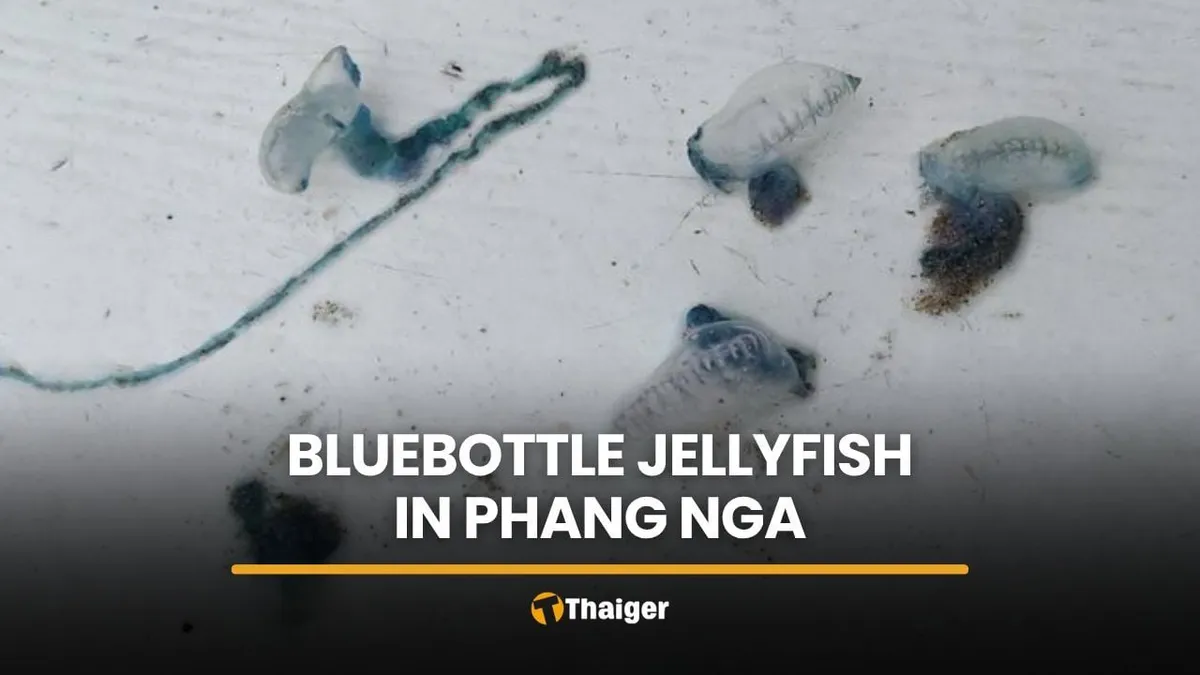
A significant influx of venomous bluebottle jellyfish has occurred on two beaches in Phang Nga province, following a period of rough monsoon weather. Local authorities issued a public advisory on June 4th, urging beachgoers to maintain a safe distance from these marine creatures.
Coastal Alert Issued for Takua Pa
The warning specifically applies to Bang Sak Beach and Ban Nam Khem Beach, located in the Bang Muang subdistrict of Takua Pa district. Strong wave activity in the Andaman Sea has been identified as the cause for these jellyfish, scientifically known as Physalia utriculus, being carried ashore and into shallow waters.
Precautions Advised for Visitors and Residents
Suriya Sonsoem, director of the Coastal Resources Conservation Division, emphasized the need for heightened vigilance among residents, tourists, and parents. Individuals who encounter blue or purple gelatinous masses on the sand are strongly advised against touching or stepping on them. Prompt notification of beach officials or local authorities is recommended.
Understanding Bluebottle Jellyfish
Bluebottle jellyfish are not true jellyfish but are classified as hydrozoans. They possess a distinctive gas-filled sac, typically blue or purple, which allows them to float on the ocean’s surface. Dangling tentacles, laden with venomous stinging cells, extend from the main body.
Health Risks and First Aid Measures
Contact with a bluebottle jellyfish or its tentacles can result in immediate and intense pain, skin irritation, and burn-like marks. In instances of severe allergic reactions, individuals may experience serious symptoms such as chest tightness, breathing difficulties, respiratory failure, shock, loss of consciousness, and in extreme cases, fatality.
In the event of a sting, officials recommend immediately rinsing the affected area with vinegar for a minimum of 30 seconds. It is crucial to avoid using fresh water, as this can inadvertently trigger remaining stinging cells to release more venom. Furthermore, rubbing, scratching, or applying sand to the stung area should be strictly avoided.
Anyone exhibiting severe symptoms, including difficulty breathing, unconsciousness, or signs of shock, should seek emergency medical attention without delay.
Previous Warnings Issued
This incident follows a similar warning issued in March, when Deputy Prime Minister and Minister of Natural Resources and Environment, Suchart Chomklin, alerted the public to the presence of toxic fire jellyfish in high concentrations around Koh Aeo in Phuket.
