

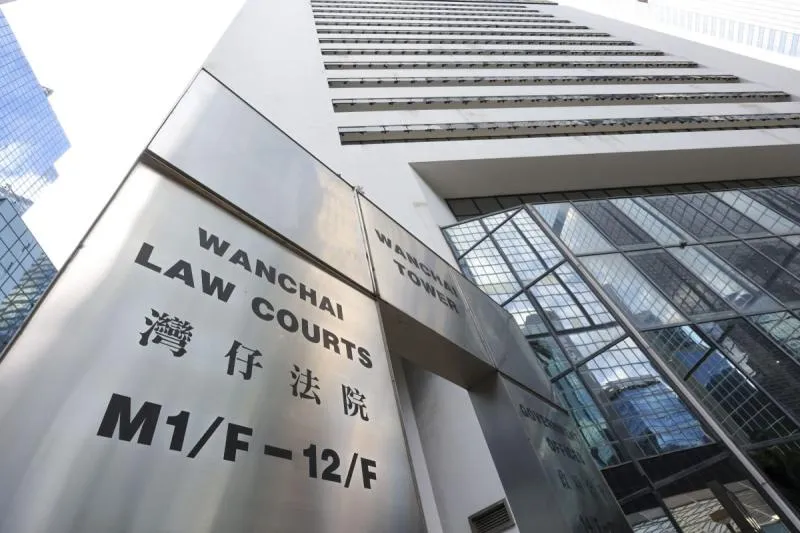
A Hong Kong beautician has pleaded guilty to fraud charges for deceiving two women into traveling to Thailand, ultimately leading to their exploitation in a Chinese-run scam operation located in neighboring Myanmar. The 33-year-old defendant, Poon Sum-yi, admitted her role in the scheme at the District Court on Friday. The victims were subsequently ‘sold’ for approximately US$54,000 (1.8 million baht) in December 2024.
The Deception Unfolds
The court heard that the relatives of the two women, identified as Peng Xinying, who was unemployed, and Liu Bingbing, a part-time model, paid over HK$585,000 (2.5 million baht) to secure their release from the undisclosed compound the following month. Poon had initially approached Peng and Liu with an enticing offer: a trip to either Japan or Canada, with Poon covering all travel expenses. Both women expressed interest in the proposition.
On December 27, 2024, Poon informed Peng and Liu that she had purchased flight tickets for them to Thailand, scheduled to depart at 9 p.m. that day, with a return planned for the following evening. She also suggested they would be compensated upon transporting 48 million baht, a detail that appears to have been part of the elaborate ruse. Shockingly, less than three hours before their scheduled flight, Poon met Peng at a restaurant in Mong Kok and proceeded to delete all text messages exchanged between them from Peng’s phone, an act that further concealed the true nature of the trip.
Journey into Captivity
Upon landing in Bangkok around 11 p.m., Peng and Liu boarded a white car, believing it would take them to their hotel. Their realization that something was amiss came the next morning when they discovered they were en route to the northern city of Chiang Mai. Poon, who had claimed she would follow on a later flight, never actually traveled to Thailand herself, leaving the two women to proceed alone into the trap.
The journey continued to the Thai-Myanmar border. There, the women were subjected to a terrifying ordeal. Five men armed with knives and sticks confiscated their personal belongings and forced them across a river into Myanmar. The situation escalated further when six other men, brandishing firearms and wearing military uniforms, compelled them into another vehicle. It was at this point that they were informed they had been ‘sold’ into the scam operation.
Life in the Scam Factory
Inside the compound, the women encountered a mainland Chinese man known by the nickname ‘rabbit chief.’ He laid out the grim reality of their situation: escape was contingent upon either paying an exorbitant ransom of US$500,000 or assisting the syndicate in defrauding wealthy overseas Chinese individuals of the same sum. The scale of the operation and the demands placed upon the victims highlighted the severity of their predicament.
In the subsequent month, the Chinese man informed the captives that their relatives had been actively searching for them on social media. He then presented a revised offer, proposing their release at a cost of US$28,000 each. He also suggested that this price could be further reduced if they agreed to remain within the compound for an extended period, a testament to the syndicate’s manipulative tactics.
Rescue and Legal Proceedings
Eventually, Peng and Liu were permitted to contact their families. Their relatives, desperate for their safety and freedom, agreed to meet the syndicate’s demands in exchange for the women’s release. The two victims were freed on January 8, 2025, and returned to Hong Kong three days later, traumatized but safe.
Following their return, the authorities launched an investigation, leading to Poon’s arrest on January 13, 2025. She reportedly remained silent when cautioned by the police. The case has proceeded through the courts, with Judge Adriana Noelle Tse Ching adjourning the sentencing until September 29. This delay is pending a ruling from the Court of Appeal concerning a similar case, which could set a precedent for Poon’s sentencing.
Poon Sum-yi has been held in custody since her initial charge in January 2025 and has been denied bail. The legal ramifications for fraud in Hong Kong are severe, carrying a maximum penalty of up to 14 years imprisonment. However, sentences in the District Court are capped at seven years.
Conclusion
This case underscores the dangerous reality of international scam operations that prey on vulnerable individuals through deceptive promises of travel and employment. The conviction of Poon Sum-yi highlights the efforts to bring perpetrators of such sophisticated fraud schemes to justice, offering a measure of closure to the victims and their families while serving as a stark warning to others involved in or considering such illicit activities.
