

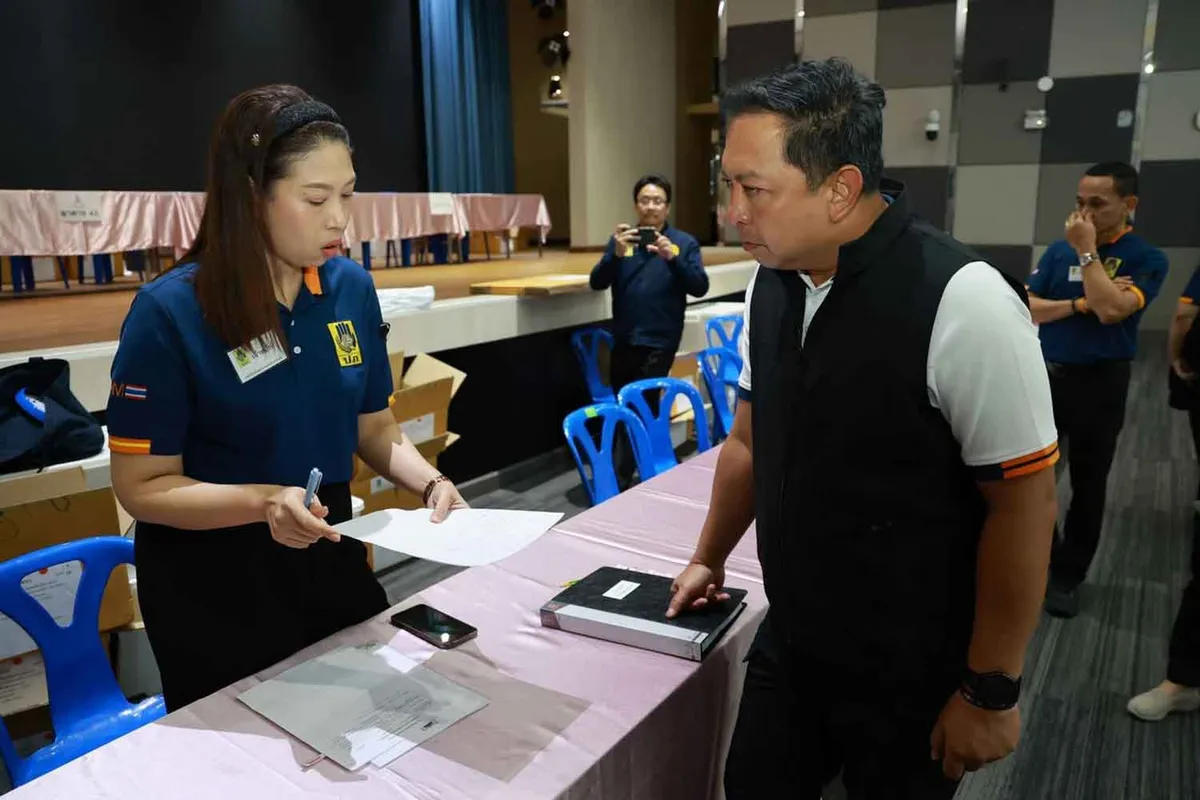
A 57-year-old man was apprehended attempting to impersonate a younger candidate during a civil service examination in Bangkok on Saturday. The incident occurred at Suan Sunantha Rajabhat University, where the man was taking an entrance exam for a position within the Department of Disaster Prevention and Mitigation. His attempt to cheat was discovered when invigilators noticed discrepancies in his appearance and identification.
Suspicious Behavior Leads to Discovery
During the examination, supervisors became suspicious of the man due to his age, which seemed incongruous with the other applicants. He was subsequently called aside for a private interview. A closer inspection of his identification card revealed that he appeared significantly older than the individual depicted in the photograph on the card. When questioned about the age difference, the man offered an unusual explanation, stating that he was undergoing chemotherapy for cancer, which he claimed had caused his facial features to age prematurely.
Fingerprint Match Reveals Identity Fraud
The invigilators, unconvinced by his explanation, proceeded to verify his identity using his fingerprints. This crucial step revealed that the fingerprints did not match those associated with the identification card he presented. Further investigation confirmed that the ID card belonged to a 28-year-old man who had intended to apply for a position at the department but had not personally taken the exam. The apprehended individual was, therefore, an imposter attempting to secure a government job under false pretenses.
Charges Filed Against the Imposter
Following the discovery of the identity fraud, the 57-year-old man was arrested and subsequently charged with making a false statement and using another person’s identification to misrepresent himself. These charges carry significant penalties, reflecting the seriousness of attempting to defraud the civil service recruitment process.
Departmental Recruitment Drive Context
The Department of Disaster Prevention and Mitigation was in the process of recruiting 217 new officials across a diverse range of roles. These positions included opportunities in critical areas such as planning, finance, accounting, science, civil engineering, and legal affairs. The department’s recruitment process is designed to ensure that only qualified and legitimate candidates are selected to serve in public service roles. The incident highlights the vigilance required in such processes to maintain integrity and fairness.
Impersonation and Identity Fraud in Examinations
The case of the exam stand-in underscores a broader issue of impersonation and identity fraud that can occur in high-stakes examination settings. Such acts undermine the fairness of competitive selection processes and can lead to unqualified individuals occupying important positions. Government agencies and educational institutions often implement multiple layers of security and verification, including ID checks, fingerprinting, and sometimes even facial recognition technology, to prevent such occurrences.
Why Identity Verification is Crucial
The primary reason for rigorous identity verification in examinations is to ensure that the person who has prepared for and earned the right to sit the test is the one actually taking it. This upholds the principle of meritocracy, where positions are awarded based on genuine ability and qualifications.
Consequences of Cheating and Impersonation
Individuals caught engaging in cheating or impersonation face severe consequences, which can include:
- Immediate disqualification from the examination.
- Banning from future examinations for a specified period or permanently.
- Criminal charges, leading to fines or imprisonment.
- Damage to personal reputation, affecting future employment prospects.
The Role of Chemotherapy and Medical Conditions
While the man cited chemotherapy as a reason for his altered appearance, it is important to note that medical treatments can indeed affect a person’s physical presentation. However, such explanations do not excuse fraudulent activity, especially when identity verification methods like fingerprinting clearly disprove the impersonation.
Understanding Chemotherapy’s Effects
Chemotherapy is a medical treatment that uses drugs to kill cancer cells. It can have various side effects, including hair loss, skin changes, and fatigue, which can alter a person’s appearance. However, these effects are generally understood within a medical context and do not provide a legitimate basis for identity fraud in official examinations.
Conclusion: Upholding Examination Integrity
The incident at Suan Sunantha Rajabhat University serves as a stark reminder of the importance of maintaining the integrity of examination processes. The swift action by the invigilators and the subsequent use of fingerprint technology were instrumental in uncovering the deception. The Department of Disaster Prevention and Mitigation, through its recruitment drive, aims to bring skilled individuals into public service. Ensuring that only the rightful candidates gain entry is paramount to the effective functioning of government departments and the trust placed in them by the public.
