

A major bakery company is significantly expanding its production capabilities with a substantial investment, while Japanese urban development firm Tokyu Corporation is exploring a large-scale project in Si Racha, Chon Buri. These parallel developments signal a push for increased manufacturing capacity and strategic urban planning within key economic zones.
Bakery Company Boosts Production Capacity
A leading bakery enterprise has allocated a considerable portion of its investment budget towards enhancing its manufacturing infrastructure. Managing Director Apisate Thammanomai detailed plans that include a new production facility at its Lat Krabang plant, slated for completion by 2028. This expansion is designed to significantly increase production capacity and improve operational efficiency.
In addition to the new production site, the company is investing in a new flour mill. The budget for this mill has increased from initial estimates due to the incorporation of more advanced machinery. Construction of the flour mill is also targeted for completion in 2028.
Further investment is earmarked for upgrading the company’s logistics fleet. This initiative includes the addition of electric pickup trucks, with a goal to introduce 100 new electric vehicles annually. This move aligns with broader industry trends towards sustainability and reduced operational costs.
Navigating Rising Costs and Consumer Spending
Despite a recent decrease in diesel prices from a peak of approximately 50 baht per litre in early April to 37.5 baht per litre by late June, Mr. Apisate noted that overall logistics and packaging expenses remain elevated. These costs are estimated to be 10-20% higher than pre-conflict levels, referencing the impact of geopolitical tensions stemming from the US-Israeli conflict with Iran.
Looking ahead, the company anticipates a gradual recovery in consumer spending during the latter half of the year. The government’s “Thai Chuay Thai Plus” co-payment scheme has reportedly provided a positive boost to company sales. Mr. Apisate expressed hope for continued government support, particularly through initiatives promoting the Thai tourism sector, which is vital for the service industry’s growth. He also called for further government action to reduce oil prices.
Tokyu Corporation Explores Si Racha Development
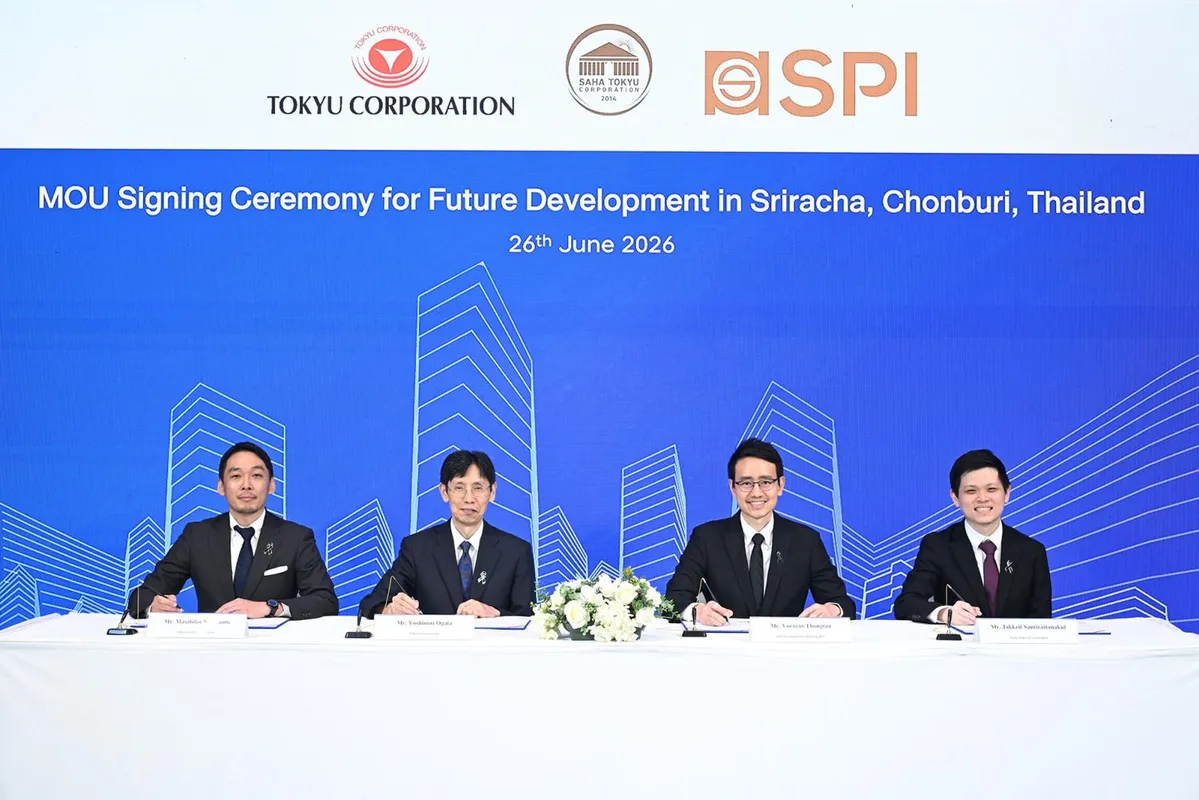
In a separate but significant development, Saha Pathana Inter-Holding Plc (SPI), Japan’s Tokyu Corporation, and Saha Tokyu Corporation Co Ltd have formalized a partnership. They have signed a memorandum of understanding to jointly investigate the potential for future development projects in Si Racha, a key district in Chon Buri province.
This collaboration will span a three-year feasibility study period. During this time, the partners intend to conduct comprehensive studies and formulate long-term development strategies projected over 10 to 20 years. The focus will be on approximately 700 rai of land owned by the Saha Group in Si Racha.
Strategic Vision for Si Racha
Vorayos Thongtan, president of SPI, highlighted Si Racha’s strategic importance as a central economic hub within the Eastern Economic Corridor (EEC). The joint venture aims to establish a new business framework and cultivate a high-quality living environment. These efforts are intended to foster sustained economic growth and attract further investment into the region.
Yoshinori Ogata, an executive officer at Tokyu Corporation, elaborated on the scope of the feasibility study. It will encompass a wide array of potential development projects, including commercial centers, office spaces, residential complexes, international schools, and convention hall facilities. The ultimate investment value remains undetermined and is contingent upon the findings of this extensive study.
Mr. Ogata indicated that projects such as international schools and convention halls are of particular interest for initial development. However, he stressed the necessity of assessing market demand thoroughly before proceeding with any specific ventures. The overarching goal is to create a vibrant and multifaceted urban environment that caters not only to the existing expatriate community, including the approximately 7,000 registered Japanese nationals in Si Racha, but also to a global influx of professionals and residents.
Mr. Ogata also commented on the continued confidence of Japanese investors in Thailand’s economic landscape. He noted that various sectors, including the automotive industry, are actively expanding their investments within the country, underscoring Thailand’s appeal as a key regional hub.
