

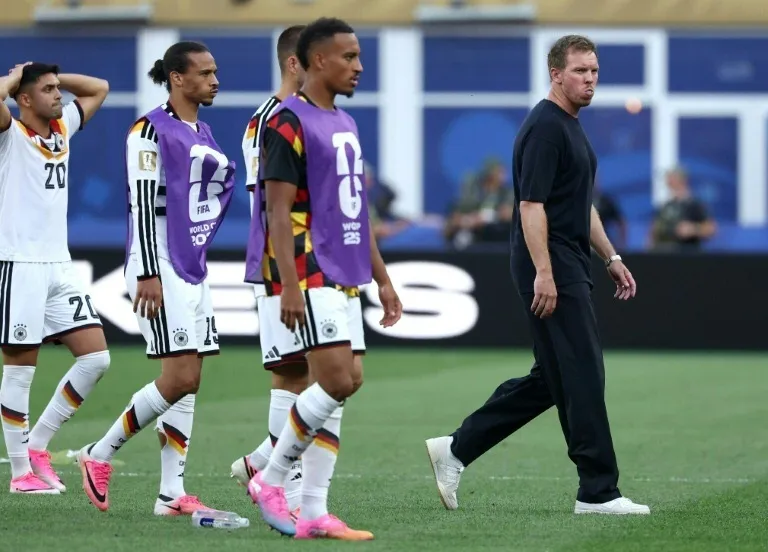
Germany’s hopes of World Cup glory have been dashed once again, with a shocking defeat to Paraguay in the last 32 marking their earliest ever exit from the tournament via a penalty shootout. This latest setback continues a concerning trend for the four-time champions, who have now been eliminated in the group stage or early knockout rounds in their last three World Cup appearances. The team’s struggles extend beyond early exits; they have failed to secure a victory in an elimination match since their triumphant 2014 World Cup win, and have not kept a clean sheet in any of their recent tournament matches.
A Steep Decline from Footballing Elite
The unexpected loss to 41st-ranked Paraguay, a team that had previously suffered a heavy defeat to the hosts, has drawn sharp criticism from the German press. Newspapers and football magazines alike have labeled the result a “new humiliation” and a “damning indictment” of the current state of German football. This sentiment reflects a broader concern that Germany is “drifting further and further away from the world’s elite.” Once a powerhouse known for nurturing top talent that European rivals envied, Germany’s ability to consistently produce world-class players has reportedly lagged behind nations like France, Spain, and England over the past decade. Despite being Europe’s most populous country and having football as its dominant sport, the men’s national team now sits at 10th in the FIFA rankings, a stark contrast to its historical standing.
Challenges in Talent Production and Depth
Several factors are contributing to Germany’s perceived lack of depth. While injuries to key players like Lennart Karl, Serge Gnabry, and Nico Schlotterbeck have undoubtedly impacted the squad, major European footballing nations often have the luxury of leaving star players out of their squads due to a deeper talent pool. Examples cited include France’s wealth of options with players like Eduardo Camavinga and Randal Kolo Muani, England’s embarrassment of riches with Phil Foden and Cole Palmer, and Spain’s emerging talent such as Dean Huijsen. This limited depth places immense pressure on Germany’s remaining world-class talents, such as Kai Havertz, Florian Wirtz, and Jamal Musiala. These players, some of whom have had challenging club seasons, have struggled to consistently replicate their top form on the international stage during the tournament, despite occasional flashes of brilliance.
Scrutiny on Coaching and Future Direction
Head coach Julian Nagelsmann has become a focal point for much of the criticism. Appointed amidst considerable fanfare, with reports suggesting top European clubs were also vying for his services, his tenure has been overshadowed by the team’s recent tournament failures. Following a Round of 16 exit at Euro 2024 on home soil, the pressure is mounting for the German Football Association (DFB) to avoid prolonged support for a coach after a significant setback, a pattern seen with previous managers Joachim Löw and Hansi Flick. Lothar Matthäus, a World Cup winner, has publicly stated that Nagelsmann lacks “imagination” and that a “new coach” is necessary for Germany to move forward. Nagelsmann himself has acknowledged the need for “big changes” but has expressed his commitment to staying on, stating he is “not one to run away” and is prepared to continue if the DFB wishes.
Calls for Fundamental Reform
Adding to the intense scrutiny is the presence of former Liverpool manager Jürgen Klopp, who has served as a prominent pundit during the tournament. Klopp has cast a long shadow over Nagelsmann and the national team setup. Earlier in the tournament, he drew some criticism for remarks that seemed to question Nagelsmann’s long-term prospects. However, following the defeat to Paraguay, Klopp adopted a more serious tone, dismissing suggestions that he should take over the coaching role. Instead, he has advocated for more profound, fundamental reforms within German football, starting from the grassroots level, specifically mentioning changes needed from the under-10 age group upwards.
Klopp emphasized the stark contrast between Germany’s current situation and the passion displayed by the Paraguayan team, for whom reaching the Round of 16 was a significant achievement. He suggested that Germany has become too reliant on its past glories. “We are Germany? No, we were Germany,” Klopp stated. “To be football Germany again, we need to really change things.” He stressed that the issue is not about individual names, neither his nor Nagelsmann’s, but about addressing systemic reasons for the team’s underperformance. While acknowledging the players’ desire to succeed, Klopp questioned why they were “unable to do it in some areas” and insisted that the underlying causes must be thoroughly investigated.
Looking Ahead: A Need for Deep Change
The consecutive early exits from the World Cup have ignited a crucial debate about the future of German football. Beyond discussions about the current coaching staff, there is a growing consensus that deeper structural changes are required. This includes re-evaluating player development pathways, enhancing the quality and depth of the talent pool, and fostering a renewed competitive spirit within the national team. The coming months will likely see intense deliberation within the DFB and the wider football community as they grapple with these painful questions and strive to restore Germany to its former standing among the world’s footballing elite.
