

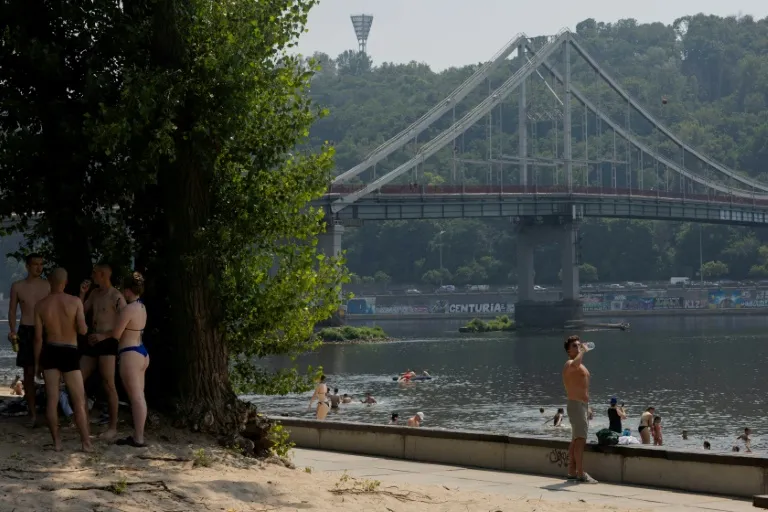
Kyiv residents are flocking to the city’s beaches and riverbanks to escape a severe heatwave, seeking moments of normalcy and relief from soaring temperatures. However, these popular summer spots present a stark dilemma, offering a chance to cool off but also exposing individuals to the ongoing dangers of the conflict with Russia. The dual threats of extreme heat and potential aerial attacks create a precarious environment for those attempting to find solace by the water.
Escaping the Heatwave
Ukraine is currently experiencing sweltering conditions, with temperatures predicted to reach up to 38 degrees Celsius in some areas as a record-breaking European heatwave extends eastward. This intense heat has driven many, including those in the capital, to seek refuge near bodies of water. Beaches along the Dnipro River and other local spots have become popular destinations for sunbathers and swimmers looking to beat the mercury.
The desire to cool down is palpable. “It’s very hot in Ukraine right now. People are trying to relax by the water, but the question is whether they’re doing it safely,” noted Pavlo Petrov, a spokesperson for the state’s emergency services. He highlighted the risks of drowning, particularly as people seek to cool off. In June alone, 123 people drowned across Ukraine, with 10 of those incidents occurring in Kyiv.
To underscore these dangers, emergency services recently conducted a demonstration on a Kyiv beach, showcasing rescue techniques. Lifeguards were seen in action, though sunbathers appeared largely unfazed, a testament to the daily routines that often include navigating emergencies.
The Unseen Danger: Aerial Threats
Beyond the risks of drowning, officials have voiced concerns about the vulnerability of beachgoers to aerial attacks. These open areas offer minimal protection from Russian missiles and drones. Despite repeated urgings from authorities to avoid such exposed locations, many Kyiv residents continue to frequent them.
The reality of the war is never far away. Air raid sirens are a common occurrence, and while some heed the warnings and seek shelter, many have grown accustomed to the alerts. The frequency of these alarms often makes it impractical for individuals to repeatedly descend into shelters, leading some to prioritize their immediate need for relief over potential, though ever-present, threats.
Tragically, the dangers have manifested. In Odesa, a Black Sea port city, a 26-year-old woman was killed by drone debris while on a beach just weeks prior. Reports and circulated footage depicted the desperate efforts of rescuers attempting to save her life.
A Soldier’s Perspective
Ivan Pyrtsu, a soldier on leave from the front lines, expressed the sentiment of many seeking a brief respite. “It’s hot in the apartment… if you have the chance to go to the beach and relax, the water helps a little,” he shared. While acknowledging the lack of cover and the potential danger from drones, Pyrtsu, like many others, chose to focus on the immediate need for relaxation.
“We’re hoping nothing happens. And, as experience shows, attacks during the daytime are quite rare,” he added, reflecting a common, though increasingly challenged, perception. However, recent patterns indicate an increase in daytime attacks by Russia, including barrages of drones targeting major cities.
Pyrtsu recognized the exposed nature of the beach, noting, “The whole area is completely open. If something were flying toward the beach, all you could really do is watch where it’s coming from and where it’s headed, so you’d have some idea of which direction to move.” Despite this, he emphasized the psychological importance of finding moments of normalcy. “If everybody is tense all the time, that’s not good either. You still have to rest.”
Finding Normalcy Amidst Conflict
The presence of war is subtly woven into the fabric of everyday life, even during leisure activities. Teenagers playfully tussle over inflatable mattresses, similar to those used for sleeping in underground metro stations during nighttime air raids. On the opposite bank of the river, large murals serve as a poignant tribute to Ukrainian brigades fighting on the front lines.
A Teacher’s Fatalistic Outlook
Mariana Tsymbalenko, a 39-year-old language teacher who recently fled Kramatorsk, finds the river a preferable alternative to air conditioning, especially given potential power outages. Ukraine’s energy grid, already strained by Russian strikes, faces additional pressure during the heatwave, leading to temporary power cuts in some regions.
Tsymbalenko, having experienced the intense pressures of war firsthand, adopts a fatalistic view regarding safety on the beach. “In the end, we’re all in God’s hands. If it’s God’s will that you die, then you will. And if not, everything will be fine,” she stated. For her, the current challenges of heat and the possibility of an attack pale in comparison to the horrors of active combat. “I’d rather have this kind of problem than a war,” she concluded.
As the heatwave continues and the conflict persists, Kyiv’s residents are navigating a complex reality, seeking moments of relief and normalcy while remaining acutely aware of the ever-present risks. The beaches, once purely recreational spaces, now embody a delicate balance between the human need for respite and the harsh realities of war.
