

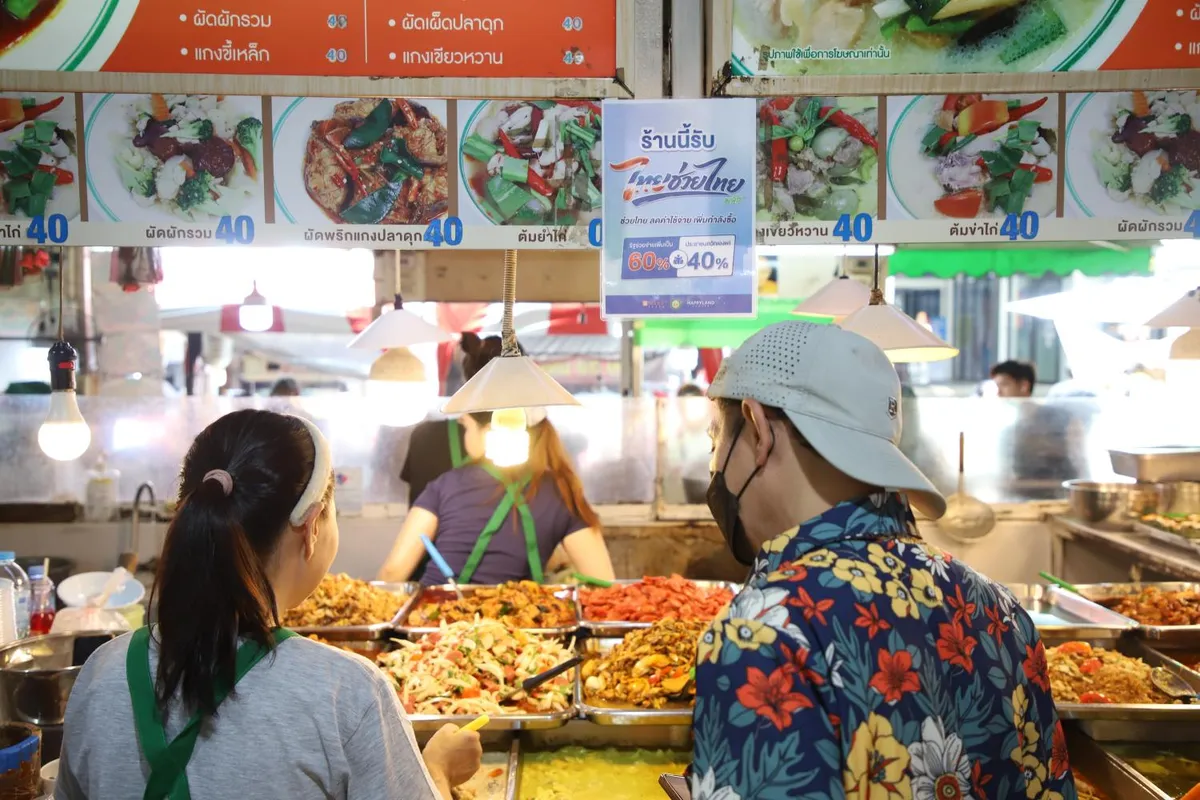
The Thai government’s co-payment subsidy scheme has significantly boosted food delivery orders, with major platforms reporting substantial increases in transactions and user engagement. Within two weeks of its extension to food delivery services on June 15, participating merchants on GrabFood saw orders exceed 500 million baht. This initiative, designed to stimulate domestic consumption, appears to be successfully channeling funds into the food service sector.
Co-Payment Scheme Drives Significant Growth in Food Delivery
The co-payment scheme, which allows consumers to receive a government subsidy when purchasing goods and services, was expanded to include food delivery platforms, leading to a surge in orders. GrabFood, a leading platform, noted that Bangkok led the nation in food delivery orders under the scheme, followed by major provincial hubs including Chiang Mai, Chon Buri, Khon Kaen, and Nakhon Ratchasima. This geographical distribution suggests widespread adoption across both urban and more populous regional centers.
Chantsuda Thananitayaudom, country head of Grab Thailand, expressed satisfaction with the scheme’s reception. She highlighted that the period since mid-June has seen an overwhelmingly positive response from all stakeholders: consumers, food merchants, and the delivery drivers themselves. The merchant participation rate via GrabFood saw a notable increase of 40% compared to the previous year’s co-payment initiative, indicating greater merchant confidence and a stronger incentive to join the program.
Consumer Spending Patterns Revealed
Analysis of GrabFood orders placed under the scheme between June 15 and June 30 revealed specific consumer spending habits. A significant portion of transactions, 55%, fell within the 100-250 baht range. Furthermore, 25% of orders were valued at less than 100 baht, suggesting that the subsidy is making everyday meal purchases more accessible and encouraging frequent, smaller orders.
Line Man Wongnai Reports Strong User Adoption
Another prominent platform, Line Man Wongnai, also reported impressive figures. Between June 15 and June 28, over 1.2 million individuals utilized the co-payment scheme through its delivery services. The platform observed a more than 15% increase in average order value by late June compared to the scheme’s launch day, indicating that users were not only ordering more frequently but also potentially ordering higher-value items or adding more to their carts.
Yod Chinsupakul, chief executive of Line Man Wongnai, commented on the scheme’s effectiveness. He stated that the performance during the initial two weeks clearly demonstrated the program’s success in stimulating daily spending. According to Mr. Yod, users spent an average of 450 baht per person, which has been crucial in ensuring a consistent flow of capital to restaurants across the country.
Overall Scheme Performance and Government Contribution
The co-payment scheme’s impact extends beyond food delivery, encompassing broader retail spending. As of June 30, the total expenditure under the scheme reached 43.2 billion baht, according to data from the Fiscal Policy Office. Of this total, individuals contributed 18.4 billion baht, with the vast majority—18 billion baht—spent at physical shops. A smaller but significant portion, 448 million baht, was allocated to online food delivery platforms.
The government’s contribution to the scheme totaled 24.8 billion baht. Similar to individual spending, the bulk of this subsidy, 24.3 billion baht, was directed towards purchases at physical stores. Approximately 550 million baht of the government’s contribution was used to subsidize orders placed via online food delivery platforms. This breakdown highlights the dual impact of the scheme: supporting brick-and-mortar businesses while also providing a substantial boost to the digital economy, particularly the food delivery sector.
Conclusion: A Successful Stimulus for the Food Sector
The initial results from the co-payment scheme’s extension to food delivery services indicate a highly successful government intervention aimed at boosting domestic spending. Both GrabFood and Line Man Wongnai have reported significant increases in order volumes, user participation, and overall transaction value. The scheme has not only provided a financial lifeline to restaurants and food vendors but has also made dining more affordable for consumers, fostering a continuous cycle of economic activity. The data suggests that the co-payment mechanism is an effective tool for stimulating demand and supporting key sectors of the Thai economy, particularly during periods requiring economic recovery.
