

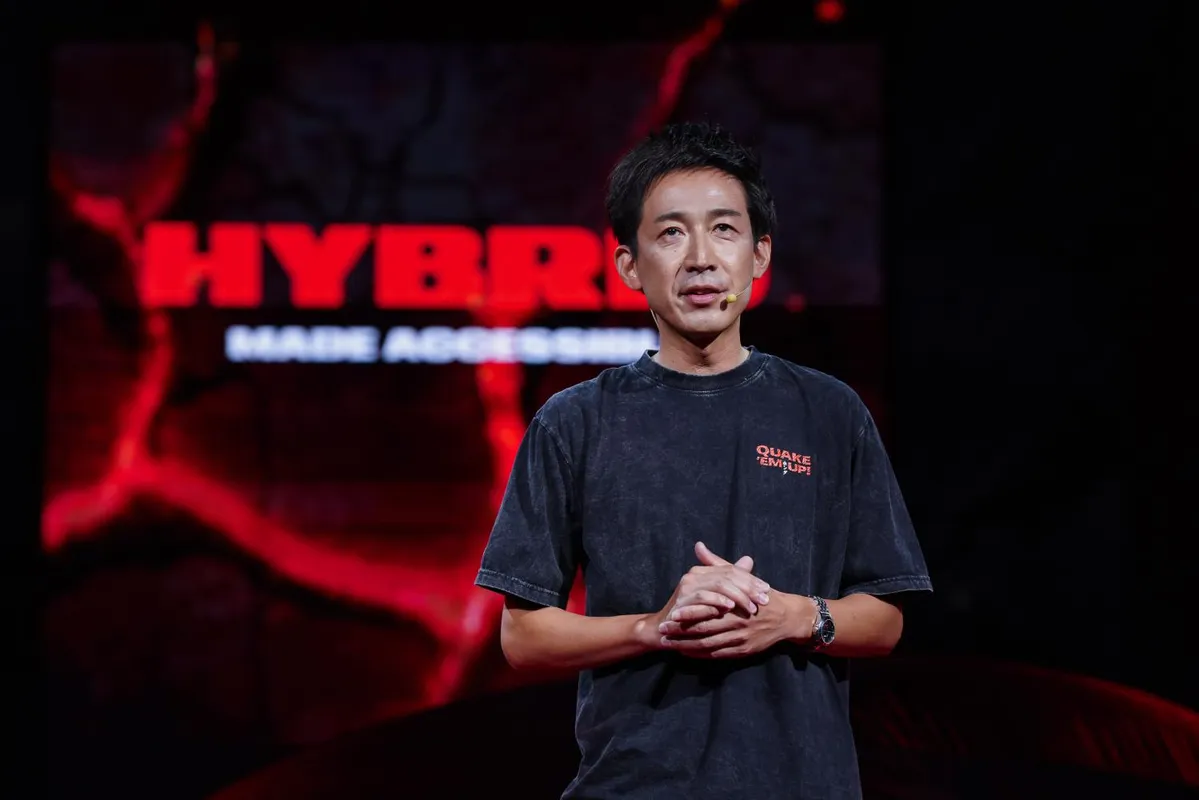
Honda is setting an ambitious target to lead Thailand’s automotive market with hybrid electric vehicles (HEVs) by 2029. The Japanese automaker plans for nearly 90% of its vehicle sales in the country to be HEVs within five years, a strategic move designed to counter the escalating popularity of Chinese battery electric vehicles (BEVs) that currently hold a significant market share. This push is centered around Honda’s proprietary “e:HEV” technology, which intelligently integrates an electric motor with a gasoline engine. This system dynamically switches between generating electricity for the motor and directly powering the vehicle, offering a compelling alternative to pure electrics.
Honda’s e:HEV Technology: A Cost-Effective Solution
Koji Iwanami, president and chief executive of Honda, highlighted the distinct advantages of the e:HEV system. He explained that its ability to automatically recharge its battery while driving, coupled with substantial reductions in fuel consumption, positions it as a highly cost-effective option compared to BEVs. “Honda expects the e:HEV to outperform BEVs,” Mr. Iwanami stated, expressing confidence that these hybrid vehicles will enable Japanese car manufacturers to regain market share from Chinese BEVs in Thailand.
To bolster this strategy, Honda recently launched four new variants of its City model in Thailand: the e:HEV RS, e:HEV SV, e:HEV V, and the VTEC Turbo. The company has projected sales of 40,000 units for these models over a full year. Encouragingly, sales have already reached 31,000 units between January and May 2026, indicating strong initial market reception. For the current year, Honda aims for total car sales of 76,000 units in Thailand, contributing to an anticipated overall domestic market volume of 660,000 vehicles.
Global Strategy for Competitive Pricing
On a global scale, Honda has announced significant plans to reduce the manufacturing costs of its next-generation hybrid systems by over 30% compared to current iterations. This cost reduction initiative is crucial for enabling the company to produce vehicles locally at competitive price points, directly challenging the market dominance of Chinese BEVs. “Honda’s car prices should be more attractive to customers who want new technology but not BEVs,” Mr. Iwanami added, emphasizing the appeal of their hybrid offerings to a broader customer base.
Advocacy for Local Content and Manufacturing Prowess
Beyond product strategy, Honda is actively engaging with the Thai government. The automaker is advocating for the extension of local content requirements, which currently apply to internal combustion engine (ICE) vehicles, to also encompass BEVs. The goal is to ensure that more than 90% of components used in vehicle manufacturing are sourced domestically, fostering local industry growth. This aligns with Honda’s long-standing commitment to Thailand as a pivotal hub within Southeast Asia. The company’s Prachinburi plant, a significant investment established after the 2011 Ayutthaya floods, serves as a central base for manufacturing and exports across the region.
Focus on the B-Segment and Future Market Outlook
Shun Kuroda, chief officer for sales and services at Honda Automobile (Thailand), underscored the company’s strategic focus on the B-segment subcompact car market. He cited the segment’s inherent advantages in affordability, fuel efficiency, and versatility as key drivers for consumer demand. Despite the strong emphasis on hybrids, Mr. Kuroda confirmed that Honda continues to invest in and develop BEV technology concurrently, ensuring a comprehensive approach to electrification.
Looking ahead, Honda’s market projections for Thailand are optimistic for hybrid technology. The company forecasts that by 2029, HEVs will command a substantial 52% share of the Thai car market. BEVs are expected to follow with 33%, while traditional ICE vehicles are projected to hold 13%, and other emerging technologies making up the remaining 2%. This outlook positions Honda’s e:HEV strategy as a cornerstone of its future success in one of Southeast Asia’s most dynamic automotive markets.
