

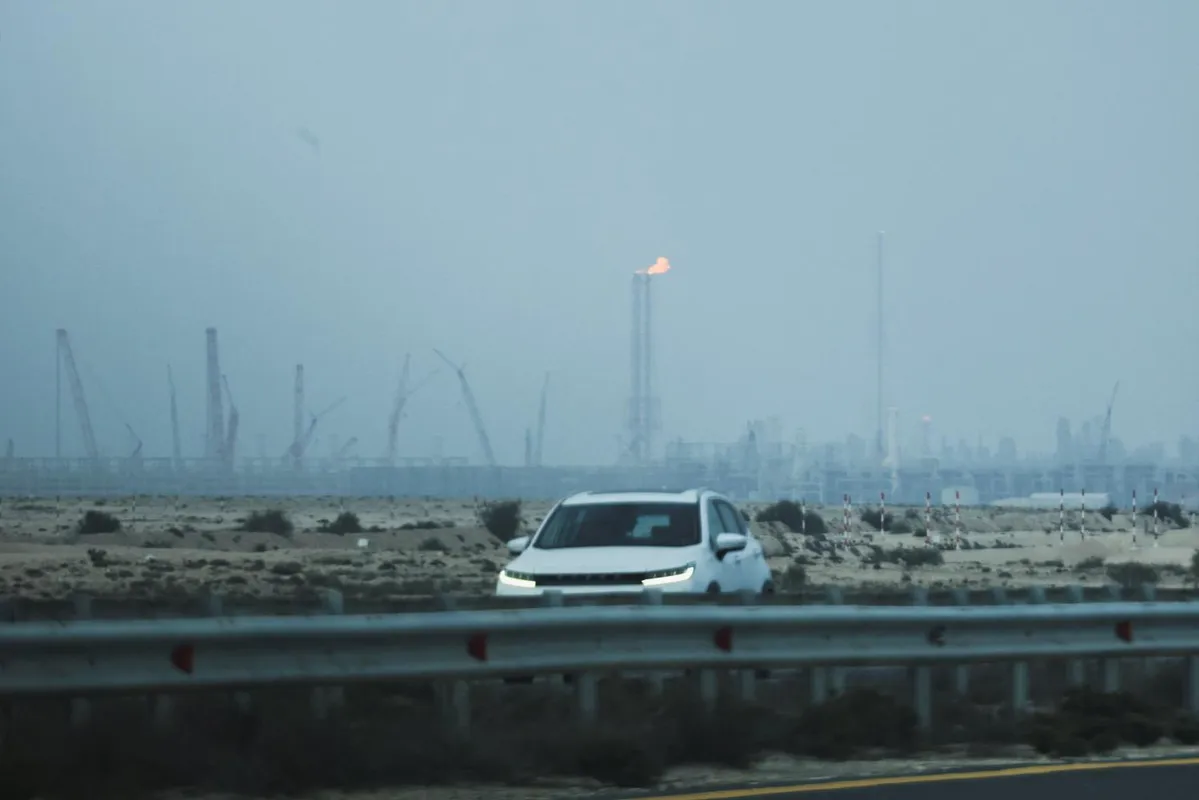
The ongoing conflict in the Middle East continues to cast a long shadow over global industries, with persistent uncertainty about de-escalation between Washington and Tehran fueling fears of a protracted confrontation. This instability is poised to worsen existing semiconductor shortages and drive up worldwide prices, according to industry observers. The repercussions are already being felt, with critical resource supply chains experiencing significant disruptions.
Earlier this year, attacks on Qatar’s Ras Laffan facility led to the disruption of nearly a third of the global helium supply. Helium is an essential component in the manufacturing of semiconductors, vital for a wide array of modern technologies, including those supporting Thailand’s burgeoning automotive sector. The scarcity of this crucial element poses a direct threat to chipmakers reliant on it.
While a memorandum of understanding was reportedly established on June 17 between the United States and Iran, aimed at fostering peace, accusations of ceasefire violations quickly emerged from both parties. These tensions were underscored by reports of an Iranian projectile hitting a cargo vessel in the Strait of Hormuz shortly after the agreement was announced, highlighting the precarious nature of the situation.
Cedric Cui, president of Omoda & Jaecoo (Thailand), emphasized the gravity of these developments. “Uncertainty in the Strait of Hormuz and the helium issues are major concerns,” Mr. Cui stated. “These will drive up operation costs of car manufacturers.” He further elaborated that the combined pressures of supply chain disruptions and rising input costs are significant challenges for the automotive industry.
Omoda & Jaecoo has already implemented price adjustments on certain vehicle models. However, the company has leveraged economies of scale to mitigate the full impact on consumers, absorbing some of the increased costs. Despite these considerable headwinds, the company remains committed to its expansion plans and new product introductions.
New Product Launches and Investment Plans
The company recently unveiled the Jaecoo 6T REEV (Range-Extended Electric Vehicle), with initial deliveries scheduled to commence this month. Bill Zhang, Country Director, expressed optimism regarding the new model, projecting sales of approximately 500 units per month. This launch signifies the company’s dedication to innovation and meeting evolving consumer demands, particularly in the new energy vehicle segment.
Beyond new product introductions, Omoda & Jaecoo is also planning to increase its investment within Thailand’s auto parts sector. This strategic move aims to bolster local manufacturing capabilities and further integrate the company into the regional supply chain. A key focus of this investment will be the expansion of new-energy vehicle production, with a particular emphasis on REEVs.
The company’s diverse portfolio of electric vehicles, which includes battery electric vehicles (BEVs), traditional hybrids, and plug-in hybrid electric vehicles (PHEVs), aligns with Thailand’s national objectives for energy transition. By offering a range of electrified options, Omoda & Jaecoo contributes to reducing carbon emissions and promoting sustainable transportation solutions within the country.
Market Presence and Sales Figures
In Thailand, Omoda & Jaecoo currently sells between 3,000 and 3,500 vehicles each month. The Chery brand, also part of the company’s portfolio, contributes an additional 600 to 1,000 units to the monthly sales volume. This established market presence provides a solid foundation for future growth, even amidst the current global economic uncertainties.
The confluence of geopolitical tensions, supply chain vulnerabilities, and the increasing demand for sustainable transportation presents a complex operating environment for industries worldwide. The automotive sector, heavily reliant on global supply chains and sensitive to energy prices, is particularly exposed. The strategic decisions made by companies like Omoda & Jaecoo, balancing investment in new technologies with the management of operational costs, will be crucial in navigating these challenges and shaping the future of mobility.
The semiconductor industry, a linchpin for modern manufacturing, faces ongoing pressure from resource scarcity. The helium shortage, directly linked to regional instability, underscores the interconnectedness of global markets. As conflicts persist and supply lines remain threatened, the ripple effects on manufacturing costs and product availability are likely to continue, demanding resilience and adaptability from businesses across all sectors.
