

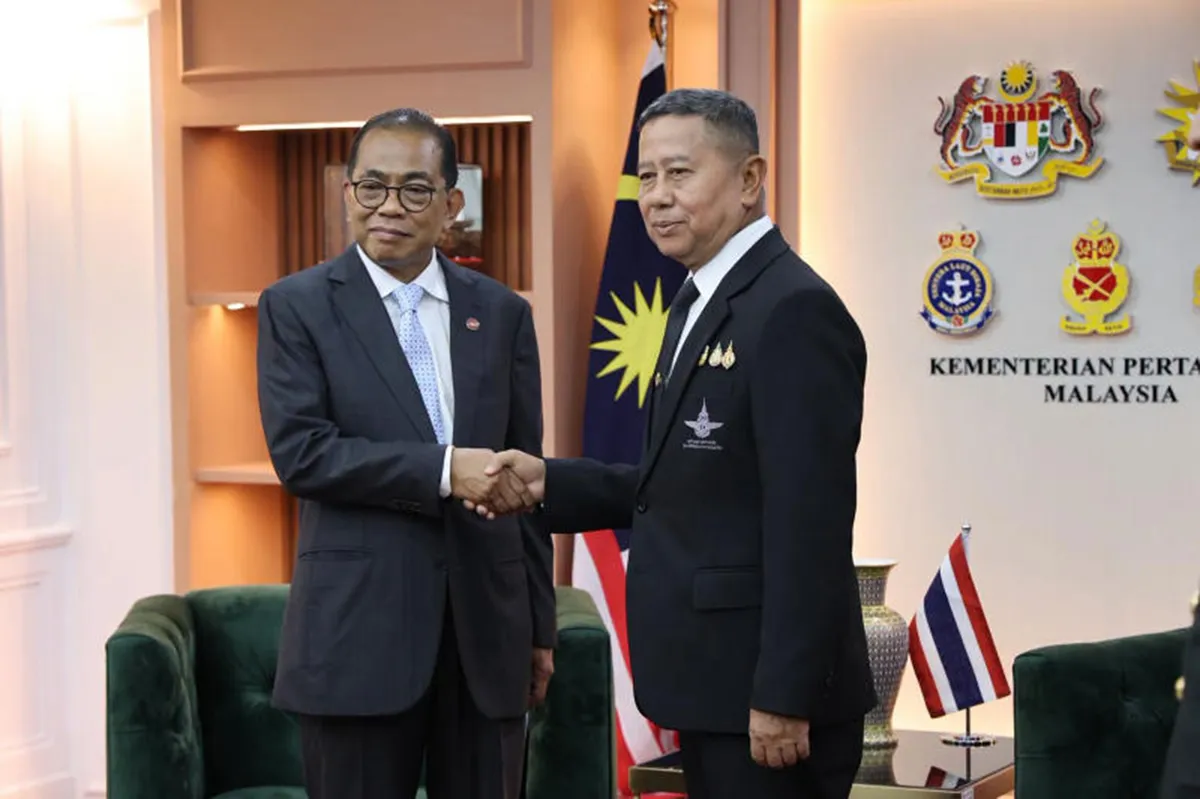
Thailand’s Defence Minister, Lieutenant General Adul Boonthumjaroen, recently concluded a two-day official visit to Malaysia, aimed at strengthening bilateral defence cooperation. The visit, extending from Monday to Tuesday, was at the invitation of Malaysian Defence Minister Mohamed Khaled bin Nordin. This engagement builds upon prior discussions held during the IISS Shangri-La Dialogue in Singapore in late May, and follows a recent trip to Malaysia by Thai Prime Minister Anutin Charnvirakul, which saw the inauguration of a new road connecting the Sadao border checkpoint.
Expanding Defence Partnership for Border Security and Development
During their high-level talks, the defence ministers from both nations committed to enhancing their collaboration through a “partnership for border area development.” This initiative is designed to simultaneously improve the quality of life for communities residing in border regions and ensure sustained long-term security. A significant outcome of the discussions was the positive reception of the progress made in drafting a memorandum of understanding (MoU) specifically on defence cooperation. This landmark agreement is anticipated to be formally signed at the upcoming 57th Thailand-Malaysia General Border Committee (GBC) meeting, scheduled to take place later this year.
Addressing Southern Border Security Concerns
A key focus of the bilateral discussions involved the security situation in Thailand’s southern border provinces. The Thai delegation emphasized the critical need to prevent these cross-border areas from being exploited to facilitate violent activities. Both countries acknowledged the importance of this issue and agreed to bolster military-to-military coordination. The objective is to enhance operational flexibility and improve communication channels along their extensive shared border, ensuring a more unified and responsive approach to security challenges.
Boosting Defence Industry Collaboration
Beyond security cooperation, Thailand and Malaysia have also agreed to broaden their partnership within the defence industry. This expansion will encompass several key areas, including the integration of supply chains, the exchange of advanced technologies, and joint initiatives for capability development. This strategic alignment aims to leverage the strengths of both nations’ defence sectors.
Building on Past Successes and Exploring New Avenues
The ministers highlighted the successful collaboration on the First Win wheeled armoured vehicle program as a foundation for future projects. Looking ahead, both countries will explore new opportunities, particularly in aircraft maintenance. Specifically, they will investigate potential cooperation with Malaysia’s Aircraft Inspection, Repair & Overhaul Depot (Airod). Airod, a subsidiary of National Aerospace and Defence Industries (Nadi), currently provides comprehensive aircraft maintenance, repair, and inspection services for both military and civilian clients. Its expanded role is seen as crucial for bolstering regional self-reliance in defence manufacturing and maintenance capabilities.
Addressing Transnational Threats and Regional Stability
The commitment to deeper cooperation extends to addressing broader regional security concerns. Both ministers agreed to work together within the framework of ASEAN’s expert working groups. This includes a pledge for closer policy coordination to effectively tackle emerging transnational threats. Such threats encompass a range of challenges, including the growing prevalence of cybercrime, sophisticated online scams, and the persistent issue of transboundary pollution. By aligning their strategies and enhancing communication, Thailand and Malaysia aim to foster greater stability and security within the ASEAN region.
Conclusion: A Strengthened Bilateral Relationship
The recent visit by Thailand’s Defence Minister to Malaysia marks a significant step forward in the bilateral defence relationship. The agreement to deepen cooperation in border development, enhance military coordination, and expand joint ventures in the defence industry underscores a shared commitment to regional security and economic prosperity. The anticipated signing of the defence cooperation MoU later this year will further solidify this strategic partnership, paving the way for more integrated efforts in tackling complex security challenges and fostering indigenous defence capabilities.
