

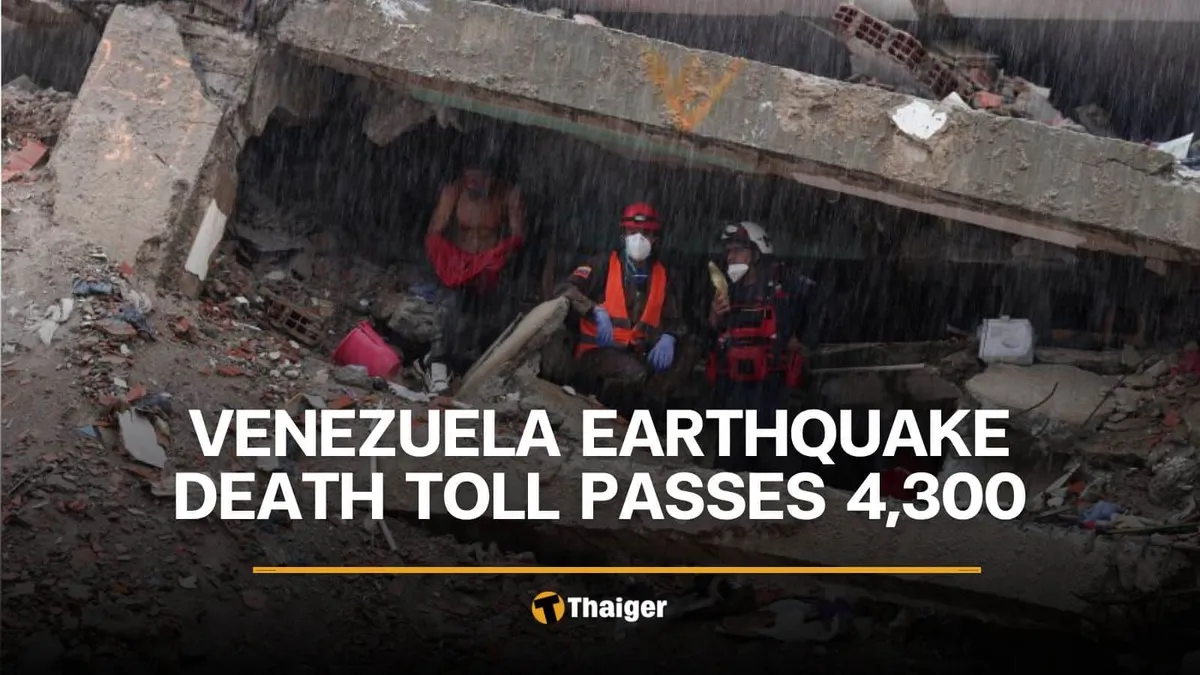
The devastating twin earthquakes that struck Venezuela on June 24 have resulted in a confirmed death toll of 4,333, according to recent statements from the President of the National Assembly. This figure represents a significant increase as search and rescue operations continue in the affected regions. In addition to the fatalities, the earthquakes injured 16,740 individuals, with 6,462 people successfully rescued from the debris. Approximately 17,000 residents have been displaced and are currently without homes.
Housing Allocations and Reconstruction Efforts
Addressing the urgent need for shelter, the government has announced plans to begin allocating housing for survivors next week. Acting President Delcy Rodríguez is slated to distribute the first 200 homes to earthquake victims. While specific details regarding the allocation process have not yet been released, this initiative marks a critical step in providing immediate relief to those who have lost their residences.
The seismic events have had a profound impact on the built environment, with 856 buildings reported as affected. Of these, 190 structures have either been completely destroyed or suffered severe structural collapse, rendering them uninhabitable. Early government assessments indicate a substantial need for at least 25,000 new homes to accommodate the displaced population. To facilitate these reconstruction efforts, officials have identified and secured approximately 40 plots of land, spanning roughly 584,000 square meters. These sites, located in the villages of Osma and Chuspa, are designated for new housing projects aimed at rebuilding the community.
Ongoing Search Operations
Despite the grim statistics, search and rescue operations are still underway in several areas where the situation remains uncertain. Rescue teams are diligently working in these remaining zones, driven by the hope of finding survivors. The President of the National Assembly emphasized the commitment to these efforts, stating, “As long as there is life, there is hope. We still have one or two spots where the situation remains uncertain. We are actively searching for survivors in these areas.” This underscores the dedication of emergency responders to continue their vital work.
International Response and Initial Impact
The scale of the disaster prompted a significant international response, with rescue teams from around the globe converging on Venezuela. The initial impact of the magnitude 7.2 and 7.5 earthquakes, which occurred on June 24 and were followed by numerous aftershocks, was catastrophic. Thousands were initially feared missing or trapped beneath the rubble. While official figures for those missing are not explicitly detailed in the latest update, an opposition website had previously estimated the number to be significantly higher, potentially exceeding 55,000. More than 1,600 foreign rescue workers arrived to support local efforts, deploying across La Guaira state and Caracas. Access to La Guaira, a heavily impacted area, was initially restricted, and power restoration has been a gradual process. The U.S. Geological Survey had previously warned that the final death toll could potentially surpass 10,000, highlighting the severity of the seismic event.
Conclusion
The Venezuelan earthquakes of June 24 have left a deep scar on the nation, with the death toll now exceeding 4,300. The government’s focus is now shifting towards recovery and reconstruction, with immediate plans for housing allocations and long-term rebuilding projects. The ongoing search efforts, though challenging, reflect a persistent commitment to finding any remaining survivors. The disaster has also highlighted the importance of international cooperation in times of crisis, as global rescue teams joined forces to aid Venezuela in its hour of need.
