

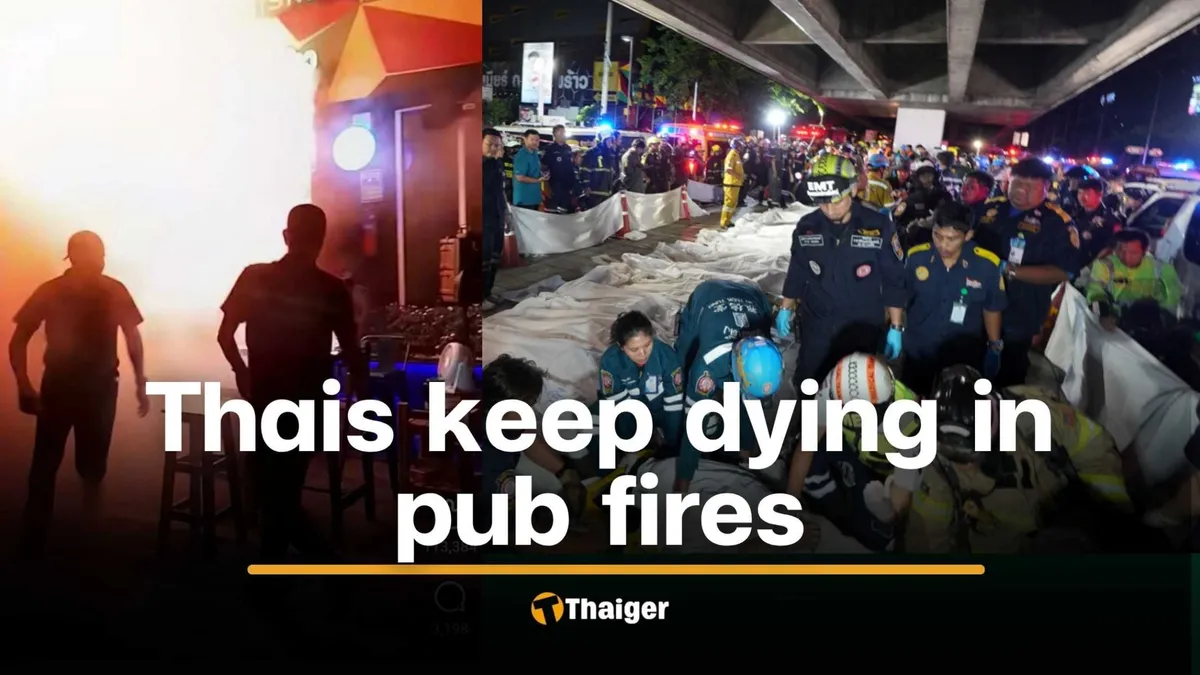
A devastating fire at Rong Beer Na Lat Phrao in Bangkok on July 12, 2026, which claimed 27 lives and injured 63, highlights a recurring pattern of safety failures in Thailand’s entertainment venues. This tragedy, occurring just 12 days after a fatal fire at an unlicensed bar in Pattaya, underscores a disturbing lack of progress in learning from past disasters, including the infamous Santika nightclub fire in 2009 and the Mountain B pub fire in 2022.
The Lat Phrao incident, which began just before midnight, saw firefighters battling a blaze that spread rapidly, trapping patrons. Investigations revealed that the venue’s fire exits were obstructed, with one blocked by a table used for selling sweets. Many victims were found clustered near these escape routes, suggesting they were impassable. The rapid spread of the fire was attributed to highly flammable decorative materials.
The Lat Phrao Fire: A Night of Horror
Emergency services received the call about the fire at Rong Beer Na Lat Phrao, a popular restaurant and drinking spot near the Lat Phrao intersection, shortly before midnight on July 12, 2026. Firefighters arrived to find the venue engulfed in flames and many people trapped inside. It took approximately 35 minutes to bring the blaze under control. By the morning of July 13, the death toll had reached 27, with 63 injured, 22 of whom remained in critical condition. The victims, aged between 20 and 30, were found with their bodies concentrated near the venue’s two designated fire escape routes, which were reportedly blocked.
Bangkok Governor Chadchart Sittipunt, who visited the scene, noted that a table used for selling sweets was found obstructing one of the fire exit doors. This detail starkly illustrates how essential safety measures can be rendered useless by everyday operations. The governor also pointed to the use of highly flammable decorative materials as a likely cause for the fire’s swift and violent spread.
Initial reports suggest the fire may have originated from an electrical short circuit, with a witness reportedly seeing smoke near the electrical cut-out switch. Forensic teams were tasked with confirming the exact cause. The venue itself, operating since 2023 under the name Brewery Na Latphrao Co Ltd, was described as having narrow entrances and low ceilings. Prime Minister Anutin Charnvirakul, who arrived at the scene early on July 13, ordered a swift investigation and expedited identification of victims.
An Ignored Warning: The Pattaya Fire
The Lat Phrao tragedy was made even more poignant by the fact that a similar incident had occurred just 12 days prior. On July 1, 2026, a fire broke out at a well-known bar in South Pattaya. This blaze claimed the life of a male employee in his late twenties. Crucially, post-fire inspections revealed that the Pattaya bar was operating without a license and lacked any fire exits. Despite the loss of life and the clear safety violations, this incident did not appear to trigger a significant nationwide response or a crackdown on similar venues.
Santika: The 2009 Inferno
To understand the recurring nature of these disasters, one must look back to the Santika nightclub fire on New Year’s Eve 2008, which spilled into January 1, 2009. A packed Santika, located in Bangkok’s Ekkamai area, erupted in flames during a live music performance. The fire started from pyrotechnics used on stage, and many patrons, mistaking it for part of the show, initially failed to react. The low ceiling and flammable materials, including foam wall panels and alcohol, caused the fire to spread with extreme speed.
The investigation following the Santika fire revealed a litany of failures: no floor plan, absent fire exit signage, insufficient emergency lighting, and overcrowding. The single main entrance, only 2.5 meters wide, became a death trap as hundreds of revellers tried to escape. The final toll was devastating: 67 dead and 45 critically injured. Legal proceedings eventually led to convictions for negligence, including the club’s executive and a director of the stage effects company. The Bangkok Metropolitan Administration was also found partially liable for failing to adequately inspect and regulate the venue.
Mountain B: A Repeat of Failures
Thirteen years later, the Mountain B pub in Sattahip, Chon Buri, experienced a similar fate. The venue, which had been operating for only two months, caught fire around 12:45 am on August 5, 2022. An electrical short circuit in the roof was identified as the cause, with acoustic foam lining the walls accelerating the blaze. The fire killed 26 people, many of whom were trapped because the rear exit was locked, forcing everyone towards the single front entrance.
Further investigation revealed that Mountain B operated without a license and had already been raided once. It lacked essential safety equipment, including a circuit breaker, and had only two fire extinguishers. The pattern of victims being found at the entrance and in toilets mirrored previous tragedies.
Common Threads: A Formula for Disaster
Examining these incidents reveals alarming commonalities:
- Inadequate Exits: Venues consistently suffer from too few exits, or exits that are blocked, locked, or poorly marked. The Santika fire saw people funnelled through a narrow door, while Mountain B had a locked rear exit. The Lat Phrao fire found victims at obstructed escape routes.
- Unlicensed Operations: Venues like Mountain B and the Pattaya bar operated without the necessary licenses, often in plain sight, raising questions about regulatory oversight.
- Flammable Materials: The use of cheap, flammable decorative and soundproofing materials in venues like Santika, Mountain B, and Lat Phrao significantly contributes to the rapid spread of fires.
- Toilets as Traps: In many cases, victims are found in toilets, which become death traps when emergency lighting fails, exit signs are missing, or smoke fills the corridors, leading people to seek refuge in enclosed spaces with no escape.
- Peak Hours Incidents: All major fires occurred between midnight and 1 am, when venues are typically at their fullest, maximizing the potential for casualties.
- Post-Tragedy Inaction: Despite regulatory changes and directives following major fires like Santika and Mountain B, enforcement appears to be lacking, allowing similar safety violations to persist.
The Unanswered Questions
For the Lat Phrao fire, crucial questions remain regarding the exact origin of the blaze, the licensing status of the venue, and how a table could obstruct a fire exit for an extended period without intervention. The investigation must also address whether any agency took additional inspection measures following the Pattaya fire warning. The protracted legal process and inadequate compensation in cases like Santika suggest that the cost of negligence may still be perceived as lower than the cost of compliance. With over a hundred lives lost across these major incidents in 17 years, Thailand faces a critical juncture: learn from these devastating events and implement rigorous safety measures now, or await the next inevitable tragedy.
