

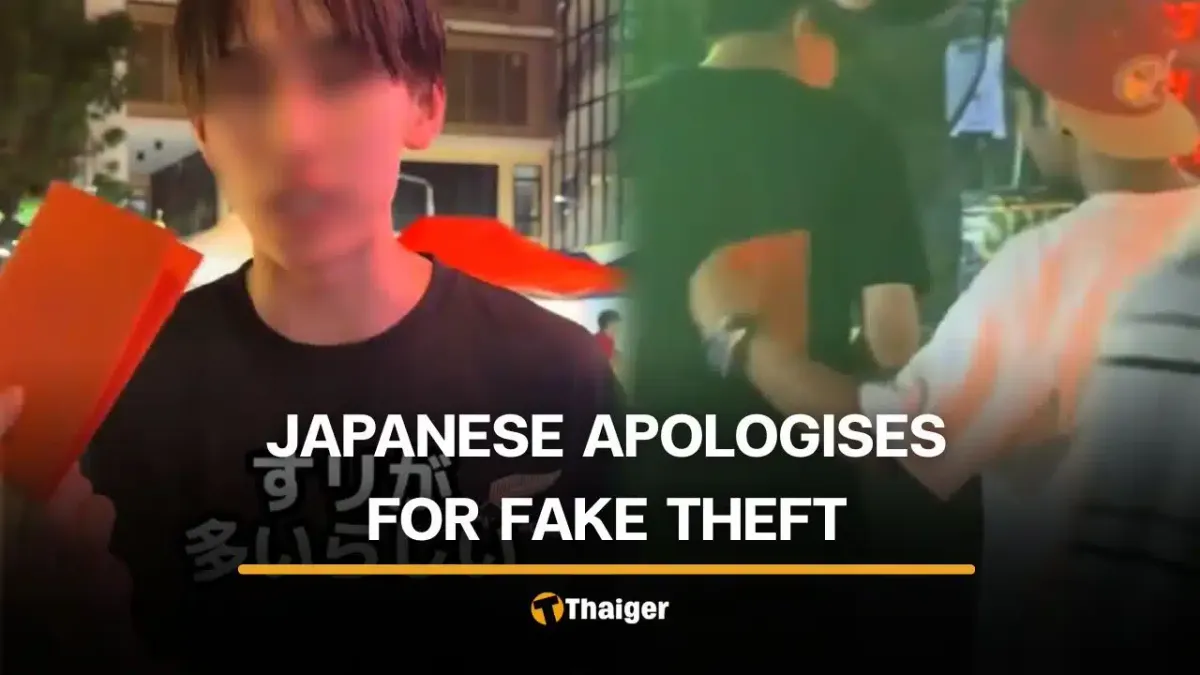
A Japanese social media influencer has issued an apology after staging a fake pickpocketing video on Bangkok’s renowned Khao San Road, sparking significant online criticism and leading to a police complaint from an individual featured in the footage. The incident has raised concerns about the authenticity of online content and its potential real-world repercussions.
Staged Video Sparks Outrage
The video, initially shared on the TikTok account @washizu_aoi1211, depicted the creator walking along the bustling Khao San Road with an orange wallet, visibly filled with cash, protruding from his back pocket. The accompanying caption, translated from Japanese, posed the question: “Will I get pickpocketed if I leave my wallet visibly sticking out of my pocket in Thailand?” The footage appeared to show several individuals surreptitiously taking the wallet, leading many viewers to believe they were witnessing actual pickpocketing incidents.
However, the creator later admitted that the scenario was entirely staged. He revealed that he had enlisted the individuals appearing in the video to pretend to steal the wallet and had compensated them for their participation. This admission came after the video garnered widespread backlash, prompting its deletion from the original account. It was subsequently reposted on X (formerly Twitter) by user @DEATHDOL_NOTE, who shared the criticism and provided an English translation of the video’s original caption.
Real-World Consequences for Featured Individual
The staged nature of the video had tangible negative consequences for at least one person involved. A Burmese national working on Khao San Road, who was featured in the footage, filed a complaint with the Chana Songkhram Police Station. According to his complaint, the viral video led tourists, particularly foreign visitors, to perceive him as a genuine pickpocket. This false perception resulted in him being treated with suspicion by potential customers.
Adding to the distress, the individual’s sister alleged that he lost his job as a direct result of the staged video circulating online. This highlights how fabricated online content, even if intended as a prank, can have severe and detrimental impacts on individuals’ livelihoods and reputations.
Apology and Continued Criticism
In the wake of the backlash, the Japanese content creator posted a video apology. He acknowledged that he had prioritized gaining views and online engagement over considering the potential negative consequences of his content. He stated that he had spoken with the worker’s younger sister and that the employer had agreed to allow the man to return to his job after reviewing the apology and clarification.
Despite the apology, many online users, both Thai and Japanese, continued to express their strong disapproval. Calls for legal action against the creator and sanctions against his social media accounts persisted. As of the latest reports, the police have not yet announced whether any formal legal proceedings will be initiated regarding the incident.
Khao San Road: A Tourist Hub and Content Creation Hotspot
Khao San Road is internationally recognized as a backpacker hub in Bangkok, attracting a diverse range of tourists and vendors. Its vibrant atmosphere and unique street culture have made it a popular location for content creators seeking to capture the essence of Bangkok. However, this popularity also makes it a potential site for staged events or pranks that can misrepresent the local community and its inhabitants.
The incident serves as a cautionary tale for social media influencers and content creators regarding the ethical responsibilities that come with producing and distributing online material. The pursuit of viral content should not come at the expense of truthfulness, respect for individuals, and an understanding of the potential real-world harm that fabricated scenarios can inflict.
Ethical Considerations in Online Content Creation
The controversy surrounding the staged pickpocketing video underscores broader ethical considerations within the realm of online content creation. As platforms like TikTok continue to grow in influence, the line between entertainment and misinformation can become blurred. Creators often face pressure to produce engaging and shareable content, which can sometimes lead to sensationalism or the staging of events for dramatic effect.
Experts in digital media ethics emphasize the importance of transparency and authenticity. When content involves staged scenarios or actors, clear disclosure is crucial to prevent viewers from forming inaccurate conclusions. Furthermore, creators have a responsibility to consider the potential impact of their content on the individuals depicted and the wider community.
The incident on Khao San Road highlights the need for greater digital literacy among social media users, enabling them to critically evaluate the content they consume. It also calls for a stronger sense of accountability among influencers to ensure their content is not only entertaining but also responsible and respectful.
Conclusion
The staged pickpocketing video on Khao San Road has ignited a necessary conversation about the ethics of online content creation and the potential consequences of prioritizing virality over authenticity. While the Japanese TikToker has apologized, the incident has left a lasting impact on those involved and serves as a stark reminder of the responsibility that comes with influencing public perception online. The situation underscores the importance of factual reporting, ethical content creation, and critical media consumption in the digital age.
