

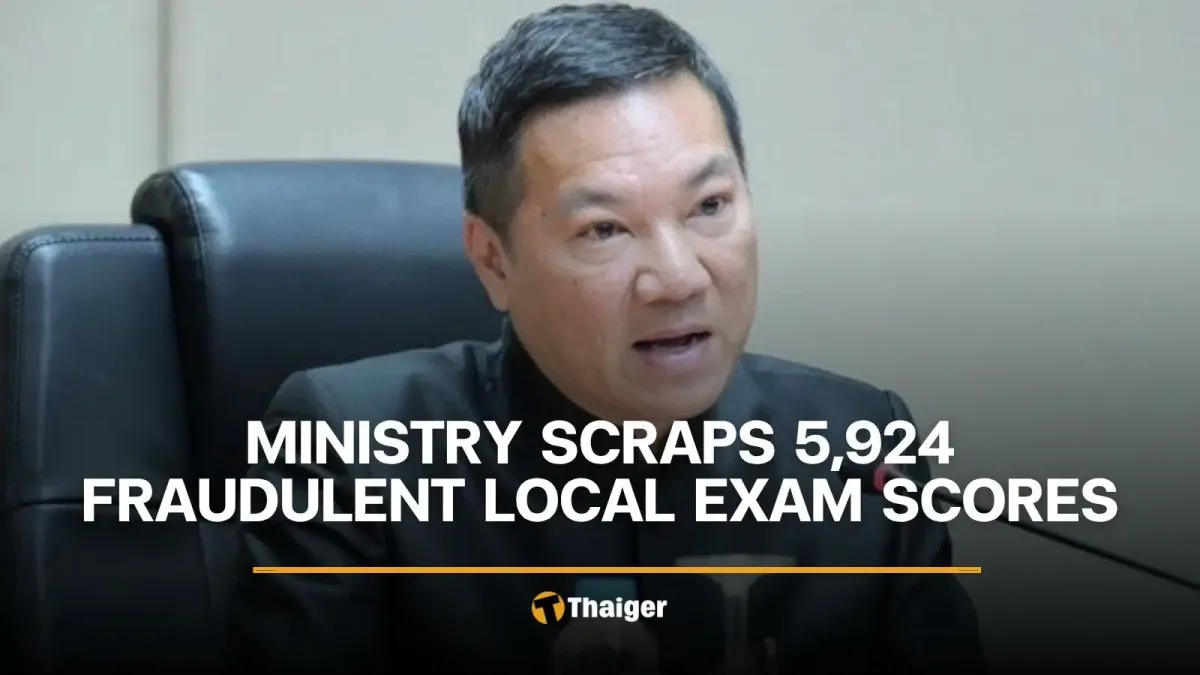
A significant number of results from a recent local government recruitment examination have been invalidated due to widespread score tampering. The Ministry of Interior has officially nullified 5,924 scores, identifying irregularities that compromised the integrity of the selection process. The southern region of Thailand recorded the highest incidence of fraudulent results.
Investigation Uncovers Extensive Irregularities
The decision to scrap these scores stemmed from a comprehensive review conducted by the Central Examination Committee. This committee, led by Wanchai Chanphon, convened for a three-hour session that included key figures such as Permanent Secretary for Interior Unsit Sampuntharat and Deputy Permanent Secretary Nirat Phongsitthithaworn, who also holds the position of acting director-general of the Department of Local Administration (DLA).
During the review, officials meticulously examined the examination data. Permanent Secretary Unsit Sampuntharat stated that the DLA scrutinized over 270,000 applications out of a total of more than 400,000 candidates. This extensive audit uncovered 5,924 instances of irregular scores. The final tally was adjusted upwards from an initial count of 5,814 after a more thorough analysis identified an additional 110 cases of score manipulation.
Committee’s Decision and Legal Basis
Following the identification of fraudulent scores, the Central Examination Committee unanimously voted to void all affected results. The committee resolved to re-issue candidate rankings based solely on verified scores. These verified scores were cross-referenced with evidence compiled by the National Anti-Corruption Commission (NACC) to ensure accuracy and fairness.
Crucially, no re-examination will be conducted. The committee affirmed that valid scores already exist for all candidates, making a new test unnecessary. Nirat Phongsitthithaworn emphasized the committee’s legal authority to revoke its own prior decisions, a power supported by the Administrative Procedure Act, as cited by Wanchai Chanphon. This legal framework provides the basis for rectifying flawed administrative orders.
Appeals and Legal Recourse
Candidates whose scores have been invalidated retain the right to appeal the decision through the Administrative Court. In anticipation of potential legal challenges, the DLA has reportedly assembled a legal team to manage any ensuing litigation.
Criminal Proceedings and Internal Review
Beyond invalidating scores, the committee has initiated criminal proceedings against all individuals implicated in the score tampering. This includes not only candidates who submitted falsified scores but also any contractors or data handlers involved in facilitating the fraud. The scope of the investigation aims to hold all parties accountable for their roles in undermining the examination’s integrity.
Furthermore, an internal review is underway to ascertain whether any members of the examination committee itself were complicit in the fraudulent activities. Permanent Secretary Unsit Sampuntharat confirmed that the NACC is conducting this separate investigation. He also addressed reports suggesting attempts to lobby for the removal of certain names from the invalidated list, stating that such efforts are now futile as the committee’s resolution is final and binding.
Broader Implications for Recruitment Integrity
The discovery of such widespread fraud in a local government recruitment exam raises serious questions about the security and fairness of similar selection processes. The DLA’s decisive action, while resulting in the nullification of thousands of scores, underscores a commitment to upholding meritocracy and ensuring that public service positions are awarded based on genuine qualifications and performance.
The rigorous review process, involving cross-referencing with anti-corruption bodies and the subsequent legal actions, signals a robust approach to tackling corruption within administrative systems. The ministry’s stance indicates a zero-tolerance policy towards exam fraud, aiming to deter future attempts and restore public confidence in the recruitment procedures for local government roles.
Future Measures and Prevention
While the immediate focus is on rectifying the current situation and prosecuting those involved, the incident is likely to prompt a review of existing examination protocols. Future recruitment drives may see enhanced security measures, more stringent oversight, and potentially the implementation of advanced technological solutions to prevent score manipulation and ensure a level playing field for all applicants. The DLA’s commitment to transparency and accountability will be crucial in rebuilding trust and ensuring the integrity of future public service examinations.
