

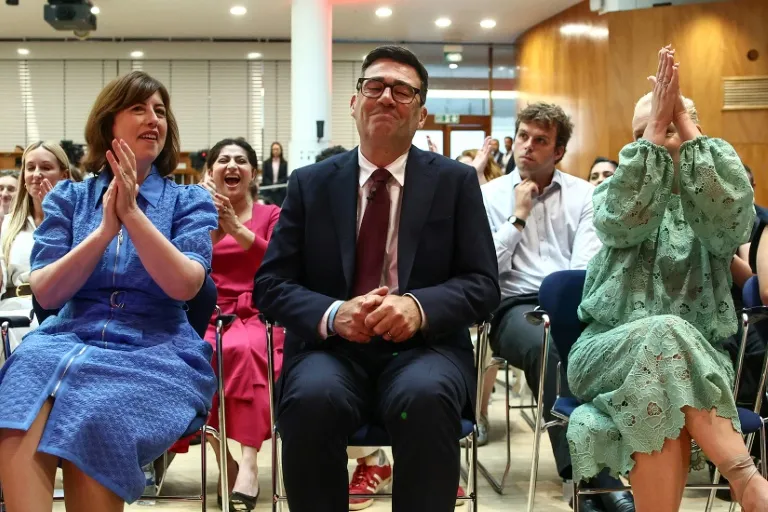
The newly elected leader of the Labour Party, Andy Burnham, faces a formidable array of challenges following his decisive victory on Friday. Experts suggest that Burnham, formerly the mayor of Greater Manchester, must now navigate a complex landscape of economic pressures, welfare system demands, defense funding gaps, and shifting political allegiances that have proven difficult for his predecessors.
Economic Headwinds and Cost of Living Crisis
A primary concern for Burnham will be revitalizing the economy and improving the financial well-being of citizens grappling with escalating energy and food costs. These price surges, exacerbated by the ongoing conflict in Ukraine, have placed significant strain on households. Burnham’s administration will operate within a constrained fiscal environment, characterized by sluggish economic growth, substantial public debt, and stringent financial regulations that necessitate balancing expenditure with tax revenue.
In his acceptance speech, Burnham articulated a vision for a more affordable nation. He has previously advocated for empowering regional centers as engines of economic expansion. “It’s not just about driving local growth, it’s about turning these places around so they drive national growth,” commented Philip McCann of the Productivity Institute, underscoring the potential of devolved power.
Burnham’s policy proposals include support for small businesses, a focus on “reindustrialisation,” and increased public oversight of essential utilities such as water, transport, and energy. Reports suggest a potential relaxation of restrictions on North Sea oil and gas extraction as a measure to alleviate energy bills. The economic direction of his leadership may also be significantly influenced by the yet-to-be-announced choice for his finance minister, whose stance could signal a more left-wing or centrist economic approach.
Addressing the Welfare Bill and Social Care
Another significant hurdle is the escalating cost of the welfare system, which Burnham has acknowledged requires attention. His predecessor, Keir Starmer, encountered considerable public and internal party opposition for proposed reforms, including cuts to winter fuel payments for seniors. These changes, which were ultimately reversed, contributed to Starmer’s declining popularity.
As a figure associated with the “soft left” of the Labour Party, Burnham is expected to face pressure to protect existing benefit levels. He has also committed to addressing underfunded public services, particularly social care, a sector he attempted to reform during his tenure as health secretary in 2009. Burnham, whose father has Alzheimer’s, expressed his readiness to confront these issues, stating, “the system’s broken” and that he is “prepared to grasp the nettle” for necessary changes.
Defense Investment and National Security
The new leader must also contend with a substantial funding shortfall in the nation’s defense strategy, estimated at £4.7 billion ($6.3 billion) over the next four years. This defense investment plan, recently unveiled by Starmer, now falls under Burnham’s responsibility to implement.
Internally and from international partners, particularly the United States, there will likely be pressure for increased defense spending. Meeting the NATO target of allocating 3.5% of GDP to defense by 2035 is a key objective. Burnham has previously affirmed his commitment to securing the necessary funding for the defense plan, stating he would take “responsibility” and make “no compromise” on national security matters.
Rebuilding Labour’s Popularity and Political Landscape
A critical task for Burnham is to counter the growing appeal of Nigel Farage’s Reform UK party, which has attracted voters from Labour. Both Reform UK and the Green Party have seen significant gains in recent local elections, intensifying the pressure on Labour’s leadership to present a compelling alternative.
In his address, Burnham outlined a strategy to forge a distinctively Labour path, distancing the party from what he termed “fringe parties.” “We win by being us,” he declared. “We won’t try to out-Green the Greens, or out-Reform Reform, or doing what we’ve done in the past of wearing too many Tory clothes.”
Professor Tony Travers of the London School of Economics noted this approach could signify a shift. “What this signals is that the Labour Party under Burnham will want to try to win back voters from Reform and the Greens with a different offer,” Travers observed.
Navigating Foreign Policy and International Relations
On the international stage, a significant challenge will be managing relations with the United States, particularly under a potentially unpredictable leader like Donald Trump. Starmer had maintained a relatively stable relationship with the incumbent US administration. Burnham has been described by Trump as “extremely liberal,” suggesting potential complexities ahead.
Beyond US relations, Burnham will need to address ongoing conflicts in Ukraine and the Middle East. His stated foreign policy aims to maintain continuity with Starmer’s approach, emphasizing strong alliances with NATO and other international partners. “Our relationship with the US will remain critical as our most important defence and security ally. And Britain’s support for Ukraine will not waver,” Burnham wrote in The Times earlier this month, signaling a commitment to established foreign policy principles.
Burnham’s leadership begins at a pivotal moment, demanding strategic acumen to address deep-seated economic issues, reform public services, bolster national defense, and redefine Labour’s electoral appeal in a challenging political climate.
