

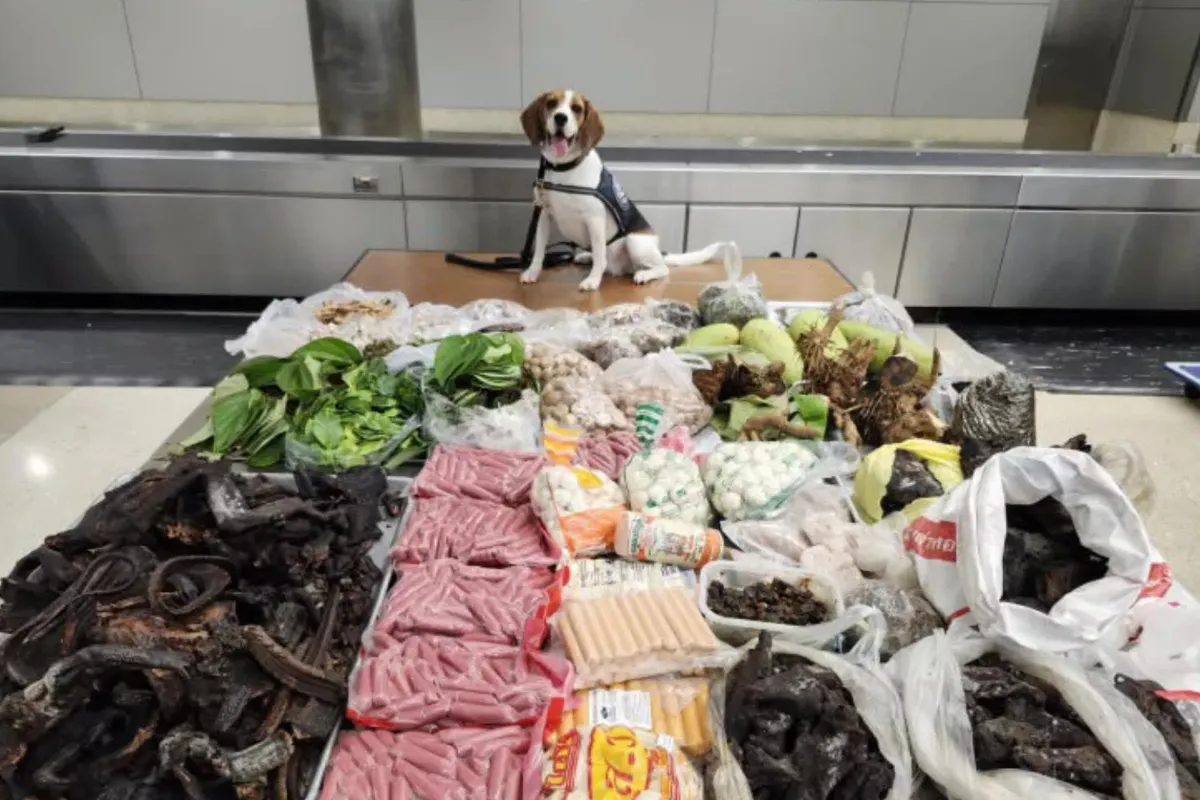
A highly trained sniffer dog has successfully detected a significant quantity of undeclared food items, including a monitor lizard carcass and various meat products, within a piece of luggage arriving from Thailand. The discovery highlights the ongoing efforts by U.S. Customs and Border Protection (CBP) to intercept prohibited agricultural and wildlife products at the border.
Canine Unit’s Crucial Role in Border Security
Maisy, a beagle renowned for her keen sense of smell and expertise in identifying agricultural contraband, is credited with alerting U.S. Customs and Border Protection officers to the suspicious contents of a suitcase. The CBP’s Office of Field Operations shared details of the find, emphasizing the critical role of their canine units in safeguarding national biosecurity. Maisy’s successful alert led to the examination of a single piece of luggage, revealing a substantial collection of items that posed potential risks to U.S. agriculture and ecosystems.
Contents of the Seized Luggage
Upon Maisy’s alert, officers thoroughly inspected the suitcase. The contents were extensive and varied, underscoring the diverse nature of items travelers may attempt to bring into the country without proper declaration. The seizure included:
- Meat Products: Approximately 22 kilograms of various meat products, notably including raw meat, were found. The importation of meat products is strictly regulated due to the risk of introducing animal diseases.
- Produce: A significant amount of agricultural produce, totaling around 14 kilograms, was also discovered. This included items such as mangoes, garlic, bamboo shoots, and banana shoots. The introduction of non-native plants and plant products can threaten domestic agriculture and introduce pests.
- Wildlife Specimen: Perhaps the most unusual item was a 7-kilogram monitor lizard carcass. This discovery was made by the U.S. Fish and Wildlife Service, indicating a potential violation of wildlife protection laws and regulations concerning the import of animal products.
Regulatory Framework and Biosecurity Concerns
The importation of agricultural products and wildlife into the United States is governed by stringent regulations designed to protect domestic industries, prevent the introduction of pests and diseases, and conserve wildlife. Agencies like CBP and the U.S. Fish and Wildlife Service work collaboratively to enforce these rules. Undeclared food items, especially raw meats and plant materials, can carry pathogens, insects, or invasive species that could devastate American agriculture or ecosystems. The presence of a monitor lizard carcass also raises concerns about illegal wildlife trade and the potential impact of non-native species if they were to establish themselves in the wild.
Public Reaction and the Smuggler’s Intent
News of the discovery, particularly the inclusion of the monitor lizard, garnered considerable attention online. Many social media users expressed astonishment at the attempt to smuggle such items into the U.S. and marveled at the quantity of food seized. Comments often praised Maisy for her effectiveness, with one widely shared remark suggesting she deserved extra treats for her diligent work. The identity of the individual traveling with the luggage was not released by the authorities, leaving the specific intent behind carrying such a diverse and substantial collection of undeclared goods a subject of speculation among observers.
Preventing Contraband at the Border
CBP employs a multi-layered approach to border security, with canine units forming an indispensable part of their strategy. These highly trained animals can detect substances that might be missed by human inspection alone, significantly enhancing the efficiency and effectiveness of screening processes. Their ability to quickly identify potential threats allows officers to focus their attention on high-risk luggage and individuals. This incident serves as a reminder to travelers of the importance of declaring all agricultural and wildlife products when entering the United States to avoid confiscation and potential penalties.
Conclusion
The successful interdiction of a monitor lizard carcass, raw meats, and various plant products from a single piece of luggage underscores the persistent challenges faced in border security. Thanks to the sharp senses of Maisy, a dedicated CBP beagle, a significant biosecurity threat was averted. This event highlights the critical need for traveler awareness regarding import regulations and the invaluable contribution of specialized detection dogs in maintaining the safety and integrity of U.S. agricultural and natural resources.
