

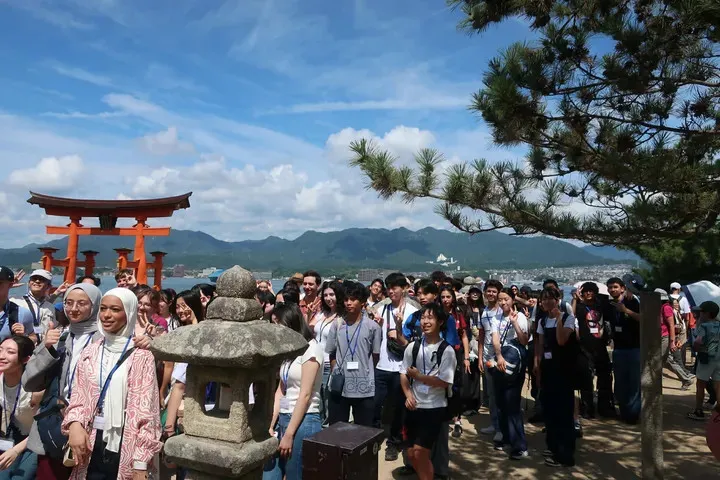
A profound lesson in peace and global understanding was recently experienced by Dhamma (JD) Thipsoda, a Thai student participating in the Hiroshima Global Youth Forum. Spending a year in Japan as an AFS exchange student, Thipsoda joined 83 other high schoolers from 21 nations to explore the concepts of peace, international camaraderie, and the vital role youth play in shaping a more harmonious future.
Bridging Divides Through Shared Experiences
Initially feeling a mix of excitement and apprehension about interacting with peers from such diverse backgrounds, Thipsoda soon found common ground within her assigned group, which included students from Egypt, France, and Japan. What began as tentative introductions quickly evolved into engaging conversations about their respective schools, opportunities available to young people, and pressing global issues. This interaction highlighted a surprising degree of shared concerns and aspirations, despite their vastly different upbringings.
The Enduring Impact of a Survivor’s Testimony
A pivotal moment of the forum was hearing the firsthand account of Ms. Keiko Ogura, a survivor of the atomic bombing of Hiroshima. While Thipsoda had encountered the history of Hiroshima through academic study and media, the personal narrative of a survivor transformed the abstract historical event into a deeply human tragedy. Coming from Thailand, where nuclear weapons are not a daily concern, the experience offered a starkly different perspective than what books or lessons could convey.
Ms. Ogura’s message resonated deeply: her lifelong aspiration for a world free from nuclear weapons could not be realized by her generation alone. She emphasized the critical responsibility of young people to carry forward this crucial endeavor. This realization prompted Thipsoda to consider, perhaps for the first time, the direct relevance of global security issues like nuclear proliferation to individuals her age.
Reflecting on Humanity at the Peace Memorial
The forum included visits to the Hiroshima Peace Memorial Museum and the Peace Memorial Park. These sites offered more than just historical facts and dates; they presented powerful visual and narrative evidence of the ordinary lives irrevocably altered by the bombing. The focus shifted from the grand historical narrative to the individual human cost, fostering a more empathetic understanding of the event’s impact.
Beyond Hiroshima: Learning from Peers
While the historical significance of Hiroshima was a central theme, Thipsoda found that the interactions with fellow students were equally transformative. The exchange of diverse viewpoints, even when challenging or unfamiliar, provided invaluable learning opportunities. Moments of not knowing how to respond led to attentive listening, a practice that proved to be a powerful tool for understanding.
A Redefined Understanding of Peace
The journey to Hiroshima did not equip Thipsoda with immediate solutions to complex global conflicts like war. However, it fundamentally reshaped her perception of peace. Previously viewing peace primarily as an abstract concept governed by international relations and governmental policies, her perspective broadened significantly. She now understands peace as something that can also originate from smaller, more personal actions: the simple acts of listening attentively, respecting individual differences, and making a genuine effort to comprehend the experiences of others, particularly those whose lives have been shaped by circumstances unlike one’s own.
The Power of Conversation
The forum underscored a crucial takeaway: fostering understanding among people from diverse backgrounds is far less daunting than often perceived. Thipsoda’s experience demonstrated that meaningful connections and mutual comprehension can often be achieved through open and honest conversation. The ability to connect with and learn from individuals with different life experiences, as exemplified by the diverse group at the forum, is a fundamental building block for a more peaceful world.
Conclusion: A Call to Action Through Empathy
The Hiroshima Global Youth Forum served as a powerful catalyst for Dhamma (JD) Thipsoda, shifting her understanding of peace from a macro-level political concept to a micro-level practice rooted in empathy and interpersonal connection. The lessons learned, particularly from the survivor’s testimony and the diverse interactions with peers, highlight the indispensable role of young people in advocating for a nuclear-free future and fostering global understanding. The experience powerfully illustrates that building bridges between cultures and individuals, even across vast differences, often begins with the simple, yet profound, act of conversation and a willingness to listen.
