

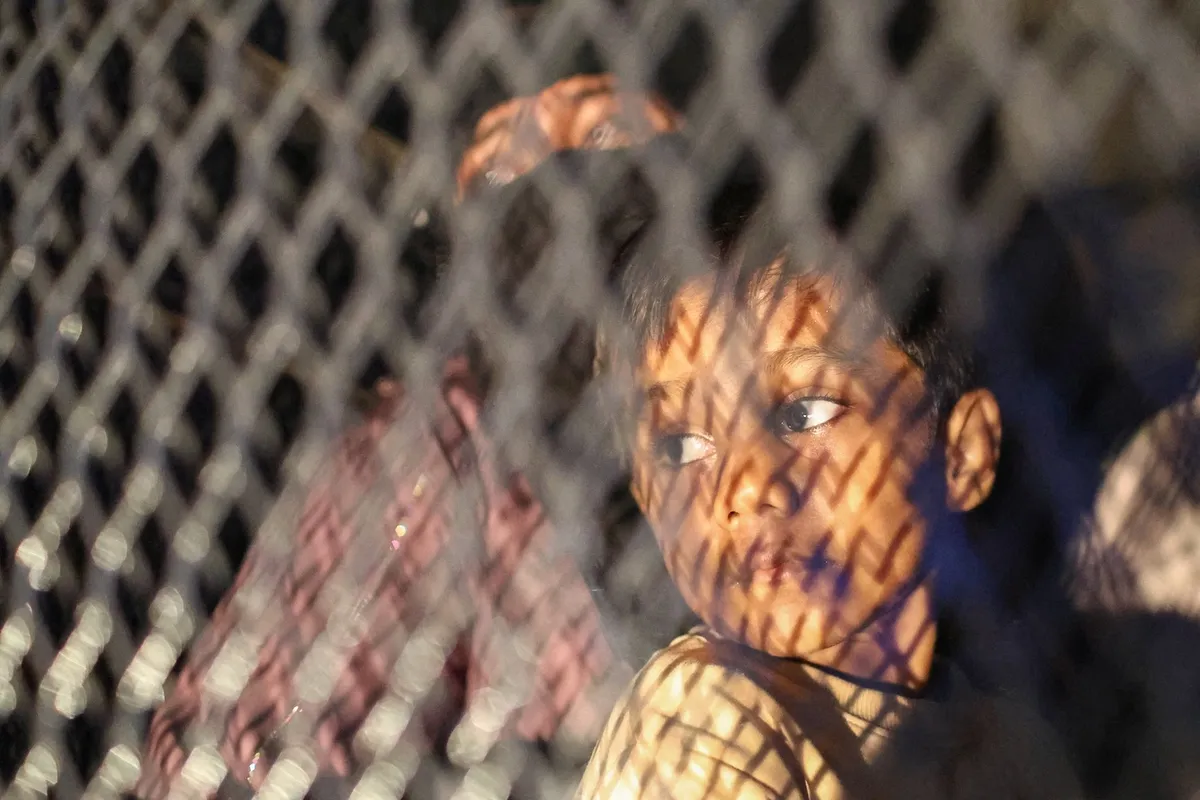
Malaysia has announced that Myanmar has agreed to accept 5,000 Rohingya refugees currently residing in Malaysia. The agreement was revealed by Malaysian Prime Minister Anwar Ibrahim on Wednesday, who highlighted the strong bilateral relations between the two Southeast Asian nations as a key factor in facilitating this development. He stated that these good relations enabled the countries to negotiate the issue effectively.
Rohingya Crisis and Malaysian Stance
Malaysia has long been a destination for Rohingya Muslims fleeing persecution in their native Myanmar. As of the end of February, approximately 126,000 Rohingya were registered with the United Nations High Commissioner for Refugees (UNHCR) in Malaysia. For decades, the Rohingya minority has been systematically denied citizenship in Myanmar, rendering them the world’s largest stateless population, according to UN data. This historical context raises questions about the voluntary nature of any return, given the documented abuses and discrimination the Rohingya have faced in Myanmar.
Myanmar’s presidential office had not immediately responded to requests for comment regarding Prime Minister Anwar’s statement. Similarly, the UNHCR office in Kuala Lumpur had not issued a public comment on the specific agreement by Thursday. However, the UNHCR has previously affirmed its commitment to working with Malaysia. This statement came after Malaysia’s foreign minister suggested a review of UNHCR operations unless stricter controls were implemented for issuing refugee documents.
Rising Tensions and Scrutiny for Refugees
Recent events have underscored the precarious situation for Rohingya refugees in Malaysia. Authorities detained over 100 Rohingya refugees earlier this week outside the UNHCR office in Kuala Lumpur. The refugees, who reportedly possessed valid UNHCR documentation, were later released after a review. They had sought assistance from the UN agency following claims of eviction from their homes in northern Penang state by local residents.
In recent months, Rohingya refugees in Malaysia have experienced increased harassment and scrutiny. This has included the closure of community schools and a rise in online hate speech and misinformation targeting the community. Malaysia, which is not a signatory to the UN Refugee Convention, generally classifies asylum seekers as illegal migrants. Earlier this month, the government requested the UNHCR to temporarily halt the registration of new refugees while Malaysia develops its own domestic system for managing asylum claims.
Background of Deportations
This development follows a history of contentious policies regarding Myanmar nationals. In 2021, Malaysia deported over 1,000 Myanmar nationals by ship. This action proceeded despite a court order to halt the repatriation and concerns raised by human rights groups that the operation included asylum seekers and UNHCR-registered refugees.
The Rohingya Plight
The Rohingya are an ethnic group predominantly from Rakhine State in Myanmar. They have faced decades of discrimination, violence, and persecution, culminating in a brutal military crackdown in 2017 that led to a mass exodus of over 700,000 people to neighboring Bangladesh. The international community has widely condemned the treatment of the Rohingya, with allegations of genocide leveled against Myanmar’s military.
The conditions in Myanmar for the Rohingya remain dire, with limited access to basic services, freedom of movement, and citizenship rights. International bodies, including the UN and the International Criminal Court, continue to investigate alleged atrocities. Many Rohingya refugees express deep-seated fears about returning to Myanmar without robust safety guarantees, full citizenship rights, and accountability for past crimes.
Future Prospects and Challenges
The agreement for Myanmar to accept 5,000 Rohingya refugees represents a potential, albeit small, step in addressing the long-standing displacement crisis. However, significant challenges remain. The voluntary nature of the return, the safety and rights of those repatriated, and the broader issue of statelessness for the Rohingya in Myanmar require careful consideration and international oversight.
Malaysia’s role as a host country continues to be complex, balancing humanitarian concerns with domestic pressures and security considerations. The government’s efforts to establish a domestic asylum management system indicate a shift in policy, but the implications for refugees and asylum seekers in the interim are critical. The international community, including UNHCR, will likely play a crucial role in monitoring any repatriation efforts and advocating for the rights and protection of the Rohingya people.
