

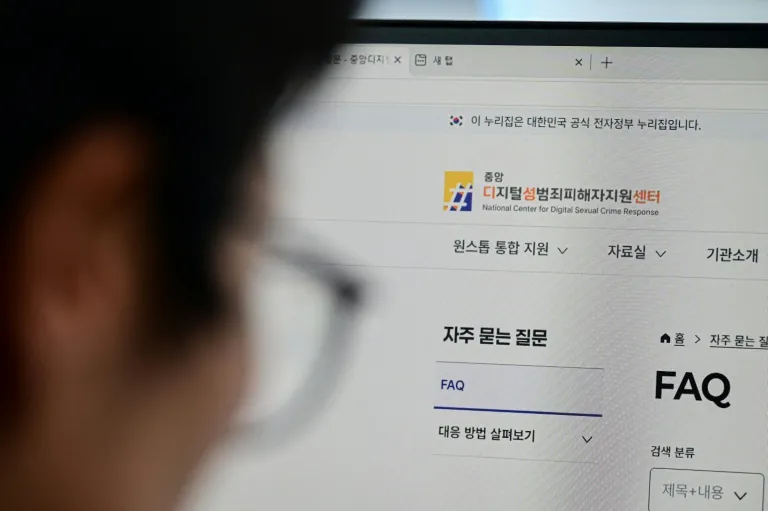
South Korea is at the forefront of combating a growing wave of digital sex crimes, with a dedicated government center working tirelessly to remove non-consensual intimate imagery, including increasingly sophisticated AI-generated deepfakes. Women in the country have long been targeted by spycams, blackmail schemes, and the non-consensual sharing of explicit content. The latest and most alarming threat comes from AI deepfakes, where harassers use generative technology and a victim’s photograph to create fabricated, invasive pornographic images.
National Center for Digital Sexual Crime Response: A Frontline Defense
Within an airy Seoul office, the National Center for Digital Sexual Crime Response operates as a critical defense against these digital abuses. A team of 23 women meticulously combs the internet, identifying and filing deletion requests for illicit content. Their efforts are bolstered by the threat of legal action against perpetrators. In the past year alone, this dedicated group successfully removed an astonishing 318,000 videos and photos. This vast archive included deepfakes, spycam footage, and intimate images shared without consent, all taken down on behalf of 10,600 individuals, a significant 75 percent of whom were women and girls.
Kim Mi-soon, the head of the government-established center, explained that South Korea’s swift and robust response is rooted in the early and widespread prevalence of digital sex crimes, coupled with women’s equally rapid and forceful advocacy for action. “South Korea acted faster than others because not only digital sex crimes became common earlier than elsewhere, but also women spoke out against them just as quickly and vigorously,” Kim stated.
The Deepfake Deluge and Evolving Threats
Established in 2018, the center’s inception coincided with tens of thousands of women participating in anti-spycam protests, demanding governmental intervention. Beyond content removal, the organization provides crucial support through its headquarters and 17 regional hubs, offering counseling and legal advice, and assisting in evidence collection for criminal prosecutions. The challenges, however, are constantly evolving. One 33-year-old woman, identified only as Kim, shared her experience with deepfakes circulating in 2024 via encrypted applications, making them difficult for even the center’s specialists to access.
Despite these hurdles, Kim, a member of the military, found significant solace and support from the center. She recounted feeling “healed” by their assistance, which included financial aid to obtain a trauma diagnosis crucial for court proceedings. “It gave me a huge sense of relief and solace,” she expressed. “Navigating the whole legal procedure alone while suffering trauma would have been impossible.”
Escalating Digital Sex Crimes and AI’s Role
Digital sex crimes in South Korea have proven to be a mutable and persistent menace. The notorious “Nth Room” scandal in 2020 exposed a disturbing network where men exploited dozens of women and girls, referred to as “slaves,” within pay-to-view “sextortion” chatrooms. Since the founding of the 46-person national response center, sexual deepfakes have emerged as the dominant new trend.
The surge in deepfake technology is stark. Between 2019 and 2023, global deepfake circulation increased by a staggering 550 percent, according to research from web safety firm Security Hero. Alarmingly, nearly 98 percent of this content was identified as AI-generated pornography targeting women. More than half of the victims identified in this research were from South Korea. While K-pop stars have been frequent targets, ordinary women are increasingly falling victim. Police data indicates that digital sex crimes constitute 40 percent of all sexual offenses in the country.
Kim Yun-hee, a deletion specialist at the center, noted a disturbing trend: “Since last year, we’ve seen more and more deepfakes of ordinary women and girls — with the images becoming way more sophisticated than before and victims getting younger and younger.” The center actively employs its own AI tools, including a monitoring system designed to detect exploitative material and messages specifically targeting children. “This job is not easy,” Kim Yun-hee, 31, admitted. “But it feels really rewarding whenever our clients say our service is a true life-saver.”
Legal Framework and International Recognition
Deepfake pornography is illegal in South Korea. Individuals found possessing such material face up to three years in prison, while creators can be sentenced to up to seven years. The penalties were further strengthened in 2024, a year marked by the discovery of numerous Telegram deepfake chatrooms distributing AI-generated sexualized footage. These images were often created using photos sourced from victims’ social media accounts, depicting female acquaintances, classmates, colleagues, and even relatives.
Clare McGlynn, a law professor at Britain’s Durham University and an expert in image-based sexual abuse, lauded South Korea’s proactive stance. She observed that Seoul is “leading the way on providing holistic support services and investing in the latest technology to try to reduce the harm.” McGlynn suggested that South Korea’s comprehensive approach offers “an example for the rest of the world.”
Addressing Root Causes: A Call for Societal Change
Despite technological advancements and legal deterrents, campaigners emphasize that the root of the problem lies in a deeply ingrained patriarchal culture that often objectifies women. Kim Yeo-jin, head of the nonprofit Korea Cyber Sexual Violence Response Center, argued that online issues necessitate offline solutions. “Unless we tackle this fundamental cause by fostering more gender equality in wider society and strengthening gender equality education at school, no amount of removal efforts will be enough,” she asserted. This perspective highlights the ongoing need for broader societal shifts alongside technological and legal countermeasures to truly combat digital sex crimes.
