

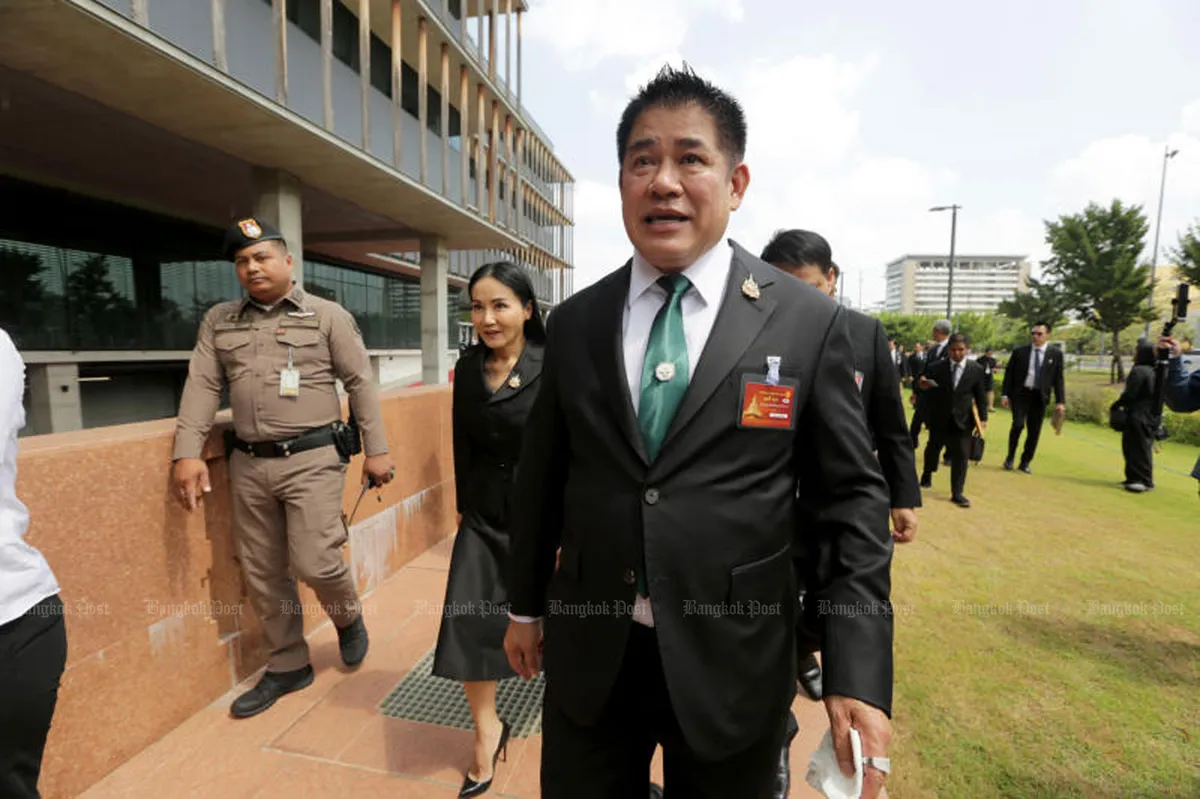
Captain Thamanat Prompow, a prominent figure and leader of the Klatham Party, has categorically denied engaging in political negotiations in Monaco, refuting rumors that suggested a clandestine meeting with former Prime Minister Thaksin Shinawatra or other representatives of the Pheu Thai Party. The allegations surfaced following claims that Captain Thamanat had traveled to Monaco with the intent of discussing parliamentary support to potentially replace the current Prime Minister, Anutin Charnvirakul.
Denial of ‘Monaco Deal’ and Political Undertones
The speculation, which gained traction on social media, hinted at a potential alliance dubbed a “red-green pact.” This term refers to the political colors associated with the Pheu Thai Party (red) and the Klatham Party (green). However, Captain Thamanat has firmly dismissed these interpretations, asserting that his recent trip to France and Monaco was purely a personal family vacation.
In a statement posted on his Facebook page, Captain Thamanat confirmed his presence in France and Monaco but emphasized the pre-planned nature of the trip. “I did travel to France and Monaco for a holiday with my family. There was nothing political about it,” he stated. He further elaborated, “I’m not the sort of person who sneaks around, and I had absolutely no need to cross continents secretly to meet Thaksin in Monaco.”
Challenging the Narrative of Secrecy
Captain Thamanat also suggested that the veracity of the claims could be easily checked by examining Thaksin Shinawatra’s travel itinerary. He implied that the former Prime Minister was not in Monaco during the period in question, thereby undermining the core assertion of their alleged meeting. This stance aims to debunk the notion that he would engage in covert political maneuvers across international borders.
Prime Minister’s Dismissal of Rumors
Prime Minister Anutin Charnvirakul also addressed the circulating rumors, dismissing the alleged “red-green Monaco declaration” as lacking any genuine political significance. With a touch of humor, he remarked on the color symbolism, stating, “when red and green are mixed together, the result is blue anyway,” referencing the color associated with his own Bhumjaithai Party. This lighthearted response served to downplay the seriousness of the speculation and distance his party from any perceived involvement.
Origin of the Allegations
The rumors first emerged on July 28, stemming from a Facebook post by political activist Thaikorn Polsuwan. The post alleged that negotiations had occurred in Monaco between representatives of the “red and green” political factions. It further claimed that the objective of these purported talks was to influence some Members of Parliament from the Pheu Thai Party, a component of the current ruling coalition, to abstain from voting in parliamentary sessions. Such abstentions, the post suggested, would weaken the government’s majority and create an opportunity for a change in prime minister, potentially marginalizing a group referred to as the “Big Teacher,” widely understood to represent the Bhumjaithai Party.
Lack of Substantiation
It is crucial to note that these allegations remain unsubstantiated. The original post by Thaikorn Polsuwan did not name specific participants, dates, or precise locations for the alleged meeting. Furthermore, no supporting evidence, such as photographs, documents, or any other form of proof, was provided to corroborate the claims of negotiations taking place. The narrative, therefore, relies heavily on speculation rather than concrete facts.
Context of Political Alliances and Speculation
Political maneuvering and speculation about potential alliances are not uncommon in the current political landscape. Following significant electoral outcomes or shifts in public sentiment, various political actors often engage in discussions and strategic planning. The “red-green pact” narrative, though dismissed by those directly implicated, highlights the ongoing scrutiny of political relationships and the constant undercurrent of potential realignments.
Captain Thamanat’s position as a key opposition figure, coupled with the Klatham Party’s distinct political identity, makes any perceived association with major parties like Pheu Thai a subject of intense interest. His denial serves to clarify his party’s stance and his personal involvement, aiming to quell the rumors that could potentially impact public perception and political dynamics.
The Role of Social Media in Political Discourse
The incident underscores the significant role that social media platforms play in disseminating political information and shaping public opinion. Unverified claims, once posted, can quickly gain traction and be interpreted as factual, leading to widespread speculation and debate. The speed at which such information travels necessitates a careful approach to verification and a critical evaluation of sources, especially when dealing with sensitive political matters.
In this instance, the absence of concrete evidence supporting the Monaco meeting allegations leaves the narrative in the realm of conjecture. Both Captain Thamanat and Prime Minister Anutin Charnvirakul have actively sought to dispel the rumors, emphasizing the personal nature of the trip and the lack of political substance behind the claims. The political activist’s original post, while initiating the discussion, failed to provide the necessary substantiation to elevate the claims beyond mere speculation.
Conclusion: A Family Holiday Amidst Political Whispers
Ultimately, Captain Thamanat insists that his journey to France and Monaco was a private family matter, devoid of any political agenda or clandestine meetings. While political commentators and social media users may continue to analyze potential alliances, the direct denials from key figures, coupled with the lack of evidence, suggest that the “red-green Monaco deal” remains an unsubstantiated rumor. The situation serves as a reminder of the constant vigilance required in navigating political discourse, particularly in the digital age where information, both accurate and speculative, can spread rapidly.
