

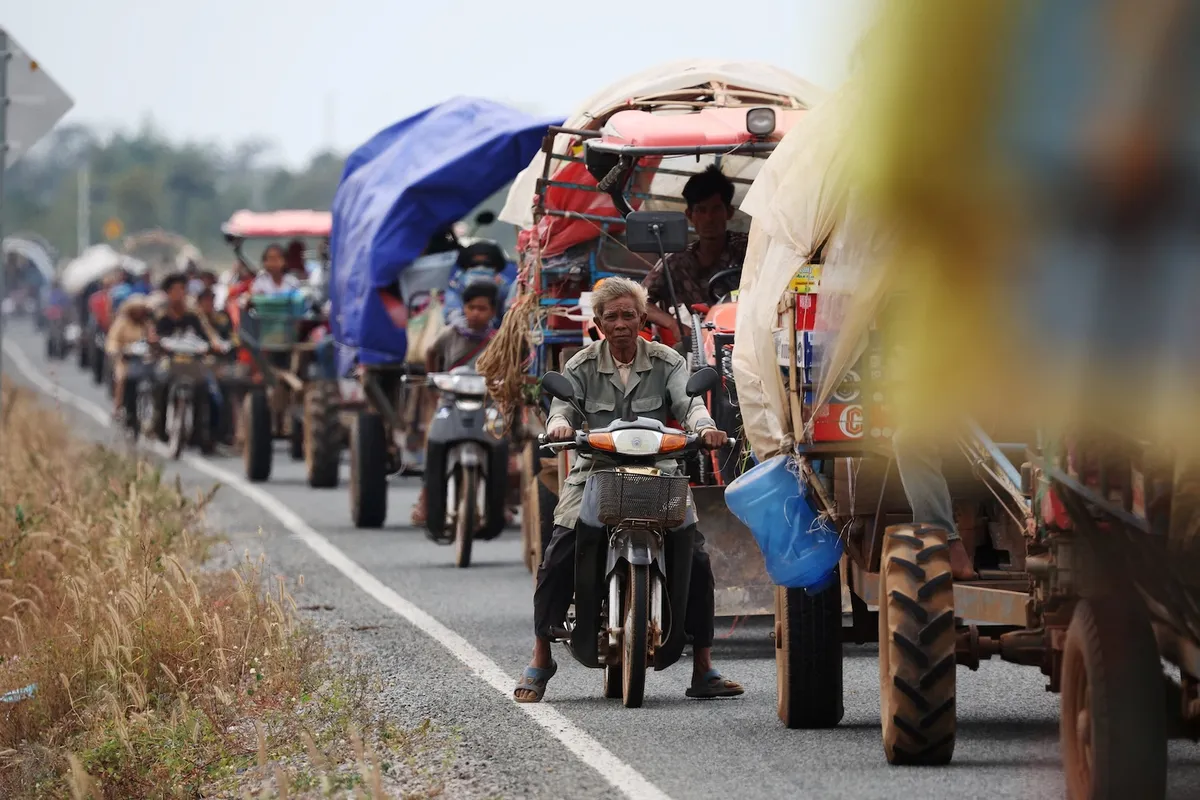
More than 20,000 Cambodian civilians who were displaced from their homes near the border with Thailand remain unable to return, according to a United Nations human rights expert. At the close of the previous year, an estimated 650,000 Cambodian nationals had been displaced in border regions. Some areas and villages are reportedly still occupied by Thai troops, preventing residents from going back.
Ongoing Displacement and International Law
Tom Andrews, the UN Special Rapporteur on human rights in Cambodia, highlighted the ongoing plight of these displaced individuals during a press briefing in Phnom Penh. He emphasized that international law clearly stipulates the right of individuals displaced by armed conflict to return to their original homes. Andrews urged both Thailand and Cambodia to collaborate effectively to expedite the safe and voluntary return of these civilians.
The situation raises concerns about the adherence to international humanitarian principles, particularly regarding the protection and rights of populations affected by border disputes and conflict. The inability of these 20,000 individuals to return suggests persistent challenges in resolving border issues and ensuring civilian safety.
Border Tensions and Economic Impact
Thailand has consistently refuted claims of illegally occupying Cambodian territory, asserting that its actions are in line with a bilateral ceasefire agreement. Despite these assurances, border crossings between the two nations remain closed. This closure has had a significant detrimental effect on Cambodia’s economy, particularly impacting border communities that depend heavily on cross-border trade for agricultural products and other goods.
The economic repercussions extend beyond trade disruptions. The closure of borders isolates communities and hinders the free movement of people and commerce, which are vital for local livelihoods and national economic growth. The lack of open dialogue and resolution on border issues continues to create economic headwinds for Cambodia.
The Cyberscam Crisis and Human Rights Challenges
Beyond the border displacement, Andrews also addressed the escalating crisis of online scam centers, which have become a major human rights challenge in Cambodia. He called upon Cambodian authorities to intensify their efforts in cracking down on these operations, which have proliferated across various parts of the country.
The UN expert described the “cyberscam crisis” as a significant contributor to Cambodia’s economic difficulties. He identified the widespread presence of transnational criminal networks involved in these scams as one of the most pressing human rights concerns facing the nation. These operations often involve sophisticated fraud schemes, human trafficking, and forced labor, causing immense suffering to victims, many of whom are trafficked from other countries.
Government Crackdown and Unaddressed Links
Andrews acknowledged that Cambodian authorities have taken some measures to combat the scam centers. He reported that over 600 scam locations have been shut down, and the licenses of 29 casinos have been revoked or suspended. Furthermore, approximately 3,000 individuals involved in scam operations are reportedly facing criminal proceedings.
However, the Special Rapporteur expressed concern that the government has not yet taken decisive action against senior Cambodian officials and other influential figures who are credibly linked to these online scam operations. He stressed the importance of accountability at all levels to effectively dismantle these criminal networks and prevent future abuses. The continued involvement of influential individuals, if proven, would undermine the credibility of the government’s efforts and perpetuate the human rights crisis.
Call for Collaborative Solutions
The dual challenges of border displacement and the cyberscam crisis underscore the complex security and human rights landscape in the region. Andrews’ remarks serve as a critical reminder of the need for sustained international cooperation and robust domestic action. Ensuring the safe return of displaced populations and eradicating sophisticated criminal enterprises require a comprehensive approach that addresses both the immediate needs of affected individuals and the systemic issues that enable such crises to persist.
The situation demands continued attention from international bodies and a renewed commitment from both Cambodian and Thai authorities to uphold human rights, resolve border disputes peacefully, and dismantle criminal networks that exploit vulnerable populations. The economic stability and human dignity of thousands depend on effective and timely interventions.
