

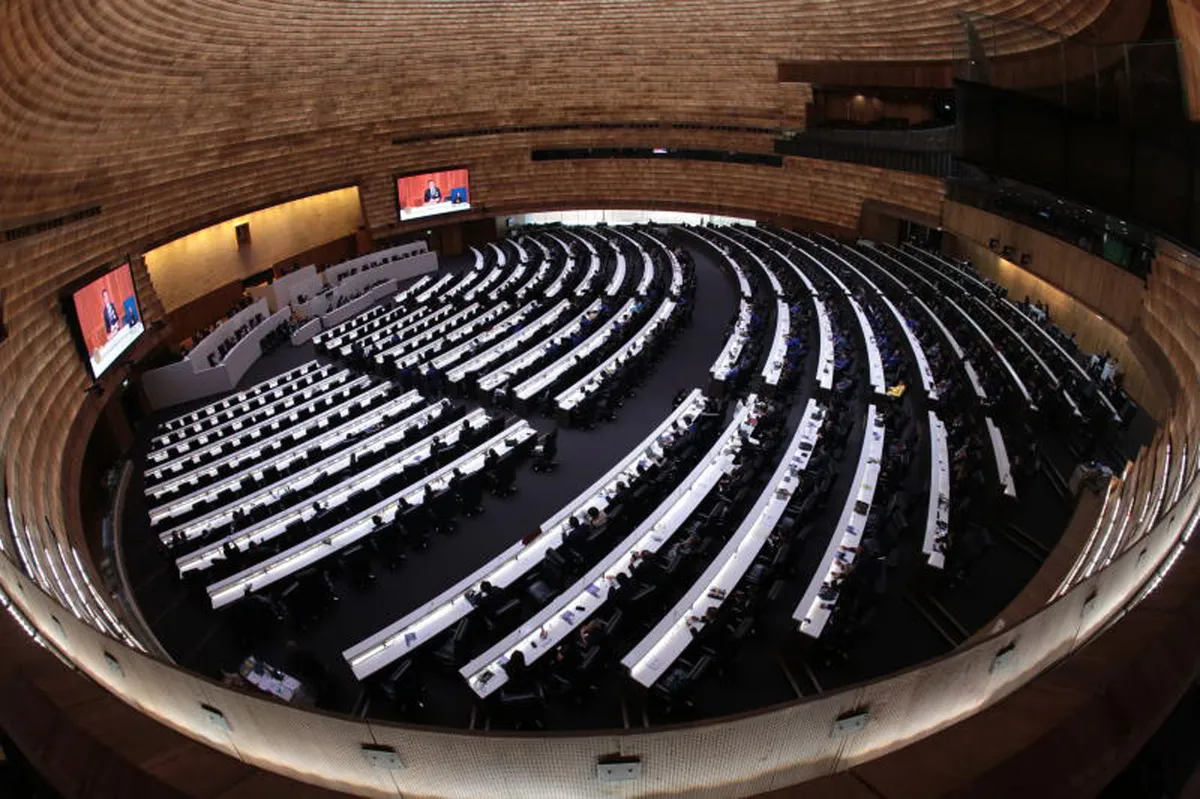
Thailand’s parliament is set to reconvene on August 25th, with the government expressing readiness to address several significant issues during the upcoming session. Among the key topics anticipated for debate are the TH-AI Passport scheme and the ongoing civil service examination corruption scandal. Government officials have stated their preparedness to engage in parliamentary scrutiny, emphasizing that ministers are equipped to provide explanations regarding matters within their respective portfolios.
Government Readiness for Parliamentary Scrutiny
Korrawee, a representative of the government, articulated that parliamentary debate and scrutiny are fundamental responsibilities of the opposition. He affirmed that ministers overseeing the Digital Economy and Society Ministry and the Interior Ministry are prepared to face these discussions. Regarding the civil service exam irregularities, Korrawee noted that these issues predated the current Bhumjaithai-led government’s tenure, suggesting they are unlikely to pose substantial challenges to the administration.
Prime Minister Anutin Charnvirakul, who also holds the position of Interior Minister, is reportedly contemplating significant changes among senior officials within the ministry, which is directly involved in the recruitment examination processes. This potential reshuffling indicates a proactive approach to addressing concerns surrounding the civil service exams.
Senate Election Allegations and Bhumjaithai Party’s Stance
The Bhumjaithai Party has also welcomed scrutiny concerning allegations of collusion in the Senate election. The party expressed confidence in nine senior party members who have denied any involvement in the alleged irregularities. These allegations were recently brought to light by the election monitoring group iLaw, which claimed that nine Bhumjaithai figures, including Prime Minister Anutin, were implicated in attempts to manipulate the 2024 Senate elections.
Korrawee suggested that the opposition’s renewed focus on this case might be an attempt to pressure the Election Commission (EC) into expediting its investigation, rather than allowing the matter to dissipate over time. The party maintains its position that its members have acted appropriately and awaits the outcome of the official investigation.
The 400-Billion-Baht Emergency Loan Decree
Turning to the contentious 400-billion-baht emergency loan decree, Korrawee indicated that no definitive decision has been made regarding the necessity of convening a special House sitting to expedite parliamentary approval. While the Constitutional Court has upheld the decree, the House of Representatives has not yet received the full court ruling. Furthermore, the cabinet must formally request a special session before it can be scheduled.
Given that the parliament is already scheduled to reconvene on August 25th, a special sitting might prove unnecessary. Korrawee stated that the matter would be thoroughly discussed with opposition whips before any final decision is reached. This approach aims to ensure transparency and consensus-building regarding the loan decree.
Background of the Emergency Loan Decree
In early July, the Constitutional Court unanimously upheld provisions within the decree that authorize borrowing to provide financial assistance to households, farmers, and businesses impacted by the ongoing energy crisis. This financial package is designated to fund initiatives such as the Thais Help Thais Plus consumer subsidy scheme and measures aimed at supporting Thailand’s transition towards cleaner energy sources.
In a separate 7-2 ruling, the court also approved borrowing for projects focused on energy efficiency, renewable energy, and alternative energy development. These initiatives are intended to foster innovation and develop related skills within the workforce.
Opposition’s Challenge to the Decree
The emergency loan decree was initially challenged by 133 Members of Parliament (MPs). Their primary argument was that the government had failed to adequately demonstrate an “emergency” situation that would justify bypassing standard parliamentary procedures for approving significant borrowing and spending plans. The MPs contended that such large-scale financial decisions require rigorous debate and approval through regular legislative channels.
Conclusion: Navigating Key Parliamentary Challenges
As parliament prepares to resume, the government appears poised to address critical issues including the TH-AI Passport scheme, civil service exam integrity, and Senate election allegations. The administration’s stance on the 400-billion-baht emergency loan decree highlights a cautious approach, balancing the need for financial intervention with adherence to legislative processes. The upcoming session promises to be a period of intense debate and oversight, testing the government’s transparency and responsiveness to public and parliamentary concerns.
