

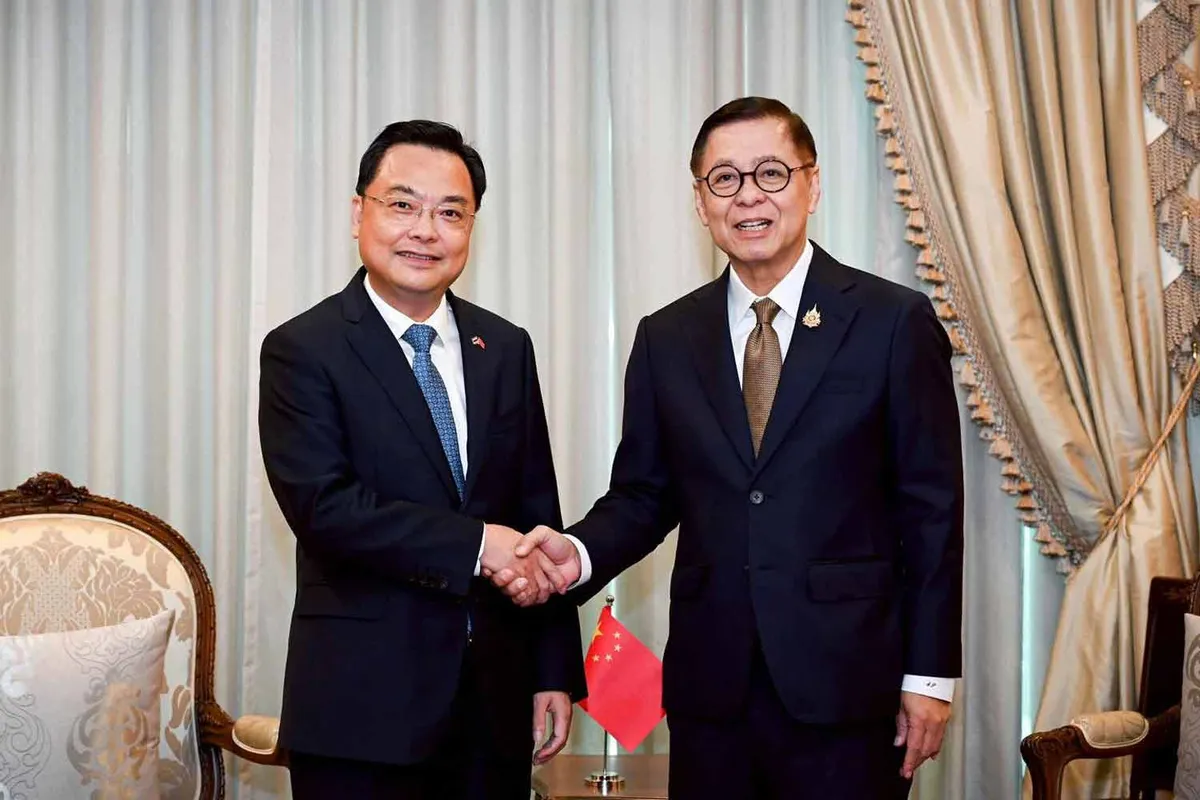
A senior Thai official has called on the Chinese ambassador to Thailand to demonstrate a deeper understanding of local sensitivities and to communicate more effectively with the Thai public, particularly following recent incidents involving Chinese nationals. The remarks highlight a growing need for diplomatic representatives to foster mutual respect and manage public perception amidst cultural exchanges.
Diplomatic Call for Enhanced Understanding
Mr. Sihasak, speaking at Government House, emphasized that foreign envoys have a crucial role in promoting positive international relations and mutual understanding. He stated that the Chinese ambassador, in particular, should actively address matters that could provoke negative reactions among Thais, rather than solely focusing on protecting Chinese interests. This call comes after a series of events that have tested the diplomatic waters between the two nations.
“I think it is the duty of the Chinese ambassador here because there have been many incidents that may cause reactions among Thais,” Mr. Sihasak explained. He further elaborated that the ambassador must proactively engage in explanations on sensitive issues. “I have told the ambassador that on sensitive matters he must come out and explain instead of speaking only to protect Chinese interests.” The objective, according to Mr. Sihasak, is to cultivate understanding and ensure that the ambassador’s public statements contribute to, rather than detract from, bilateral goodwill.
Suvarnabhumi Airport Incident and Security Concerns
A significant point of contention was an incident at Suvarnabhumi Airport where a group of Chinese fans aggressively pursued a Chinese actor, leading to a security breach. The situation escalated when 22 of these fans, along with their idol, were denied boarding on a Thai Airways International flight bound for Beijing due to safety concerns. During the ensuing commotion, a Thai security guard was observed making a gesture that some interpreted as offensive.
In response to the public outcry and the airport’s handling of the situation, the management of Suvarnabhumi Airport issued an apology. They clarified that the 22 Chinese travelers were prevented from boarding on the night of July 29th because they had not adhered to airport regulations and their actions posed a potential safety risk. The airport management also expressed regret for the conduct of security personnel during the subsequent altercation after the passengers were moved to a holding area.
Online commentary following the release of video footage of the incident largely supported the actions of the airline and security staff, acknowledging the difficulty of managing such a chaotic scenario. The incident underscored the challenges faced by airport authorities in balancing passenger flow, celebrity security, and the behavior of overzealous fans.
Addressing Previous Diplomatic Friction
This airport event was not an isolated diplomatic friction point. Shortly before the Suvarnabhumi incident, the Chinese Embassy in Bangkok had lodged a complaint regarding the alleged mistreatment of a Chinese female visitor by security staff at a fan event in the city. Organizers of the event were urged by the embassy to discipline their security personnel.
The Tourism Authority of Thailand (TAT) responded with a statement expressing regret over the incident, which garnered attention in Chinese media. However, subsequent information revealed that the woman involved was reportedly a queue-jumper who had previously provoked event organizers and assaulted a security staff member attempting to escort her away. The Chinese Embassy did not issue any further statements regarding this clarification.
The Ambassador’s Role in Bilateral Relations
Mr. Sihasak reiterated that the primary role of an ambassador is to foster international relations and build bridges of understanding between peoples. He stressed that diplomatic representatives should consider their official duties when making public statements, aiming to de-escalate rather than inflame public reactions. “The duty of the (Chinese) ambassador here and the Thai ambassador there is to maintain good relations between both sides,” he concluded, emphasizing the reciprocal nature of diplomatic responsibilities.
Conclusion: Navigating Cultural Nuances in Tourism
The recent events and subsequent diplomatic exchanges highlight the delicate balance required in managing international tourism and cultural interactions. While Thailand welcomes visitors, it also expects adherence to its laws and respect for its cultural norms. The onus is on foreign representatives, like the Chinese ambassador, to facilitate this understanding, ensuring that incidents do not escalate into broader diplomatic issues. Effective communication and a genuine effort to comprehend local sensitivities are paramount for maintaining the strong ties between Thailand and China, especially within the context of burgeoning tourism and people-to-people exchanges.
