

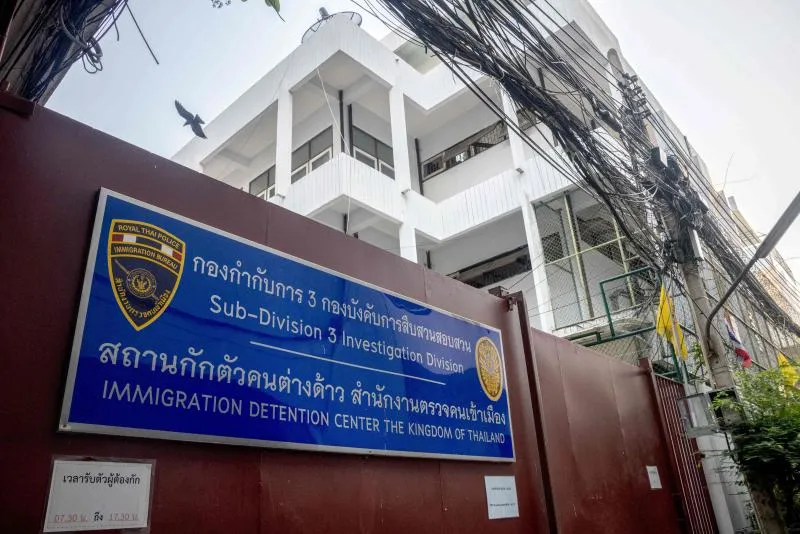
A prominent Chinese activist, Zhang Xiaoyan, has found refuge in Canada after being detained in Thailand, raising significant concerns about transnational repression and the safety of dissidents abroad. Zhang, 55, who was held in an immigration detention center in Bangkok, expressed her deep fear of deportation during her confinement. She arrived in Vancouver on Monday, marking a significant development for a figure known for her advocacy on democracy and human rights.
Background of Activism and Flight to Thailand
Zhang’s activism dates back to her time as a teacher in Shenzhen, China. She fled to Thailand in 2014 after facing threats from her school principal for promoting Falun Gong, a spiritual practice that the Chinese government designates as an illegal cult. In Thailand, she was granted United Nations refugee status, which provided a degree of protection. While in exile, Zhang became a vocal advocate for various causes, including the push for democracy in Hong Kong, a special administrative region of China.
Her profile rose further last year when she was named to a symbolic Hong Kong parliament. This unofficial body was established through an online poll organized by a Canada-based activist group. In response, Hong Kong police, operating under the territory’s national security law, accused participants of subversion and placed bounties on their heads, with Zhang’s exceeding US$25,000.
Detention in Bangkok and Deportation Fears
Zhang’s situation took a critical turn in May when Thai authorities arrested her for overstaying her visa. She was subsequently placed in immigration detention. This arrest immediately fueled fears that Beijing would leverage its influence to secure her deportation, either back to Hong Kong or mainland China, where she could face severe repercussions for her activism.
Thailand is not a signatory to the UN Refugee Convention. However, it is bound by the international legal principle of non-refoulement, which prohibits sending individuals back to countries where they face persecution or danger. Despite this principle, human rights organizations have pointed to past instances where Thailand has deported individuals to China, including 40 Uyghurs in February of the previous year and two rights activists in 2015, both of whom were later imprisoned.
Sunai Phasuk of Human Rights Watch highlighted this pattern, stating, “For many years, Thailand has been cooperating with China’s transnational repression by tracking down those wanted by Beijing, arresting them, and sending them back to China in total disregard of concerns for their safety.” During her detention at Bangkok’s Suan Phlu immigration detention center, Zhang reported being isolated, with restricted access to her phone and news, effectively cutting her off from the outside world.
Intervention and Arrival in Canada
While reports suggested Beijing attempted to prevent her departure to a third country, Zhang was ultimately able to leave Thailand. Following legal and diplomatic interventions, she boarded a flight to Vancouver, arriving on Monday. Zhang chose not to provide extensive details about her arrest, detention, or departure, stating she had agreed to limit her comments. She acknowledged the complex geopolitical position of Thailand, describing it as “caught in the middle” between China and Western nations, and understanding the difficulties faced by smaller countries in such situations.
Broader Concerns for Overseas Dissidents
Zhang’s case is part of a larger trend of Beijing seeking to silence dissidents operating outside its borders. Since 2023, Hong Kong has issued numerous bounties on overseas figures, actions widely condemned by Western governments and human rights groups as an extension of China’s authoritarian reach. Zhang was among four Chinese detainees in Thailand whose precarious situations were brought to light by Human Rights Watch last month, all facing potential deportation.
Another individual highlighted is Chinese investigative journalist Bai Zhaodong, who fled to Thailand in 2024 after reporting on sensitive political topics. Bai is currently held in the same Bangkok facility where Zhang was detained. China’s foreign ministry spokesman, Lin Jian, stated last month that Bai is suspected of extortion and bribery and that an extradition request has been submitted. However, media advocacy group Reporters Without Borders (RSF) expressed grave concerns for Bai’s safety if deported, noting that his life would be at risk. RSF reported that despite an offer of asylum from an unspecified country, Thai authorities had twice canceled Bai’s flights and extended his detention.
Nadthasiri Bergman, the lawyer representing both Zhang and Bai, urged Thailand to prioritize human rights over economic or diplomatic considerations, calling for the journalist’s release. Canada’s immigration and refugee department, while declining to comment on Zhang’s specific case due to privacy and safety protocols, affirmed the country’s commitment to resettling refugees, citing a “long and proud tradition.” Thailand’s Ministry of Foreign Affairs did not respond to requests for comment.
Conclusion
The successful resettlement of Zhang Xiaoyan in Canada offers a glimmer of hope for activists facing persecution abroad. However, her ordeal underscores the persistent challenges and dangers confronted by Chinese dissidents, as well as the complex role countries like Thailand play in the geopolitical landscape of transnational repression. The ongoing cases of individuals like Bai Zhaodong highlight the urgent need for international cooperation and a steadfast commitment to human rights principles in protecting those seeking safety from authoritarian regimes.
